Key Takeaways Stablecoin reserves are quietly funding US government debt purchases. Smart money entered crypto while the public was laughing at it. BlackRock’s entry signals the same institut
Key Takeaways- Stablecoin reserves are quietly funding US government debt purchases.
- Smart money entered crypto while the public was laughing at it.
- BlackRock’s entry signals the same institutional gravity shift every time.
- Normalization of digital payments is where the largest capital waves form.
The Argument: Institutions Already Changed Sides
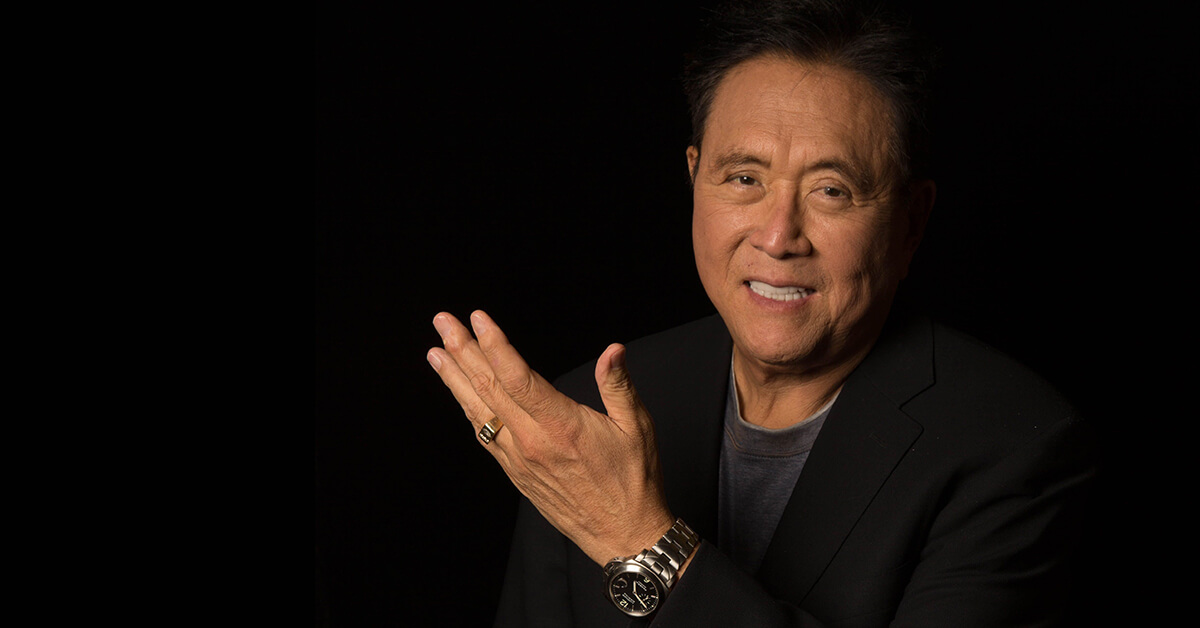
Kiyosaki opened by framing the current moment as a quiet regime change in institutional finance that most retail investors missed entirely.
“The biggest financial institutions on earth quietly stopped asking how do we kill this and started asking how do we control it,” he said on the Rich Dad Radio Show. “That was the real turning point.”
His timeline of that shift was specific. Hedge funds began buying Bitcoin first. Then large investment firms offered crypto exposure to wealthy clients. Then banks that had publicly called crypto a fraud began offering custody services for their richest customers. Then came the ETFs. “When Wall Street creates an ETF around something, it is no longer fringe,” Kiyosaki said. “It becomes part of the system.”
The BlackRock entry was the signal he pointed to as definitive. “When the largest asset manager on earth enters a market, smaller institutions follow,” he said. “That’s how financial gravity works. The big money moves first. Then pension funds. Then financial advisors. Then retirement accounts. Then eventually, the public. By the time the public hears about it on the news and feels comfortable, the early money has already been made.”
Bitcoin Was the Opening Act
Kiyosaki made a distinction that most crypto coverage does not: Bitcoin proved the idea, but the infrastructure play is elsewhere.
“The real story was never Bitcoin,” he said. “Bitcoin was the opening act. It proved the idea could survive. It proved people would trust a currency that no government could print. But the real infrastructure play is something most people have never thought about.”
That infrastructure play, in his framing, is stablecoins. “A stablecoin is a digital dollar,” he explained. “Unlike Bitcoin, which moves wildly in price, a stablecoin is designed to stay at one dollar. Simple, stable, but the implications are enormous. Because suddenly you can move dollars across the world instantly. No three-day wire delays, no bank fees, no permission required. Money starts moving like information moves.”
The structural implication he highlighted is one that most mainstream coverage has not absorbed. Many stablecoin companies hold their reserves in US Treasury bonds. “That means crypto companies are quietly becoming buyers of US government debt,” Kiyosaki said. “Think about how strange that is. The same system the government tried to destroy is now helping support parts of the financial system itself.”
The Five Companies He Named
Kiyosaki identified five companies his research team flagged as positioned for the infrastructure buildout, prefacing the list with an explicit disclaimer that this is not financial advice and that the entire thesis could be wrong.
Coinbase was his first pick, and his framing moved well beyond the retail trading app most people know. “Coinbase is becoming financial infrastructure,” he said. “Custody. Settlement. Institutional access. Compliance.” His argument is that as large financial institutions continue moving into digital assets, they need regulated infrastructure and trusted settlement systems, and Coinbase is already operating in that space.
Circle, the issuer of USDC, was his second. “Circle sits behind one of the largest stablecoins in the world,” he said, “and stablecoins may become one of the most important financial products of the next decade.” He described Circle as quietly evolving into something resembling a digital bank, while acknowledging the regulatory tension that comes with operating in space traditionally controlled by banks.
READ MORE:
 VanEck’s Sigel Targets Q4 for Full Bitcoin Positions
Block, founded by Jack Dorsey, made the list for its aggressive positioning around Bitcoin and peer-to-peer financial infrastructure. Kiyosaki’s argument is that if younger generations continue shifting toward digital financial behavior, companies already embedded in those ecosystems carry significant long-term upside.
PayPal was his fourth pick, and he anticipated the skepticism directly. “PayPal? That’s not exciting. Exactly. That’s the point,” he said. “Mainstream adoption almost always flows through companies people already trust. And once major payment companies start integrating stablecoins and digital assets into the everyday tools people already use, the transition stops feeling speculative. It starts feeling normal. And normalization is where giant waves of capital begin flowing.”
BlackRock closed the list. “BlackRock is the largest asset manager on earth,” Kiyosaki said. “The most traditional Wall Street institution you can name. That’s exactly why it matters. When the world’s largest money manager starts building infrastructure around digital assets, you should pay attention. Not because institutions are always right. But because institutions follow incentives.”
The Risk He Did Not Avoid
Kiyosaki spent time on the downside case in a way that financial entertainment rarely does. “This entire thesis could be wrong,” he said plainly. “Governments could regulate this industry into a corner. Major hacks could destroy public confidence. Speculative bubbles could collapse again and take years to recover. Large banks could dominate the space and crush every smaller player.”
His framing of intelligent investing was explicit: “It’s about probabilities. Position sizing. Patience.” He drew a sharp distinction between retail investors who chase headlines and meme coins and the approach he described as identifying massive trends before the crowd understands what is happening, then waiting.
“The public thinks crypto is fighting Wall Street,” he said. “Wall Street is already positioning to profit from the next phase of it. The public is still reading the old headlines. The smart money is already building.”
The information provided in this article is for educational purposes only and does not constitute financial, investment, or trading advice. Coindoo.com does not endorse or recommend any specific investment strategy or cryptocurrency. Always conduct your own research and consult with a licensed financial advisor before making any investment decisions.
The post Robert Kiyosaki: Retail Is Missing the Real Crypto Play appeared first on Coindoo.