Key Takeaways Kiyosaki argues that recurring income lets investors keep buying Bitcoin during market declines. Bitcoin generates no yield on its own, so producing income from it requires lend
Key Takeaways
- Kiyosaki argues that recurring income lets investors keep buying Bitcoin during market declines.
- Bitcoin generates no yield on its own, so producing income from it requires lending, derivatives or another layer of risk.
- Coinbase Institutional puts realistic Bitcoin yield strategies at roughly 1% to 8%, well below the 15% to 40% cited in the post.
- Kiyosaki sold his own Bitcoin in November 2025 and moved the proceeds into cash-generating businesses.
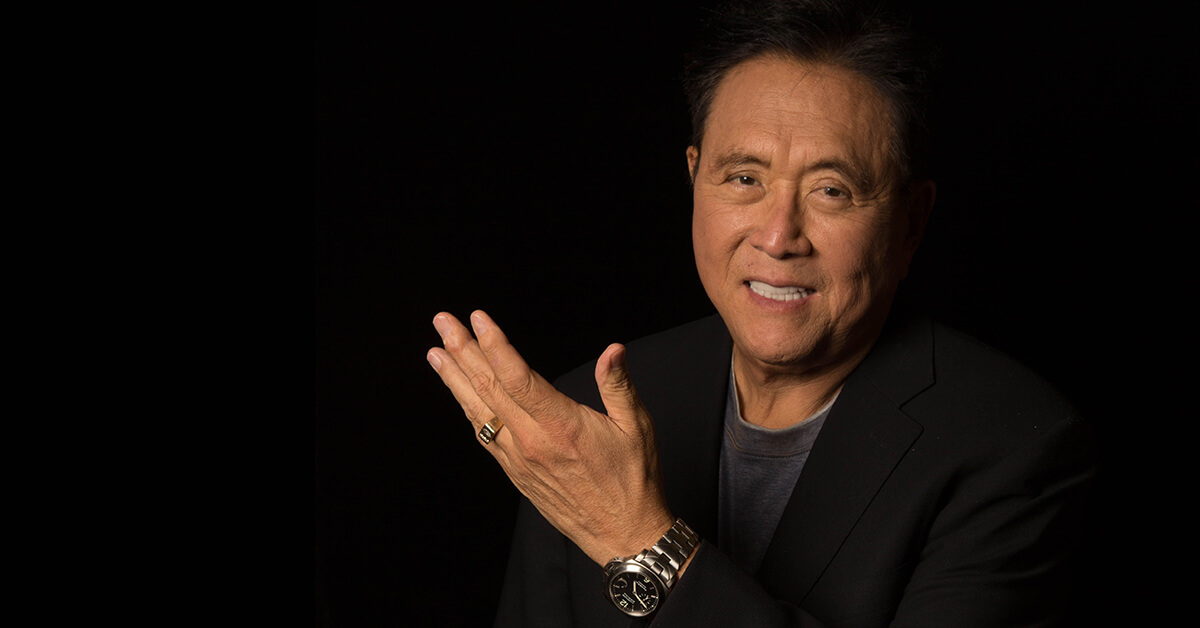
Robert Kiyosaki has offered a simple explanation for why some Bitcoin investors panic during a crash while others continue accumulating.
In a recent Facebook post, the author of Rich Dad Poor Dad divided buyers into two groups. The first bought Bitcoin expecting a quick price increase, then sold when the market moved against them. The second continued earning cash flow from their assets and used that income to acquire more BTC at lower prices. The point, he wrote, is not to time the market but to position assets “to pay you while you wait.”
The underlying idea is useful. An investor with recurring income, available cash and no urgent need to sell is better equipped to survive a drawdown than someone who entered with borrowed money or committed more capital than they could afford to leave invested.
But the post also compresses several very different ideas into one phrase: making Bitcoin generate cash flow. Bitcoin does not produce income on its own, and the 15% to 40% annual yields mentioned in the post would require risks that are not explained.
The Strongest Part of the Argument Is Liquidity
Kiyosaki’s central point is not really about predicting Bitcoin’s next move. It is about avoiding a situation where a falling price forces a sale.
An investor with income from a business, employment, property or a diversified portfolio can continue meeting expenses without touching the Bitcoin position. The same income may also provide capital for periodic purchases when the price declines. That is materially different from generating income from Bitcoin itself: the cash flow exists independently of BTC, which can stay in self-custody without being lent, pledged or placed inside a trading strategy.
Kiyosaki’s example also mixes two different reference points. A buyer who paid $100,000 and watched the price fall to $68,000 is down 32%, not the 46% the post cites. That 46% figure matches Bitcoin’s decline from its October 2025 record of roughly $125,800, a real drawdown but not the one the hypothetical buyer in his example experienced. The distinction matters in an argument built entirely on how investors respond to their own losses.
There Is a Third Group Missing
The choice is not limited to panic selling or generating monthly income from Bitcoin.
A third investor may buy a deliberately small position, use no leverage and simply hold through the decline. That investor does not need BTC to generate yield because the original allocation was sized around the possibility of a severe drawdown.
This is closer to the approach described by the BlackRock Investment Institute, whose portfolio research treats Bitcoin primarily as a source of risk that must be sized carefully. BlackRock considers a 1% to 2% allocation reasonable in a traditional multi-asset portfolio for investors who accept the possibility of rapid price declines, noting that larger allocations can cause Bitcoin to dominate the portfolio’s overall risk.
The important principle is not that every investor should use the same percentage. It is that the position should be small enough to survive the type of decline Bitcoin has repeatedly experienced. An oversized position can produce panic even when the long-term thesis has not changed. A manageable position gives the holder time, which is the real advantage Kiyosaki is trying to describe.
Fidelity’s Data Supports Rebalancing Through Crashes
The strongest institutional evidence behind Kiyosaki’s broader thesis comes from Fidelity Digital Assets’ 2026 Bitcoin portfolio study.
Fidelity tested hypothetical traditional portfolios with different Bitcoin allocations across a period in which Bitcoin experienced several drawdowns ranging from 40% to 70%. Despite those declines, the maximum drawdown of the wider portfolio did not increase as much as might have been expected. Fidelity attributed the result partly to Bitcoin’s historically low correlation with traditional assets and partly to annual rebalancing.
Rebalancing creates a systematic version of buying lower. When Bitcoin falls below its intended portfolio weight, capital is moved from other assets to restore the target allocation. When Bitcoin rises sharply, part of the position is reduced to prevent it from taking over the portfolio.
That approach backs the disciplined part of Kiyosaki’s argument. Capital is deployed after declines according to predetermined rules rather than fear, excitement or a prediction about where the bottom sits. It does not, however, depend on Bitcoin producing 15% to 40% annual income, because the capital for rebalancing comes from the rest of the portfolio.
Bitcoin Does Not Produce Yield by Itself
Bitcoin has no native staking mechanism, dividend, rental payment or contractual interest stream. A BTC balance does not increase simply because it remains in a wallet.
BlackRock states this directly: Bitcoin has no underlying cash flows that can be used to estimate its future return. Its value depends primarily on supply, demand and the market’s expectations for future adoption.
Coinbase Asset Management makes the same distinction. Unlike assets with native staking, Bitcoin does not independently generate yield. A return described as “Bitcoin yield” must therefore come from an additional financial activity conducted with or around the BTC, and each method changes the risk profile. The investor is no longer only exposed to Bitcoin’s price.
Where Bitcoin Yield Actually Comes From
A Coinbase Institutional report on crypto yield provides a useful comparison of the main strategies and their expected returns.
StrategyCoinbase’s Expected BTC ReturnWhat Creates the ReturnMain Trade-Off
Secured lendingApproximately 1%–2%Interest paid by an overcollateralized borrowerCounterparty, custody and collateral-management risk
Futures basis tradingApproximately 4%–8%The price difference between spot Bitcoin and derivativesLeverage, liquidation, funding and exchange exposure
Covered callsApproximately 2%–8%Premiums received for selling call optionsUpside is capped while downside exposure remains
Coinbase Asset Management offers products in this category, so these estimates come from a firm with a commercial interest in the market it is describing.
Even these lower ranges are not guaranteed. Coinbase stresses that basis strategies can suffer when spreads disappear, covered calls can surrender gains during a sharp rally and lending depends on the quality of the borrower and collateral controls. The report also argues that professional management matters because these strategies involve execution, custody, margin, compliance and operational risks that are not visible in a simple advertised yield.
The venues offering these returns range from centralized platforms to onchain protocols, an area Coindoo covers in its overview of yield farming platforms. Their legal standing is also under active review: SEC Commissioner Hester Peirce recently warned that crypto vaults and onchain lending strategies can fall under securities, investment company or investment adviser rules depending on who controls the strategy.
The 15% to 40% Claim Needs More Explanation
Kiyosaki’s post states that some holders continued earning annual yields of 15% to more than 40%, but it does not identify the product, strategy, duration or source of those returns. That range sits substantially above the 1% to 8% estimates in Coinbase Institutional’s comparison of secured lending, basis trading and covered calls.
A high return is not automatically impossible, especially during periods of unusual volatility or strong borrowing demand. It does, however, require an explanation. A yield cannot be evaluated without knowing who pays it and what can cause it to disappear.
Returns at that level may involve leverage, unsecured lending, concentrated options exposure, complex decentralized finance positions or incentives that are temporary rather than recurring. The headline number reveals very little without the accompanying loss scenarios.
The post does point somewhere for the strategy behind those returns. Kiyosaki credits the approach to Dan Ryder, whom he describes as having taught it to more than 1,200 people. Ryder is the founder of Prime DeFi, a crypto education company operated by Ryder Media Inc. that markets a paid training program through free online presentations. Its marketing describes semi-passive decentralized finance cash flow paid daily through smart contracts, while its own disclaimer tells prospective customers not to purchase if they are expecting a get-rich-quick program. The figure Kiyosaki cites therefore describes people who have taken a course rather than independently verified investment results.
What the post still does not describe is the method itself: which products generate the yield, who pays it, or what happens when a strategy stops working. A named teacher is not a substitute for a disclosed strategy, particularly when the introduction arrives attached to something being sold.
FINRA also warns that crypto assets are often extremely volatile and less liquid than traditional instruments, and that they may be offered without the regulatory protections investors expect from registered securities. Assets transferred to a third party for yield can therefore introduce risks that do not exist when Bitcoin remains in self-custody.
.dark-mode .read-more {background-color: #343a40 !important;}
READ MORE:
 S&P and Pantera Launch Revenue-Based Crypto Index
Five Questions Matter More Than the Advertised Rate
Before treating a Bitcoin yield product as dependable monthly income, the structure needs to answer several basic questions:
- Who pays the return? Income must come from a borrower, trading counterparty, option buyer, protocol incentive or another identifiable source.
- Who controls the Bitcoin? The holder may lose direct custody while the strategy operates.
- What collateral protects the position? A quoted yield means little if the borrower is weak or collateral can collapse with Bitcoin.
- What happens during a sharp rally? Covered-call income may look attractive until the strategy prevents participation in a major upside move.
- Can the position be exited immediately? Lockups, withdrawal limits and stressed liquidity can matter most when the market is falling.
Kiyosaki makes the comparison directly, arguing that a rental property keeps paying rent whether or not real estate crashes and that Bitcoin can work the same way. The mechanics differ. Rental income comes from a tenant using a property the owner still holds. Bitcoin yield usually comes from lending the asset to someone else or exposing it to a trading strategy, so both the source of the income and the risks attached to it are fundamentally different.
Kiyosaki’s Own Cash Flow Does Not Come From Bitcoin
There is a useful test case for the difference between external income and Bitcoin yield, and it is Kiyosaki himself.
In November 2025 he disclosed that he had sold roughly $2.25 million of Bitcoin at about $90,000 a coin, having accumulated it years earlier near $6,000. He said the proceeds were going into two surgery centers and a billboard business, which he expected to produce around $27,500 in monthly income, and framed the decision as practicing what he teaches. He has continued to speak positively about Bitcoin since. In June 2026 he said he was watching Bitcoin and Ethereum for a re-entry, waiting for prices to reverse their decline before buying back in.
That is a coherent strategy, and it is the version of his argument that holds up: sell an asset that pays nothing, buy assets that pay every month, then deploy the income as you choose. It is not the strategy the recent post describes. The income he pointed to comes from medical facilities and advertising space, not from lending Bitcoin or selling options against it. Even in his own example, the cash flow was generated outside Bitcoin, which is the distinction the post blurs.
The Better Version of Kiyosaki’s Thesis
Kiyosaki is strongest when he argues that investors should not depend on a rising Bitcoin price to remain financially stable. Independent income, cash reserves, conservative position sizing and rules-based rebalancing can all reduce the likelihood of being forced to sell during a crash, and Fidelity’s data gives that idea credible support. The argument weakens only when all of those tools are described as Bitcoin cash flow.
The real divide is therefore not between people who earn 40% on their Bitcoin and people who panic. It is between investors whose portfolios can survive a drawdown and those whose portfolios require the price to keep rising. Cash flow can help build that resilience. So can keeping the position small enough that no yield is needed at all.
Source review: Based on Robert Kiyosaki’s published post and his November 2025 disclosure of a Bitcoin sale, portfolio research from the BlackRock Investment Institute and Fidelity Digital Assets, Coinbase Institutional’s crypto yield report, FINRA investor guidance, Prime DeFi’s published materials and Bitcoin price history, checked July 23, 2026.
This article is provided for informational purposes only and does not constitute financial or investment advice. Yield-generating crypto strategies carry risk of partial or total loss.
The post Robert Kiyosaki Says Bitcoin Should Pay You But Here’s the Catch appeared first on Coindoo.