Robert Kiyosaki, the author of Rich Dad Poor Dad, has urged investors to approach the current Bitcoin correction with strategic thinking rather than emotional reactions, reinforcing his long-
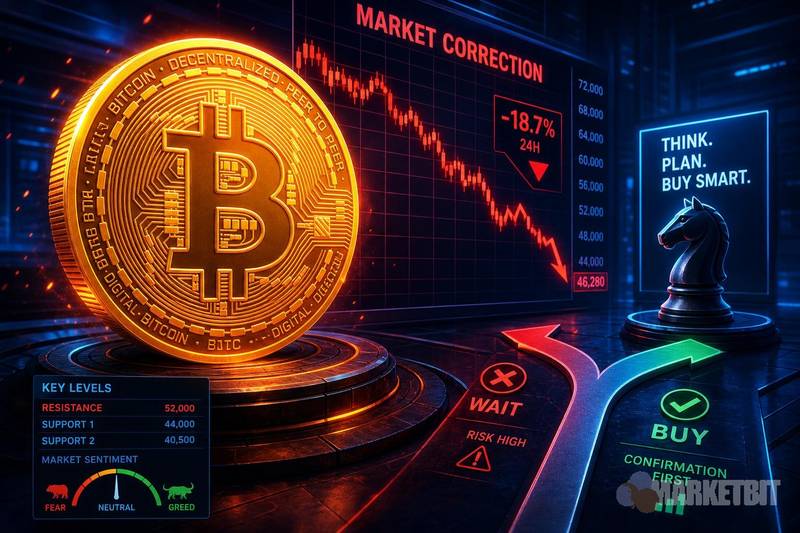
Robert Kiyosaki, the author of Rich Dad Poor Dad, has urged investors to approach the current Bitcoin correction with strategic thinking rather than emotional reactions, reinforcing his long-standing stance on using market downturns as opportunities.
What Kiyosaki Is Telling Investors During the Bitcoin Pullback
Kiyosaki's latest message, shared via U.Today, centers on the idea that corrections reward prepared investors rather than reactive ones. His framing of "thinking smart" points to discipline and selectivity over panic selling.
WHAT TO KNOW
- Robert Kiyosaki is encouraging investors to stay strategic during Bitcoin's current correction.
- A Bitcoin correction refers to a price decline, typically 10% or more from a recent high, that occurs within a broader trend.
- Kiyosaki's message aligns with his established philosophy of treating volatility as a filter that separates long-term investors from short-term speculators.
A correction in market terms means Bitcoin has pulled back meaningfully from a recent peak. This does not necessarily signal a trend reversal, but it does test whether holders maintain conviction or exit under pressure.
Why Bitcoin Corrections Often Test Investor Conviction
Corrections create emotional pressure because unrealized gains shrink rapidly, and fear of further losses triggers selling. This dynamic is particularly intense in crypto markets, where 24/7 trading and leveraged positions amplify short-term moves.
Prominent voices like Kiyosaki gain traction during these moments precisely because uncertainty drives investors to seek reassurance or frameworks for decision-making. His message to investors arrives at a time when Bitcoin holders are weighing whether the pullback represents a buying window or the start of deeper weakness.
The distinction between short-term volatility and long-term conviction is central here. Investors who entered Bitcoin based on a multi-year thesis, such as those who positioned around institutional ETF flows, face a different calculus than traders managing weekly positions.
Fear-driven decisions during corrections often lead to selling at local lows, a pattern that Kiyosaki's "think smart" framing directly addresses. Retail investors tend to buy during euphoria and sell during fear, inverting the logic of accumulation.
What Smart Positioning Could Look Like for Bitcoin Investors
Kiyosaki's guidance, while not prescriptive in terms of specific price levels, points toward a few practical principles: patience during drawdowns, sizing positions according to personal risk tolerance, and avoiding leverage that forces liquidation at the worst moment.
For investors with longer time horizons, corrections historically have presented accumulation opportunities within broader bull cycles. However, no two corrections are identical, and the outcome depends entirely on whether the structural drivers of demand remain intact.
The broader altcoin market's behavior during Bitcoin corrections also matters. Capital rotation patterns shift when BTC pulls back, and investors must decide whether to concentrate in Bitcoin or diversify across assets showing relative strength.
Security concerns add another dimension to positioning decisions. Events like the recent Gravity Bridge exploit serve as reminders that risk management extends beyond price exposure to custody and protocol selection.
Risk management remains the practical core of "thinking smart." This means defining exit levels before entering, never allocating capital that cannot be held through a full drawdown cycle, and separating trading activity from long-term holdings. Whether Bitcoin's current correction deepens or reverses, strategy should precede action, not follow it.
Disclaimer: This article is for informational purposes only and does not constitute financial or investment advice. Cryptocurrency and digital asset markets carry significant risk. Always do your own research before making decisions.
Read original article on marketbit.net