Tokenized stocks just got a real stress test on Robinhood Chain. Volumes showed up fast, the memes showed up faster, and under it all a serious question popped up for traders and builders: is
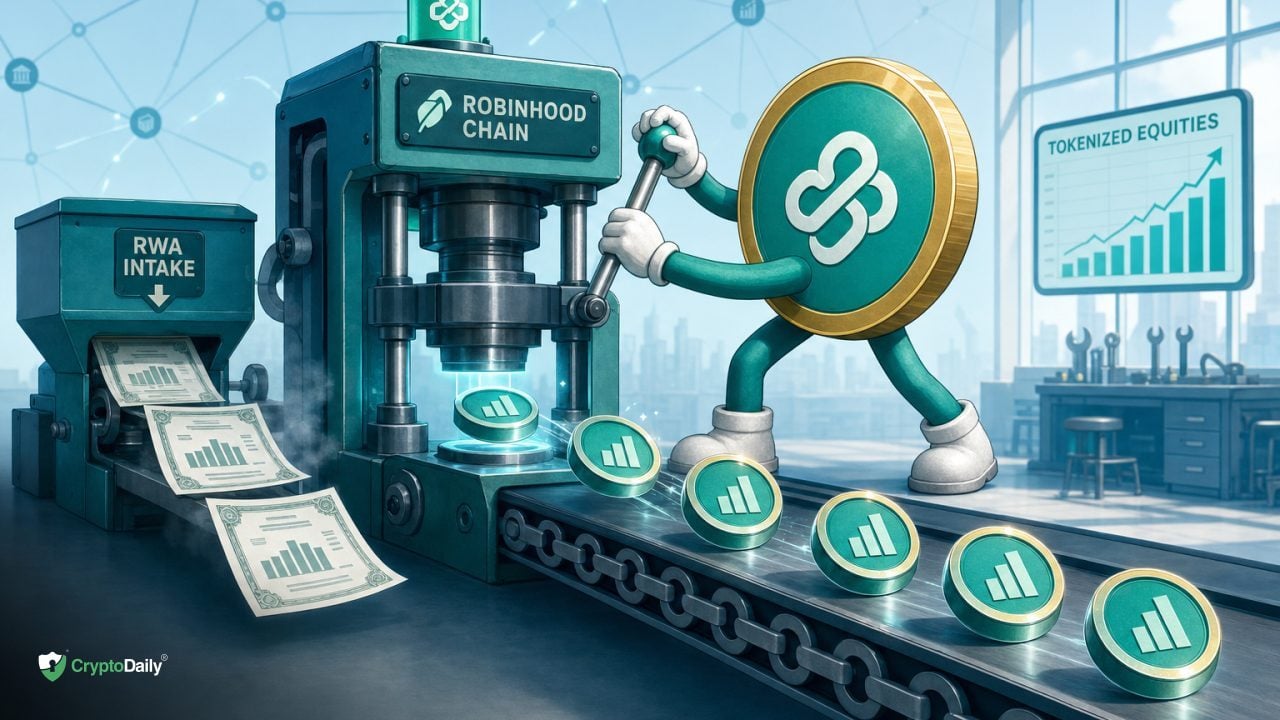
Tokenized stocks just got a real stress test on Robinhood Chain. Volumes showed up fast, the memes showed up faster, and under it all a serious question popped up for traders and builders: is this the moment RWAs go from demo to daily driver?
If you’re trying to decide whether to touch these Stock Tokens, the problem is practical. How are they priced when the stock market is closed? What’s the spread, who holds the real shares, and what could go wrong on a weekend gap?
Let’s keep it simple and specific. Here’s what changed on Robinhood’s new chain, how the tokenized flow actually works, and a playbook to size your risk without getting lost in buzzwords.
Aspect What to Know Launch & availability Robinhood Chain mainnet went live on July 1, 2026 with Stock Tokens announced and available that day Robinhood Newsroom. Early traction Within two weeks, TVL neared $312M and daily transactions were ~3.6M, vaulting the chain up DEX rankings CoinDesk. Growth pace By July 21, TVL was about $431M, ~6M daily transactions, and $9B+ cumulative DEX volume, with memecoins still dominating flow The Block. RWA breakout RWAs on-chain jumped roughly fivefold to ~$70M in under two weeks; a dozen tokenized stocks now clear $500K+ per day, led by GameStop, NVIDIA, and SpaceX CoinDesk. What these tokens represent Tokens typically map to economic exposure to an underlying stock. They may not grant voting rights or direct share custody. Read the issuer docs. Key frictions Oracles, spreads, weekend gaps, smart contract risk, and potential KYC or regional limits depending on the venue and product. Who it suits On-chain traders seeking 24/7 equity exposure, arbitrageurs managing basis, and builders testing RWA rails. Long-only investors may still prefer a broker.
How tokenized stocks on Robinhood Chain actually work
Start with the basics. A Stock Token is a crypto asset that tracks the price of a listed company’s shares. Under the hood, there’s usually a legal wrapper that holds or references the equity exposure, then issues tokens that mirror that exposure on-chain. You get a transferable, 24/7 instrument that tries to stay in line with the off-chain stock.
Price discovery depends on two things. First, an oracle or pricing feed that updates the on-chain reference. Second, market makers and arbitrageurs who keep the token in line with the stock, especially when the stock market is closed. If the token drifts too far, someone trades the spread.
Robinhood Chain adds distribution and throughput. The chain launched on July 1, 2026 with Stock Tokens live the same day Robinhood Newsroom. In the first weeks, activity and TVL ramped quickly, with memecoin fuel in the mix and RWAs starting to claim a meaningful slice of volume CoinDeskThe Block.
One more practicality. Tokenized stocks can trade while the stock market sleeps. That’s a feature and a risk. Spreads can widen after hours. Oracles may update less frequently. And if news hits at 2 a.m., the token can gap before equity markets reopen.
Quick glossary
- RWA: Real-world asset represented on-chain, like stocks, bonds, or funds, with claims defined by legal docs and smart contracts.
- Stock Token: A token that tracks a company’s share price. Often economic exposure only, not voting rights or direct share custody.
- Oracle: A data feed that pushes off-chain prices on-chain. Latency and reliability matter for spreads and liquidation logic.
- TVL: Total value locked in protocols on a chain, a rough proxy for capital committed to on-chain apps.
- Basis: The difference between token price and the underlying stock, often wider outside equity market hours.
- Redemption: The process, if offered, to swap tokens back to off-chain exposure, usually gated by KYC and terms in the issuer docs.
Step-by-step playbook
- Read the product terms. Find the Stock Token’s issuer page and skim the legal summary. Confirm what rights you get, how pricing works, and whether redemption exists.
- Check the market structure. Identify which DEX or venue you’ll use on Robinhood Chain, the supported pools, and typical spreads during US market hours vs weekends.
- Prep a wallet and gas. Choose a wallet that supports Robinhood Chain and fund it with the native gas token. Test a tiny transaction to confirm fees and confirmations.
- Start with a sizing rule. Begin small. Watch slippage at different times of day. Scale only if spreads and depth look stable for your ticket size.
- Mind the clock. U.S. equities have set trading hours. Tokenized versions trade 24/7. Expect wider basis around opens, closes, and on newsy weekends.
- Track the oracle. If the oracle cadence slows after hours, spreads may widen. Avoid market orders if depth is thin and updates lag.
- Plan exits. Decide ahead of time how you’ll de-risk if the token diverges. Use limit orders, split fills, or wait for core market hours to tighten spreads.
- Review tax and compliance. Tokenized equities might be treated like securities or derivatives depending on your jurisdiction. Keep records and verify eligibility.
RWA traction on Robinhood Chain: what’s actually growing
The numbers tell a clean story. In the first two weeks post-launch, Robinhood Chain was already handling around 3.6 million transactions daily with roughly $312 million in TVL, quickly ranking among top networks by DEX flow CoinDesk. One week later those figures climbed to about 6 million daily transactions and $431 million TVL, and cumulative DEX volume crossed $9 billion, though memecoins still drove a good chunk of it The Block.
The twist is how fast RWAs started to matter. By July 25, value tied to real-world assets jumped roughly fivefold to around $70 million, and a dozen tokenized stocks cleared more than $500,000 a day. The standouts were GameStop at about $26.6 million per day, NVIDIA around $14 million, and SpaceX near $6.4 million CoinDesk.
Why that mix? Memes attract attention, attention attracts market makers, and market makers need venues with throughput and users. RWAs then piggyback that liquidity. If spreads are tight for the fun stuff, they can be tightened for serious instruments too. That’s the quietly bullish part of this story for tokenization builders.
Costs, spreads, and where to trade the exposure
There isn’t just one way to get equity exposure. Each route comes with a different mix of hours, fees, and counterparty risk. Here’s a straight comparison to frame trade-offs.
Route Market hours Typical costs Liquidity driver What you actually hold Primary risks Stock Token on a Robinhood Chain DEX 24/7 DEX fees + gas; wider spreads after hours; potential price impact on larger tickets On-chain liquidity pools and market makers; oracle updates On-chain token tracking equity exposure Oracle lag, smart contract risk, basis vs underlying, venue eligibility Traditional broker shares Exchange hours with pre/post-market Commission or PFOF implied costs; borrow fees if shorting Exchange order books, market makers, regulated venues Broker-held claim to registered shares Custody concentration, limited hours, operational holds on events Equity-like perpetuals on a CEX 24/7 Trading fee + funding; potentially tight spreads; leverage available CEX order book depth and market makers Derivative contract referencing the stock Exchange counterparty risk, funding costs, regulatory limits
Pro tip: track the basis during five windows each week. US equity open and close, Friday after-hours, and the first hour of Sunday crypto price action. If the token gets jumpy, consider limit orders or wait for core hours.
Fees matter, but basis eats portfolios in silence. If you trade size, sample fills at noon ET vs 2 a.m. Saturday. If the spread is 5 to 10 times wider overnight, that’s not a bug, it’s the price of 24/7 access. Adjust ticket size or wait for liquidity windows.
Where RWAs fit in the Robinhood Chain stack
The early data says Robinhood Chain can move retail-sized flow reliably. Memecoins lit the spark, but the RWA curve bending up is the part institutions will circle in a deck. The question is whether tokenized stocks can sustain depth when the next fad rotates.
Three drivers to watch: more tickers, better oracle cadence, and maker incentives that narrow after-hours basis. If the chain keeps adding liquid names and improves pricing at the edges of the week, on-chain stock exposure stops feeling like a novelty and starts feeling routine.
There’s also a builder angle. If RWAs hold users on-chain, everything else benefits. Payments, savings wrappers, even structured vaults can reference the same assets. That’s when a chain stops living on hype and starts living on habit.
Bar chart (July 24, 2026) of daily trading volume for a dozen Robinhood Chain tokenized stocks — shows GameStop, NVIDIA and SpaceX leading and illustrates multi‑million‑dollar daily trading for on‑chain stock tokens. — Source: CoinDesk
Scenarios to plan for over the next quarter
Base case: tokenized equity volumes grind higher but remain lumpy around catalysts. Spreads stay tight during US hours and widen off-hours. Makers get smarter, so the worst gaps compress, but weekend liquidity is still for patient hands.
Upside case: more listings and bigger arbitrage pipes pull spreads in 24/7. If a few large desks commit continuous two-way flow, the experience gets close to a CEX perpetual, minus leverage. That could bring a second wave of users who were waiting for tighter execution.
Downside case: a tokenization hiccup, a headline about rights or redemption, or a high-profile oracle event spooks flow. Spreads jump and liquidity hides. In that scenario, the meme side keeps trading, but RWA depth takes time to recover.
Pitfalls and red flags
- Economic exposure vs ownership. Many Stock Tokens do not grant voting rights or direct share custody. Know what you actually hold before you size up.
- After-hours basis. Tokens trade 24/7. The underlying stock does not. Expect price gaps and wider spreads outside exchange hours.
- Oracle assumptions. If the price feed lags during volatile periods, stop-loss logic and liquidation thresholds can misfire. Sample update cadence.
- Liquidity pockets. Depth can vanish during weekends or holidays. If you must trade then, use limits and smaller clips.
- Smart contract and venue risk. Bugs, permission changes, or pool exploits can impair tokens even if the stock is fine.
- Eligibility and KYC. Some venues gate access by region or verification. Check the rules before you move funds.
For ongoing coverage, analysis, and plain-English explainers on what actually matters on-chain, you can always drop by Crypto Daily.
Frequently Asked Questions
Do tokenized stocks give me the same rights as shares at a broker?
Usually not. Many Stock Tokens provide economic exposure, not corporate voting rights or direct share custody. Always check the product documentation to see what you get and what you do not.
How are prices set when the stock market is closed?
On-chain tokens rely on oracles and market makers. After-hours, there is no live exchange quote, so prices float on indicative feeds and trader expectations. That is why basis and spreads tend to widen on evenings and weekends.
Can anyone trade these tokens on Robinhood Chain?
Access depends on the venue and your jurisdiction. Some platforms may require verification or restrict regions. Confirm eligibility and any compliance steps before moving capital.
What about dividends and corporate actions?
It varies by product. Some token structures pass through cash flows, some adjust the token mechanics, and some do not include dividends at all. For splits or mergers, issuers typically outline how tokens adjust. Read the terms.
Are tokenized stocks more volatile than the underlying?
During regular market hours, they often track closely if liquidity is healthy. Outside those hours, they can be more volatile because the reference market is closed and depth is thinner.
How big is RWA activity on Robinhood Chain right now?
By late July 2026, RWAs were reported around $70 million with a dozen tokenized stocks clearing more than $500,000 per day, led by GameStop, NVIDIA, and SpaceX CoinDesk.
What is the main risk traders underestimate?
Basis and liquidity around news. A weekend headline or a Monday open after a big token move can leave you with fills far from where you expect. Plan sizing and exits for those windows.
Disclaimer: This article is provided for informational purposes only. It is not offered or intended to be used as legal, tax, investment, financial, or other advice.