Russia Crypto Sanctions: 5 EU Nations Push a Crackdown, What Next? As of November 17, 2026, the foreign ministers of Finland, Denmark, Estonia, France and Lithuania are urging Brussels to tig
Russia Crypto Sanctions: 5 EU Nations Push a Crackdown, What Next?
As of November 17, 2026, the foreign ministers of Finland, Denmark, Estonia, France and Lithuania are urging Brussels to tighten Russia crypto sanctions.
Their joint letter, announced on November 16, 2026, targets Russian crypto networks that the ministers say help Moscow bypass restrictions, according to theFinnish Government.
Why Does the EU Want to Crack Down on Russian Crypto Networks?
The five ministers say Russia increasingly uses digital assets for cross-border payments and procurement, bypassing banking channels and financial messaging systems.
Front companies and intermediary networks hide Russian involvement, which keeps Moscow supplied with goods and technologies for its war on Ukraine, the Finnish Government states.
Estonian Foreign Minister Margus Tsahkna raised the same concern on X, pointing to shadow financial networks and Ukraine war funding crypto channels. His post adds: “Our sanctions must follow the money, wherever and however it moves.”
What Do the Five Countries Want Targeted?
The Finnish Government release lists these priorities for the forthcoming sanctions negotiations:
Russia-linked exchanges, wallet services and stablecoin networks
Other intermediaries behind crypto sanctions evasion
Banking and shipping networks alongside them
Tougher enforcement across Member States against illegal use of digital assets
Closing regulatory and supervisory gaps
Restrictions on a Russian crypto exchange, or on front organizations crypto firms rely on, would stretch current Russia crypto sanctions further.
What Has the EU Already Done on Russia Crypto Sanctions?
Date
EU Step
23 July 2026
21st package bans transactions with 14 related platforms in non-EU countries
23 July 2026
First possible full third-country ban on digital asset services
6 November 2026
Task force on sanctions evasion announced
Per theCouncil of the EU, the 21st package covers platforms based in Georgia, Panama, the UAE, the Marshall Islands, Kyrgyzstan and Belarus.
The Council also says the package carries the highest number of listings in four years. The new instrument lets the bloc ban any transaction between an EU operator and a provider that Russia uses.
What Is the New EU Task Force on Evasion?
Commissioner Maria Luís Albuquerque announced the EU crypto sanctions task force after chairing the tenth High-Level Expert Group meeting on 5 November, theEuropean Commission statement says.
The meeting also covered the role of the European Anti-Fraud Office and consistent enforcement by Member States.
The group aims to detect sanctions circumvention crypto routes. Albuquerque said new technologies or outside jurisdictions must not become safe havens for evasion.
Together, the task force and the letter feed the wider Russia crypto sanctions debate.
Who Else Covered the Letter on X?
BSCNews also covered this news in itstweet on X, saying the ministers want stricter measures, restrictions on exchanges and front organizations, and stronger international cooperation.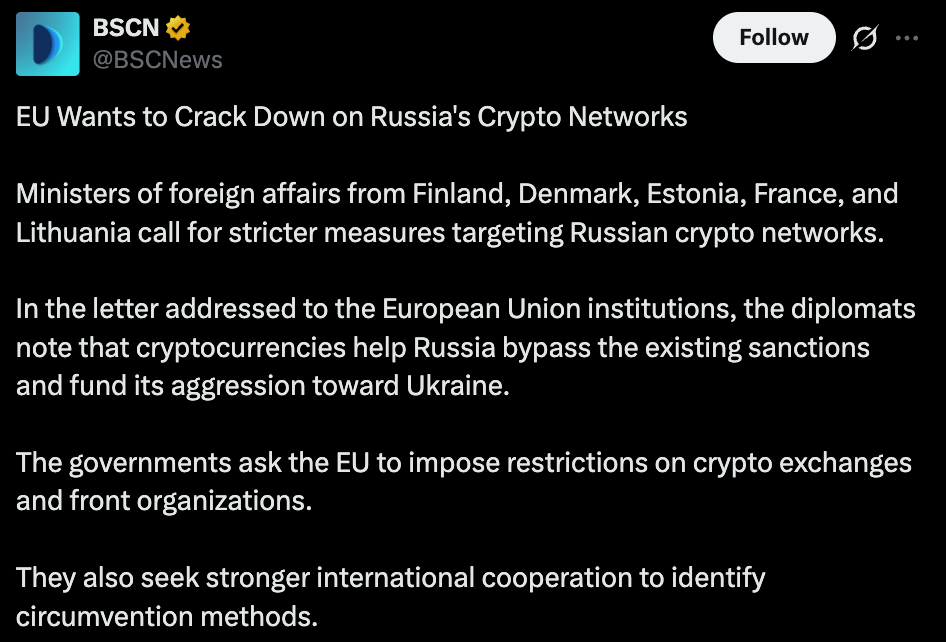
Tsahkna also announced the letter in hispost on X.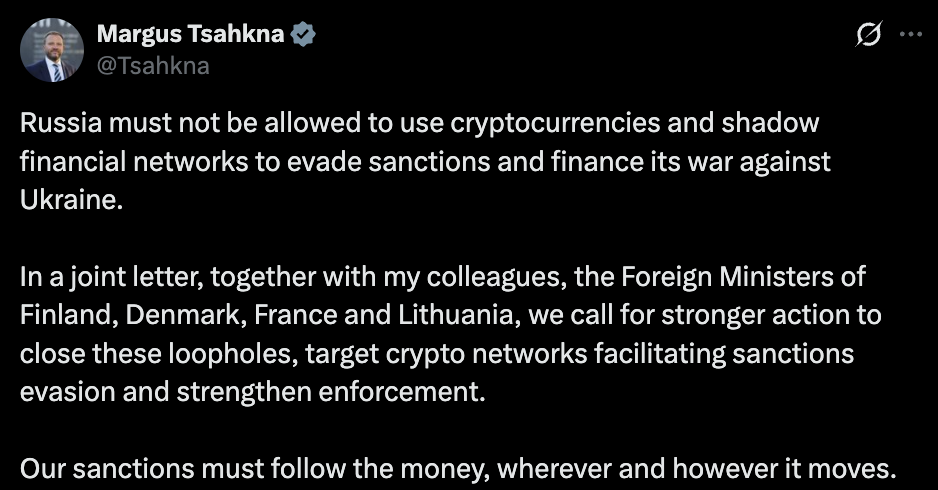
Expert View: What Could Happen Next?
Analysts following crypto news today may read the letter as political pressure ahead of the next sanctions talks, not a new rule. No new measure has been adopted yet.
A wider EU crypto crackdown 2026 could follow if member states back the ministers, though timing and scope are unannounced. None of the cited sources link the letter to price moves.
For readers of crypto news, the key signal is how the talks treat stablecoin networks and third-country platforms. Russia crypto sanctions may tighten further, but that is not confirmed.
Disclaimer: This article is for information only and is not financial, legal, or investment advice. Digital assets are volatile. Verify details with official sources before making any decision.