Russia's Deputy Finance Minister Ivan Chebeskov has issued a pointed warning to the country's cryptocurrency holders: if foreign issuers freeze stablecoins held through Russian intermediaries
Russia's Deputy Finance Minister Ivan Chebeskov has issued a pointed warning to the country's cryptocurrency holders: if foreign issuers freeze stablecoins held through Russian intermediaries, investors themselves could be left bearing the losses. The remarks, reported by state news agency TASS, come as Moscow pushes to bring its vast and largely unregulated crypto market under formal oversight.
A Market Too Large to Ignore
Roughly 20 million Russians now hold digital assets worth approximately 3.7 trillion rubles, or about $44 billion, making the country one of the largest crypto markets in the world by sheer user count.Daily transaction volumes hit approximately 50 billion rubles, or roughly $600 million. Chebeskov said clearer regulation should also provide more reliable data on the market's true size and activity.
The scale of those figures has pushed Russian authorities to act. Russia began enforcing the Law on Digital Currency and Digital Rights on September 1, which legalises crypto-related transactions such as investing, buying and selling, and exchanging, and sets a legal basis for exchange licences, the establishment of digital depositories, and the provision of related services by intermediaries such as banks and brokers.
The Freeze Risk and What It Means for Investors
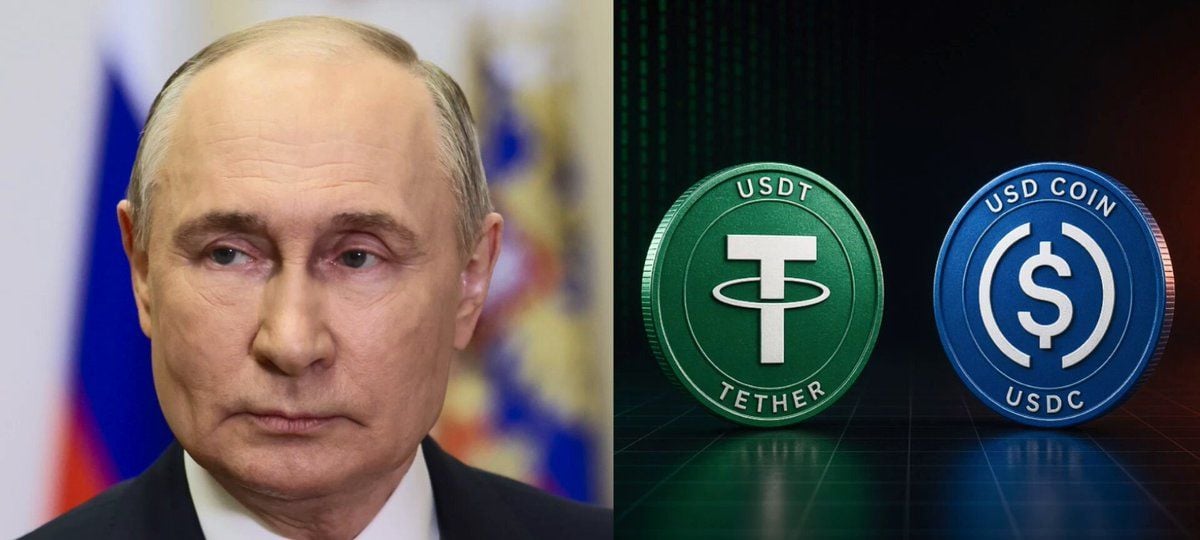
Chebeskov's warning centres on a structural vulnerability that Russian officials have openly acknowledged. Foreign issuers of stablecoins, including $USDT issuer Tether and Circle, which issues $USDC, retain the technical ability to freeze assets at the request of foreign authorities. Tether has frozen funds at the request of law enforcement, and Circle, which issues USDC, holds the same power to freeze wallet addresses. Because those decisions fall outside the control of Russian depositories or intermediaries, the ministry's position is that investors could have no legal recourse domestically if such a freeze occurs.
By channeling USDT trading through licensed Russian intermediaries, authorities are attempting to create a buffer between domestic users and the risk of unilateral freezes by Tether. However, the ministry's warning makes clear that this buffer does not eliminate investor risk entirely.
To address the broader regulatory gap, Russia is developing rules that would clearly define responsibilities between investors and digital asset intermediaries. The new framework introduces annual purchase caps for retail investors and narrows the list of stablecoins available on regulated platforms to exactly one: USDT.Retail investors must first pass a knowledge test and may purchase up to 300,000 rubles, roughly $3,700, per licensed intermediary per year.
The first participants in the organised crypto market may be registered and licensed by the end of 2026, according to Central Bank of Russia Deputy Governor Vladimir Chistyukhin.Chebeskov also noted that Russian residents hold more than 10 million cryptocurrency wallets overseas, underlining the challenge Moscow faces in drawing activity onto domestic, regulated platforms.
Sources:Crypto Briefing: Russia mandates investors report foreign crypto transactions, warns of losses from stablecoin freezesCryptopolitan: Russia counts 20 million crypto users holding $44 billion in digital assetsThe Moscow Times: Russia Passes Crypto Law to Legalize Trading Under Tight Central Bank Oversight