
Markets7 min read
Why Is Dash (DASH) Price Down Today?
TLDR Keypoints Dash (DASH) is trading at $35.38, down 4.09% in the past 24 hours, according to CoinGecko data as of 08:52 UTC on November 28, 2026. The decline comes after MEXC delisted both
What Changed In The SafePal Data Breach On November 28? Crypto news update: the wallet maker said on November 28, 2026, that the SafePal data breach reached older purchases than first disclos
What Changed In The SafePal Data Breach On November 28?
Crypto news update: the wallet maker said on November 28, 2026, that the SafePal data breach reached older purchases than first disclosed. An extra 37,542 crypto payment records, covering purchases from September 6, 2022 to March 1, 2025, are now included.
The firm said recovery phrases, private keys, and wallet funds were not involved.
According to its official security update, the new figure counts records, not people. Refunds, repeat purchases, and failed attempts each add a record.
The records sat in separate crypto payment and store systems and were matched through a shared payment ID, a reference that ties a payment to a purchase. The company called it the same incident, not a new flaw.
Group
Orders placed
Size
Exposed
Not exposed
Original (disclosed Aug 16, 2026)
Mar 2, 2025, to Apr 11, 2026
About 39,798 customers
Name, email, shipping address, phone, purchase details
Seed phrases, private keys, wallet credentials, bank or card details, government ID
Added (Nov 28, 2026)
Sep 6, 2022 to Mar 1, 2025
37,542 records
Name, email, country, order ID, products, payment ID
Shipping address, phone, card or bank details, wallet payment addresses, wallet credentials
Customers in the first group received individual emails on August 16 with the subject line "[Important] Your SafePal Order Information Has Been Affected". They could also check their status with an order ID and shipping country. The two counts use different units, customers and records, so they should not be added together into one total of affected people.
The older group holds less personal detail, yet a name, email, and product list can still make a fake support message look real. Another hardware wallet maker faced a similar exposure in the Keystone hardware wallet data breach in October 2026.
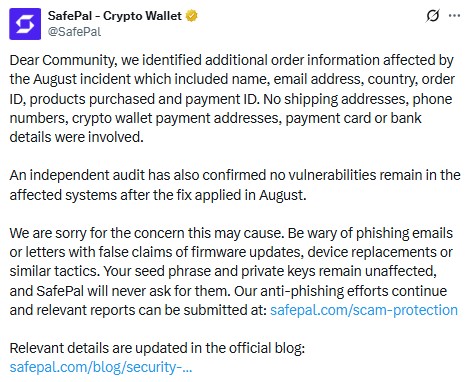
Source: SafePal Official X Post
No, according to the firm. It said it never requests, collects, processes, or stores recovery phrases or private keys, and it found no sign that wallet access or funds were compromised. It also said hardware devices and cold-storage design are isolated from its online store, so on-device keys were not touched by the flaw.
Those statements are the firm's own and have not been independently confirmed here. They do match the lists above, which show no wallet credentials in either part of the SafePal data breach.
The main risk, SafePal said, is targeted phishing built on purchase details. It tied the expanded disclosure to reports of phishing emails reaching customers outside the first date range. Its updates also describe physical letters sent in November 2026 that cite the incident, ask readers to scan QR codes, or claim a firmware update or free device replacement is needed.
Other lures include refunds and customs fees. Scammers can reuse details from the SafePal data breach to sound credible, so a sender knowing your purchase proves nothing. Suspicious messages can be reported on the official Scam Protection page.
A safe routine, based on the firm's guidance:
Treat any purchase since September 6, 2022 as possibly affected.
Never scan an unknown QR code or open an unsolicited link.
Type the official website address yourself.
Remember that it says it never asks for a recovery phrase, PIN, or private key.
If a phrase was shared, treat the wallet as compromised, create a new one on a trusted device, and move remaining assets.
Date
Event
Aug 16, 2026
Original disclosure; affected customers emailed
August 2026
Authorization flaw fixed, a bug that let outsiders view another customer's details
November 2026
Physical phishing letters reported
Nov 28, 2026
Wider scope disclosed
The firm said it cut retention of personal information in its order-processing environment to 90 days, subject to legal requirements. Independent security auditor Cure53 then reviewed the fix and the wider systems and, per the company, found no remaining vulnerabilities.
Takedown work is ongoing, and the company has not given a final count. It reported removing more than 30 phishing sites at first, contacted logistics and fulfillment partners, opened a dedicated support channel, and brought in anti-phishing providers, including Phishfort.
Retention explains one gap. Contact details for the earlier period had already been deleted under the old policy, so no individual emails could go to that group. The date to remember is September 6, 2022: anyone who bought after it should assume the SafePal data breach touched their details and expect no personal notice.
Disclaimer: This crypto news report is informational and is not financial or security advice. Verify details on official channels.