AI has long been presented as an imminent threat to entry-level white-collar jobs, promising massive and rapid reductions. However, Sam Altman, CEO of OpenAI, now acknowledges that his initia
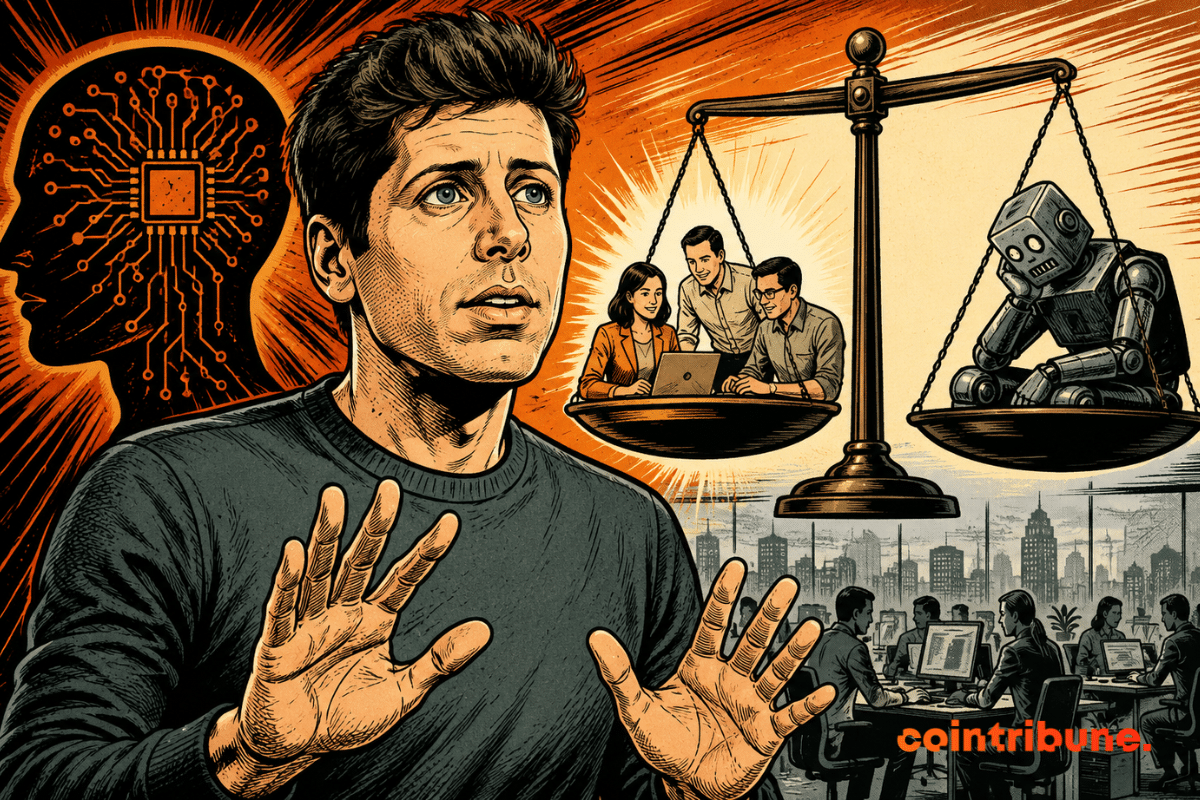
AI has long been presented as an imminent threat to entry-level white-collar jobs, promising massive and rapid reductions. However, Sam Altman, CEO of OpenAI, now acknowledges that his initial predictions were exaggerated. Current data shows limited disruptions in the labor market, even though some companies use AI to justify planned layoffs. This development invites a more nuanced reflection on the integration of AI into the professional world.
In brief
- Sam Altman acknowledges that his initial predictions about the massive impact of AI on employment were exaggerated.
- Studies from Yale Budget Lab, Brookings, and Anthropic show that AI-related disruptions remain limited so far.
- The phenomenon of u201cAI whiteningu201d obscures the actual perception of technology-related layoffs.
- AI changes working methods and increases productivity, but its adoption remains gradual and framed by technical and regulatory constraints.
Sam Altman: AI has not caused the employment apocalypse
The CEO of OpenAI, Sam Altman, said that the rapid development of AI has not caused the global employment apocalypse he feared. Speaking virtually at a conference hosted by the Commonwealth Bank of Australia (CBA) in Sydney, he explained that although OpenAI correctly anticipated some technological advances related to ChatGPT in 2022, his predictions about social and economic consequences turned out to be wrong.
Altman specified that he was initially worried about potential job losses, particularly among entry-level white-collar workers. “I am glad to have been wrong about this; I thought the elimination of entry-level white-collar jobs would have had a greater impact to date,” he said during his interview with Matt Comyn, CEO of the CBA. He added that “his intuition about the real impact of AI had proven incorrect,” but he now better understands why these massive effects have not occurred.
AI and the labor market: limited disruptions and practical realities
Analyses from Yale Budget Lab and the Brookings Institution indicate that disruptions remain minimal for now, despite growing adoption of AI tools across various sectors.
Anthropic highlights a notable gap between AI’s theoretical capabilities and its practical use. Obstacles related to process design, regulatory compliance, and accuracy requirements limit the effective replacement of human tasks. Thus, artificial intelligence changes some working methods without causing massive job losses.
Meanwhile, the phenomenon of “AI whitening” emerges in some companies. This practice consists of attributing layoffs already planned to AI, obscuring the real perception of technological impact on employment. Altman insists on the need to distinguish AI’s real effects from strategic pretexts of company management.
€20 bonus for registering on BitvavoThis link uses an affiliate program.ChatGPT and organizational adjustments
The deployment of ChatGPT at the end of 2022 intensified AI experimentation in offices, notably in customer support, marketing, and development. Pilot projects showed that AI can increase productivity, but its adoption remains gradual. Companies must integrate these tools with caution, considering data security and compatibility with existing systems, notably those of Microsoft and other technology partners.
Discussions around AI also highlight the importance of appropriate public policies. Calls for training, retraining, and transparency are multiplying to support workers. Altman acknowledges that AI changes working methods but has not yet caused massive replacement. Thus, long-term evolution will depend as much on company choices as on regulatory and educational measures implemented.
In conclusion, artificial intelligence continues to progressively reshape the labor market. Although alarming predictions have not materialized, vigilance remains necessary to ensure balanced and fair integration. The coming years may see more systematic adoption of AI, leading to more significant organizational adjustments, but always framed by constraints.