SEC Chair Paul Atkins stated that the president wants the United States to become the "crypto capital of the world," signaling a distinctly pro-digital-asset posture from the agency's top reg
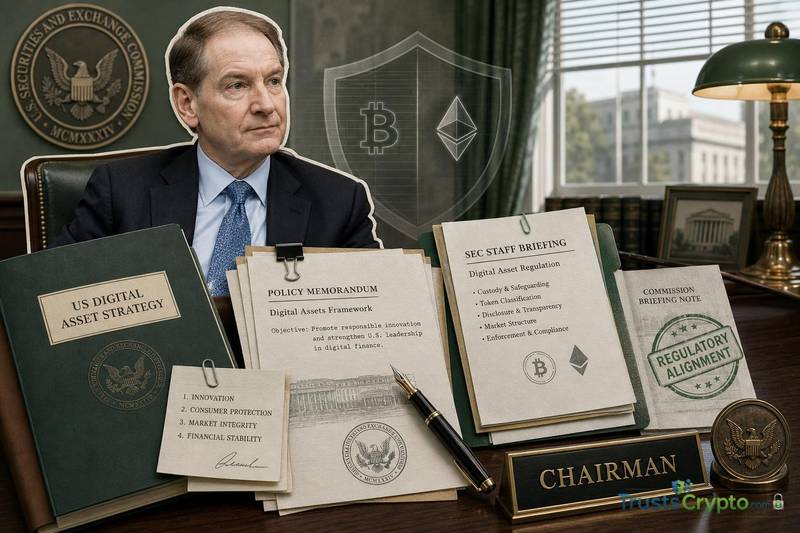
SEC Chair Paul Atkins stated that the president wants the United States to become the "crypto capital of the world," signaling a distinctly pro-digital-asset posture from the agency's top regulator during a joint SEC-CFTC event focused on regulatory harmonization.
Atkins made the remarks at a joint SEC and CFTC harmonization event that examined how the two agencies can coordinate oversight of digital assets. The event, which the SEC titled "U.S. Financial Leadership in the Crypto Era," centered on aligning federal regulatory approaches to cryptocurrency markets.
The phrase "crypto capital of the world" directly echoes language from a January 2025 executive order on strengthening American leadership in digital financial technology. That order established a policy framework prioritizing innovation-friendly regulation and national competitiveness in blockchain technology.
What Atkins' Framing Signals for SEC Crypto Regulation
When an SEC chair publicly aligns the agency's mission with a presidential pro-crypto agenda, it sets expectations for how staff approach enforcement, rulemaking, and no-action guidance. The statement positions digital asset regulation as a matter of national economic strategy rather than purely investor protection.
However, rhetoric from a chair does not constitute finalized policy. The SEC operates through formal rulemakings, staff guidance, and enforcement actions, all of which require deliberation and, in many cases, public comment periods. A single statement, however pointed, does not change existing securities law or prior enforcement precedents.
The joint nature of the event with the CFTC is itself notable. Jurisdictional overlap between the two agencies has long created uncertainty for crypto businesses unsure whether their tokens qualify as securities or commodities. A coordinated public appearance suggests both agencies may be moving toward clearer boundary lines, which is something the industry has requested for years.
What a 'Crypto Capital' Agenda Could Mean for US Markets
If the administration follows through on this framing, it could affect where crypto companies choose to incorporate, list tokens, and seek venture funding. Regulatory clarity tends to attract institutional capital, while ambiguity pushes firms toward jurisdictions like the UAE, Singapore, or Switzerland that have established licensing frameworks.
For investors, the signal matters for sentiment. Pro-crypto rhetoric from the executive branch and its appointed regulators has historically correlated with increased risk appetite in digital asset markets. Recent bullish sentiment readings in 2026 reflect a market already positioned for favorable policy outcomes.
For crypto startups and exchanges operating in the US, the practical question is whether this rhetoric translates into fewer Wells notices, faster token registration pathways, or clearer safe harbors. Without those concrete steps, the "crypto capital" label remains aspirational.
What to Watch Next From the SEC and the White House
The SEC-CFTC harmonization initiative is the immediate development to track. If the agencies produce joint guidance or a shared regulatory framework for digital assets, that would represent substantive follow-through on Atkins' rhetoric.
Future SEC enforcement actions will also serve as a barometer. A reduction in enforcement-first approaches toward crypto projects, or a pivot toward issuing formal guidance before pursuing cases, would confirm a genuine shift in agency posture.
White House coordination matters as well. The executive order established a working group structure, and whether that group produces actionable recommendations, or stalls, will determine if the "crypto capital" goal moves from slogan to policy. Market participants watching for concrete developments may also note how institutional positioning in crypto markets shifts in response to regulatory clarity.
Implementation, not messaging, is what ultimately determines whether the US attracts or repels crypto innovation. The next 6 to 12 months of SEC rulemaking activity will be the definitive test.
Who is Paul Atkins?Paul Atkins is the current chair of the U.S. Securities and Exchange Commission. He was appointed by the president and has publicly signaled support for regulatory approaches that encourage digital asset innovation in the United States.
Does this statement change crypto law immediately?No. A public remark from the SEC chair does not alter existing securities law, regulations, or prior enforcement precedents. Changes would require formal rulemaking, staff guidance, or legislative action by Congress.
Why does the phrase "crypto capital of the world" matter?It signals that the administration views crypto regulation through a competitiveness lens rather than a purely restrictive one. This framing can influence how SEC staff prioritize enforcement versus facilitation, and it shapes market expectations about future regulatory actions.
Disclaimer: This article is for informational purposes only and does not constitute financial or investment advice. Cryptocurrency and digital asset markets carry significant risk. Always do your own research before making any investment decisions.
Read original article on trustscrypto.com