The U.S. Securities and Exchange Commission has filed charges against a former executive of Linqto, a private-market investment platform, alleging the individual orchestrated a fraud scheme t
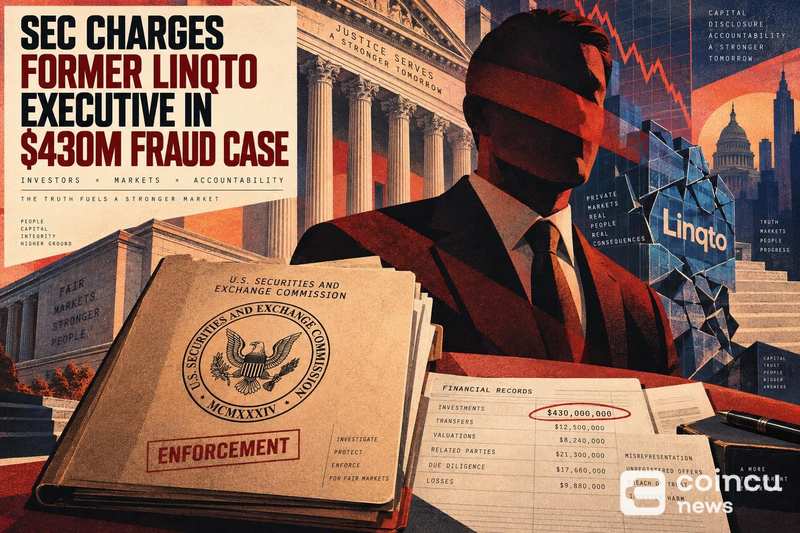
The U.S. Securities and Exchange Commission has filed charges against a former executive of Linqto, a private-market investment platform, alleging the individual orchestrated a fraud scheme totaling $430 million that targeted retail investors.
What the SEC Alleges in the $430 Million Linqto Fraud Case
The SEC's charge centers on an alleged $430 million fraud attributed to a former Linqto executive, per SEC enforcement records. As with all SEC enforcement actions at the charging stage, the allegations have not been adjudicated and the accused is presumed innocent unless and until a court finds otherwise. For related coverage, see Bitcoin Fog Case Cited in Roman Storm Tornado Cash Trial.
Linqto operates as a platform enabling retail participation in pre-IPO and private-equity securities, a market segment that has attracted heightened regulatory scrutiny as retail access to private placements has expanded. The SEC has not publicly confirmed a guilty verdict or settlement in this matter as of the time of writing.
Retail Investors Named as Alleged Victims
The SEC specifically identifies retail investors as the alleged targets of the scheme, a designation that carries particular regulatory weight. Retail investors, as defined under federal securities law, are individuals who lack the capital thresholds or institutional standing of accredited or qualified purchasers, and they receive heightened statutory protections precisely because of their relative vulnerability to fraud in complex financial products.
Allegations of retail-investor harm tend to draw more aggressive SEC posture, as seen in prior enforcement actions. The former Celsius CEO's settlement with the New York Attorney General over alleged harm to retail depositors illustrates how regulators have escalated responses when individual investors are the named victims of financial misconduct.
What an SEC Charge Means Procedurally
An SEC charge initiates a civil enforcement proceeding; it is not a criminal indictment and does not establish liability. The charged party retains the right to contest the allegations before an administrative law judge or in federal district court, depending on the venue the SEC selects, per SEC enforcement procedure guidelines. No penalties, disgorgement amounts, or settlement terms are confirmed in the available record at this stage.
Investors and observers should distinguish the charge from a final order. The SEC may later seek injunctive relief, monetary penalties, or an industry bar, but those outcomes remain conditional on litigation or settlement. Cases involving alleged fraud of this scale, such as the federal fraud charges brought against a former bank teller over crypto-linked transfers, illustrate that the procedural path from charge to resolution can span months or years.
Key Facts at a Glance
Regulator: U.S. Securities and Exchange Commission. Subject: A former executive of Linqto, identified in SEC enforcement records. Alleged amount: $430 million. Alleged victims: Retail investors. Status: Charge filed; no final adjudication confirmed as of publication.
FAQ: SEC, Linqto, and the Alleged $430 Million Fraud
The SEC alleges the former executive engaged in a fraud scheme totaling $430 million. The specific statutory counts have not been confirmed in the available public record beyond the regulator's initial filing.
How much money is alleged in the case?
The SEC's charge describes an alleged fraud of $430 million. That figure represents the claimed scope of the scheme as stated by the regulator; it is not a confirmed loss amount adjudicated by a court.
Who are the alleged victims?
The SEC identifies retail investors as the alleged affected group. No confirmed count of individual investors or per-investor loss figures is available in the current record.
Does an SEC charge mean the allegations are proven?
No. An SEC charge is a formal allegation initiating enforcement proceedings. The accused party has not been found liable by any court or administrative body, and all claims must be treated as unproven until the matter is resolved through litigation or settlement. Regulatory watchers following similar enforcement patterns, including the Bitcoin Fog case cited in the Roman Storm Tornado Cash trial, note that complex financial fraud charges frequently evolve substantially before any final finding.
What should investors in Linqto watch for next?
The next procedural milestone is the charged party's formal response to the SEC's complaint, followed by either a contested hearing or settlement discussions. Any injunctions, asset freezes, or disgorgement orders sought by the SEC would represent material developments for affected investors to monitor. Observers tracking retail-investor exposure to private-market platforms, including the outcome of similar cross-border enforcement actions targeting retail participants, should watch for any interim asset preservation orders from the court.
Disclaimer: This article is for informational purposes only and does not constitute financial or investment advice. Cryptocurrency and digital asset markets carry significant risk. Always do your own research before making decisions.
The post SEC Charges Former Linqto Executive in $430M Fraud Case was initially published on Coincu.