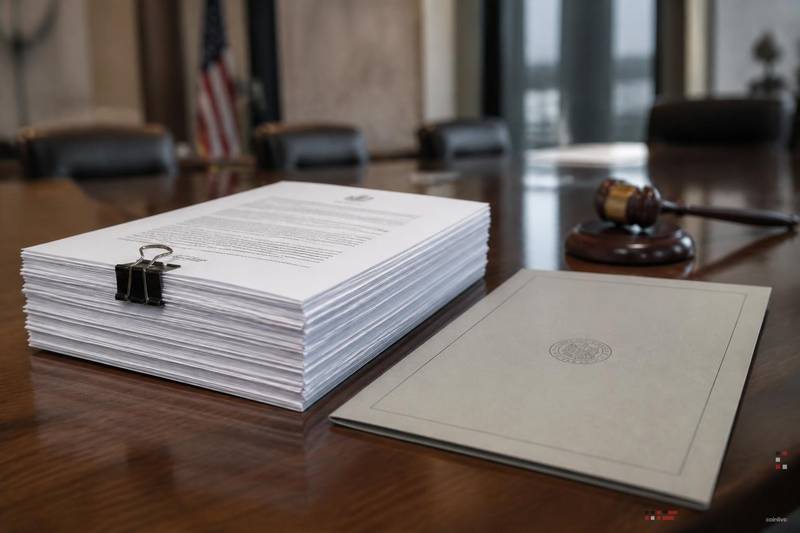
Chairman Paul Atkins framed the package as the mechanism to deliver President Trump’s stated goal of making the U.S. “the crypto capital of the world,” alongside five other crypto-specific ru
Chairman Paul Atkins framed the package as the mechanism to deliver President Trump’s stated goal of making the U.S. “the crypto capital of the world,” alongside five other crypto-specific rulemakings covering broker-dealers, exchanges, and tokenized securities.
Key Takeaways
- Flagship crypto offer-and-sale rule (RIN 3235-AN38) targeted for July 2026, this month.
- Creates registration exemptions and a safe harbor for token issuers, not a new registration regime.
- Six crypto RINs span capital raising, broker-dealer custody, exchange structure, and tokenized Treasuries.
- Rulemaking front-runs the CLARITY Act; final scope hinges on what Congress passes.
What the Agenda Actually Commits To
The agenda is a statement of intent with assigned regulatory identification numbers (RINs), not final rule text. Six entries address crypto directly. The flagship, listed as “Crypto Assets” under RIN 3235-AN38, sits at the Proposed Rule Stage and carries an “economically significant” designation, the label applied to rules with an expected annual economic impact of $100 million or more. That classification is the single most important detail on the list: it signals the SEC’s own economists expect this rule to materially reshape the U.S. digital asset market, and it triggers a heightened cost-benefit analysis requirement that shapes the final text.
The remaining five crypto entries are structural. RIN 3235-AN48 applies broker-dealer financial responsibility, customer-asset protection, and recordkeeping rules to firms holding crypto. RIN 3235-AN49 (Crypto Market Structure Amendments) governs how digital assets trade across exchanges and platforms, while RIN 3235-AN50 adapts the trade-through rule that dictates order-routing and best-execution mechanics. RIN 3235-AN53 sets a framework for trading tokenized U.S. government securities on alternative trading systems, the entry most relevant to the tokenized-Treasury market. RIN 3235-AN51 clarifies when a crypto market participant qualifies as a regulated dealer, though its crypto-specific applicability is less explicit in the agenda than the others.
Exemption, Not Registration
The structural novelty of Regulation Crypto is that it reduces regulatory obligations rather than adding them. Per the agenda, the proposal would establish temporary registration exemptions for developers first distributing crypto investment contracts, permit a capped amount of fundraising, and create a safe harbor for issuers stepping back from the managerial efforts that trigger securities classification under Howey.
That last clause is the load-bearing mechanism. The Howey test classifies an asset as a security when investors expect profit from the efforts of others. By building a safe harbor around issuers who demonstrably reduce their managerial role, the SEC is codifying a path for a token to start as a security and transition out of that status as its network decentralizes, the “sufficient decentralization” concept the agency has gestured at since 2018 but never formalized in a rule.
The proposal does not arrive from nothing. It builds directly on the SEC’s March 17, 2026 interpretive release, which established a five-part taxonomy sorting crypto assets into digital commodities, digital collectibles, digital tools, stablecoins, and digital securities. That interpretation told the market how existing law applies; Regulation Crypto is the first rulemaking that changes the obligations themselves.
2026 Regulatory Timeline
March 17, 2026: Foundational Interpretive Release
SEC establishes a five-part crypto taxonomy, clarifying Howey test application to digital assets.
June 18, 2026: SEC/CFTC Harmonization
Joint request for comment to align derivatives definitions and reduce regulatory gaps.
July 2026: Regulation Crypto Launch
Target date for the “Regulation Crypto” rulemaking (RIN 3235-AN38) to propose formal registration exemptions.
The Onshoring Thesis
The agenda’s crypto section is an explicit capital-competition play. Atkins tied it directly to bringing “more products onshore,” and the market-structure and tokenized-Treasury entries (AN49, AN53) target the infrastructure that would let regulated U.S. venues host tokenized securities and government debt, activity that has largely developed offshore or in regulatory grey zones. The consensus read is that this is a deregulatory tailwind for U.S.-based token issuers and exchanges. The structural reality is narrower: the agenda front-runs the CLARITY Act market-structure bill still moving through Congress, and Atkins has said the rulemaking would give the SEC a “head start” implementing that legislation.
READ MORE:
 Zcash Hits 80% Supply Milestone: What’s Next for ZEC?
 Execution Risks
Three risks temper the bullish read.
- Legislative dependency. The safe harbor’s durability depends on statute. An exemption created by rule can be narrowed or reversed by a future Commission; only the CLARITY Act would give it legislative permanence. If the bill stalls or passes in altered form, the rule may require rework, and issuers who relied on it face renewed uncertainty.
- Proposal, not law. Every RIN here is at the proposed or prerule stage. An economically significant rule requires a public comment period and a full cost-benefit analysis, a process that historically runs six to eighteen months from proposal to adoption. The July date is when the clock starts, not when compliance obligations exist.
- Judicial exposure. The March interpretation and any exemptive rule remain non-binding on federal courts. Howey stays controlling precedent, and private litigants can still argue a given token is a security regardless of the safe harbor. The rule reduces SEC enforcement risk; it does not eliminate civil litigation risk.
What to Monitor
The operative signal is the Notice of Proposed Rulemaking itself, expected this month. The specific parameters that will define the rule’s impact are the fundraising cap (the dollar ceiling on exempt raises), the duration of the temporary exemption, and the precise decentralization test that governs safe-harbor eligibility. Those three figures, absent from the agenda summary, will determine whether Regulation Crypto is a functional onshoring pathway or a narrow carve-out. The CLARITY Act’s progress in the Senate is the parallel track that determines whether any of it becomes permanent.
This article is for informational purposes only and does not constitute financial, investment, or legal advice. Regulatory proposals are subject to change through the rulemaking process. Always consult primary sources and qualified professionals.
The post SEC Targets July for First Major U.S. Crypto Rule appeared first on Coindoo.