An SEC tokenized-stock experiment has imposed a three-month trading pause after participants breached the program's volume cap for the second time. The halt affects trading activity within th
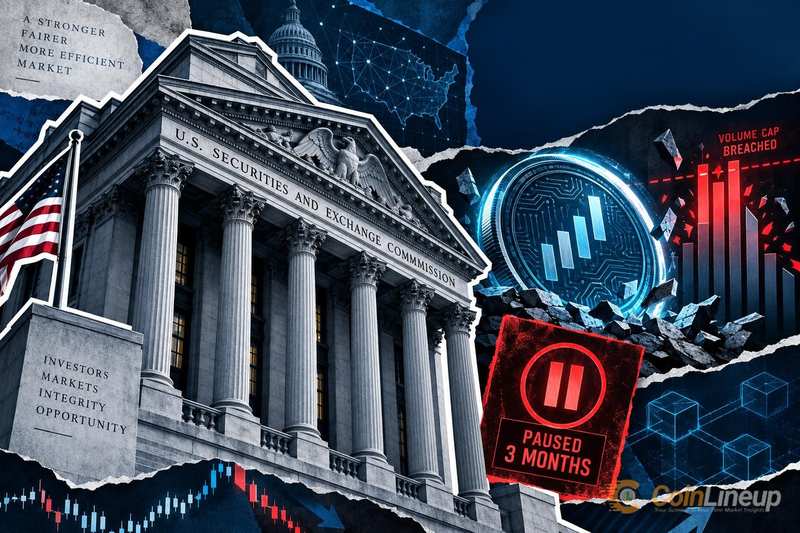
An SEC tokenized-stock experiment has imposed a three-month trading pause after participants breached the program's volume cap for the second time. The halt affects trading activity within the experimental arrangement and raises questions about whether the program's guardrails are set at the right level.
Key Takeaways
- Trading in the affected SEC tokenized-stock experiment is paused for three months.
- The pause was triggered by a second breach of the experiment's volume cap, a pre-set ceiling on how much trading can occur within a given period.
- The measure applies to this specific experimental arrangement, not to all tokenized securities or digital-asset markets broadly.
Why the SEC tokenized-stock experiment paused trading
A volume cap is a hard limit on how much trading activity a program allows before it automatically stops. Think of it like a circuit breaker on a fuse box: when too much current flows through, the switch trips to prevent damage. In this experiment's case, trading activity exceeded that limit a second time, triggering the pause. For related coverage, see SideSwap: Liquid Markets Reopen, L-BTC Redemptions Paused.
According to reporting by CryptoSlate, the structure of such tokenized-stock pilots can include exactly this kind of automatic enforcement mechanism, where a repeated cap breach results in a multi-month trading halt rather than a simple warning. The SEC's experimental framework appears designed to slow activity down rather than shut the program permanently when limits are crossed. For related coverage, see Solana Hits 2026 High as $18M Shorts Liquidated.
This kind of regulatory caution is visible across the SEC's broader approach to digital assets in 2026. The agency has also moved carefully in areas like granting conditional federal trust-bank approvals to crypto firms, building in conditions and limits rather than issuing blanket clearances. For related coverage, see Québec advierte que Pump.fun no está autorizado a captar inversores.
What the three-month halt means for tokenized-stock trading
For anyone holding or trading within the affected experiment, the practical effect is straightforward: no new trades can be executed for the duration of the pause. Tokenized stocks are digital tokens that represent ownership in real-world company shares and trade on blockchain networks rather than traditional exchanges.
The more consequential question is what happens when the pause ends. Participants and observers will watch whether the SEC adjusts the volume cap upward, tightens it further, or leaves the rules unchanged before allowing trading to resume. The answer will signal how much appetite the agency has for scaling the experiment.
The pause also arrives at a moment when Congress is still working through the rules that will govern crypto and digital-asset products more broadly. Legislation like the CLARITY Act has faced its own obstacles in the Senate, meaning the regulatory framework around tokenized securities remains unsettled at the legislative level as well.
For a newcomer trying to understand the stakes: this experiment is essentially a supervised test of whether stock ownership can be represented and traded as a token on a blockchain. The SEC built in volume limits precisely to keep the test small and controllable. A second breach suggests the experiment is generating more activity than the agency planned for, which is why trading is now on hold while regulators assess next steps.
Official updates on the experiment's status are expected to appear on the SEC's 2026 press release page as the review period progresses.
Disclaimer: This article is for informational purposes only and does not constitute financial or investment advice. Cryptocurrency and digital asset markets carry significant risk. Always do your own research before making decisions.
Read original article on coinlineup.com