Securitize has taken a serious step toward the public markets after U.S. regulators declared its merger registration statement effective, clearing the way for shareholders of Cantor Equity Pa
Securitize has taken a serious step toward the public markets after U.S. regulators declared its merger registration statement effective, clearing the way for shareholders of Cantor Equity Partners II to vote on the deal. The proposed transaction would bring one of the best-known names in real world asset tokenization to the New York Stock Exchange under the ticker SECZ, giving the fast-growing tokenized finance sector a more visible seat inside traditional capital markets.
Real World Asset Tokenization Gets a Public Market Test
The planned listing matters because real world asset tokenization is moving from a crypto-native theme into a regulated finance discussion. For years, tokenization was often treated as a future promise. Now the sector is being tested through public filings, shareholder votes, institutional products, and revenue numbers.
The transaction still needs approval from Cantor Equity Partners II shareholders, with a special meeting set for June 29, 2026. If approved and closed, the combined company is expected to trade on the NYSE as SECZ. That would give public investors exposure to a business built around placing traditional assets, such as funds and securities, on blockchain-based rails.
What the SEC Clearance Actually Means
The SEC declaring the Form S-4 effective does not mean the agency has endorsed the deal or the company. It means the registration statement has cleared a key disclosure review stage, allowing the shareholder vote process to move forward. In plain terms, the paperwork has reached the point where investors can formally decide whether the merger should proceed.
That distinction is important as crypto markets often overread regulatory steps, especially when a known blockchain company is involved. This is not a final listing by itself, and it is not a blank check for the wider industry. Still, it removes one of the main procedural hurdles standing between Securitize and a public market debut.
Why Investors Are Watching Securitize
Securitize sits in a part of crypto that has held up better than many speculative trends because it connects blockchain infrastructure with real financial products. The company works across tokenized funds, asset servicing, investor management, and compliant digital securities.
Its first-quarter numbers also give the market something concrete to measure. Securitize reported $19.5 million in Q1 2026 revenue, up 39% from the same period a year earlier. That growth gives investors a clearer view of demand, although it does not remove execution risk. Public markets will not judge real-world asset tokenization only by hype. They will watch revenue quality, margins, client retention, and whether assets on-chain turn into durable fees.
Tokenized Assets Are Growing, But Liquidity Still Matters
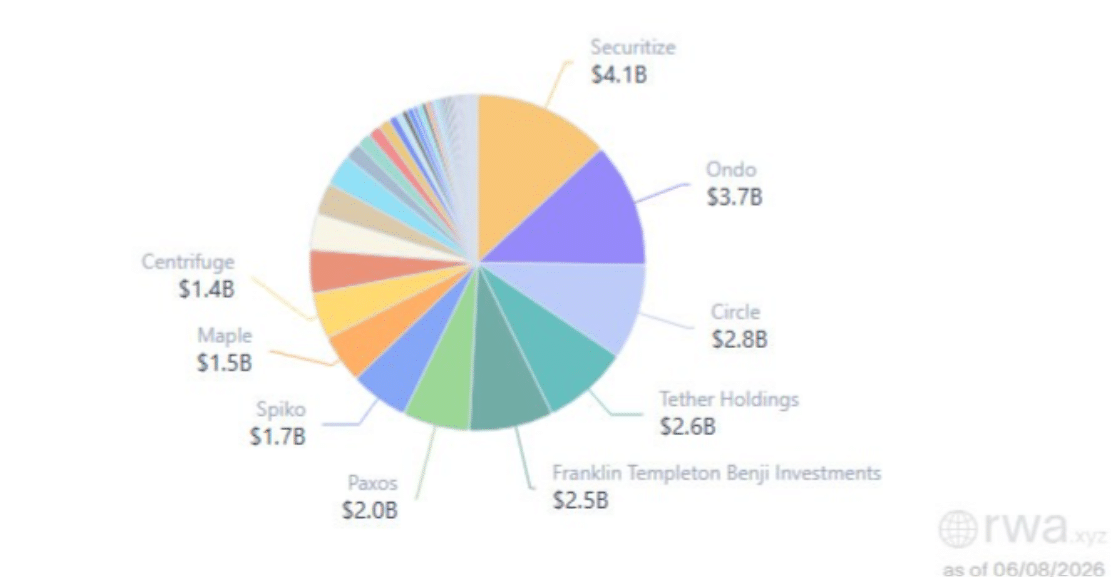
The broader tokenized asset market has expanded quickly as current market dashboards show tens of billions of dollars in tokenized real-world assets, excluding stablecoins, while stablecoins remain much larger. This gap says a lot. Stablecoins have already found product-market fit for payments, trading, and settlement. Tokenized funds, Treasuries, private credit, and other securities are still building their user base.
That does not make the sector weak. It makes it early. Real world asset tokenization can improve settlement speed, transparency, and access, but investors should not confuse tokenized value with active liquidity. A token can represent a real asset and still trade lightly. That is why on-chain asset value, holder count, transfer activity, and redemption structure all matter.
The Wall Street Angle
Securitize’s planned listing lands at a time when large financial firms are giving tokenization more attention. The appeal is simple. Traditional markets still rely on slow settlement cycles, layers of intermediaries, and operating hours that feel dated next to digital networks. Tokenization offers a way to modernize parts of that system without throwing away regulation.
That is where real world asset tokenization has an edge over many crypto sectors. It does not need to sell a fantasy of replacing finance overnight. It can focus on making fund issuance, transfers, compliance checks, and settlement more efficient. That is a quieter pitch, but sometimes the quieter pitch lasts longer.
Key Indicators to Watch Next
The next key indicator is the June 29 shareholder vote. Approval would move the deal closer to completion, while delays or weak support could cool near-term momentum. Investors should also watch redemption levels, because SPAC deals can lose cash if many shareholders redeem before closing.
Revenue growth is another major signal. Securitize needs to show that tokenized assets can produce repeatable income, not just one-off announcements. Assets under management also matter, but fee conversion matters more. A platform with large headline assets and thin monetization will face harder questions once it trades publicly.
Market conditions will also play a role. If crypto sentiment improves, tokenization firms may receive more attention. If risk appetite fades, investors may demand cleaner earnings and stronger proof before paying a premium.
Conclusion
Securitize’s SEC clearance is not the finish line, but it is a meaningful step for real world asset tokenization. The company is moving closer to a public listing at a time when institutions are looking for practical blockchain use cases rather than another round of empty slogans. If the shareholder vote passes and the deal closes, SECZ could become one of the clearest public market gauges for investor appetite in tokenized finance.
The bigger question is whether real world asset tokenization can grow from promising infrastructure into a steady, fee-generating financial business. Securitize now has a chance to prove that case in front of public investors.
Frequently Asked Questions
What happened with Securitize?
Securitize’s merger registration statement was declared effective by the SEC, allowing shareholders of Cantor Equity Partners II to vote on the proposed business combination.
When is the shareholder vote?
The shareholder vote is scheduled for June 29, 2026, and the deal still needs approval before the planned NYSE listing can move forward.
What ticker will the combined company use?
If the transaction closes as planned, the combined company is expected to list on the New York Stock Exchange under the ticker SECZ.
Why does this matter for crypto?
It matters because real world asset tokenization is one of the main areas where blockchain technology is being linked with regulated financial markets.
Glossary of Key Terms
Form S-4: A registration statement used in merger and acquisition transactions involving securities.
SPAC: A special purpose acquisition company created to take another company public through a merger.
Tokenization: The process of representing an asset on a blockchain through a digital token.
Real-World Assets: Traditional assets such as funds, bonds, Treasuries, private credit, or real estate represented on-chain.
AUM: Assets under management, which measures the value of assets a company or platform oversees.
Sources
prnewswire
SEC
Disclaimer: This article is for informational purposes only and should not be treated as financial, investment, legal, or tax advice. Readers should conduct independent research and consult qualified professionals before making any investment decision.