Senators Push Treasury for Clearer State Rules A bipartisan group of U.S. senators, led by Senator Cynthia Lummis, has written to Treasury Secretary Scott Bessent urging the department to cla
Senators Push Treasury for Clearer State Rules
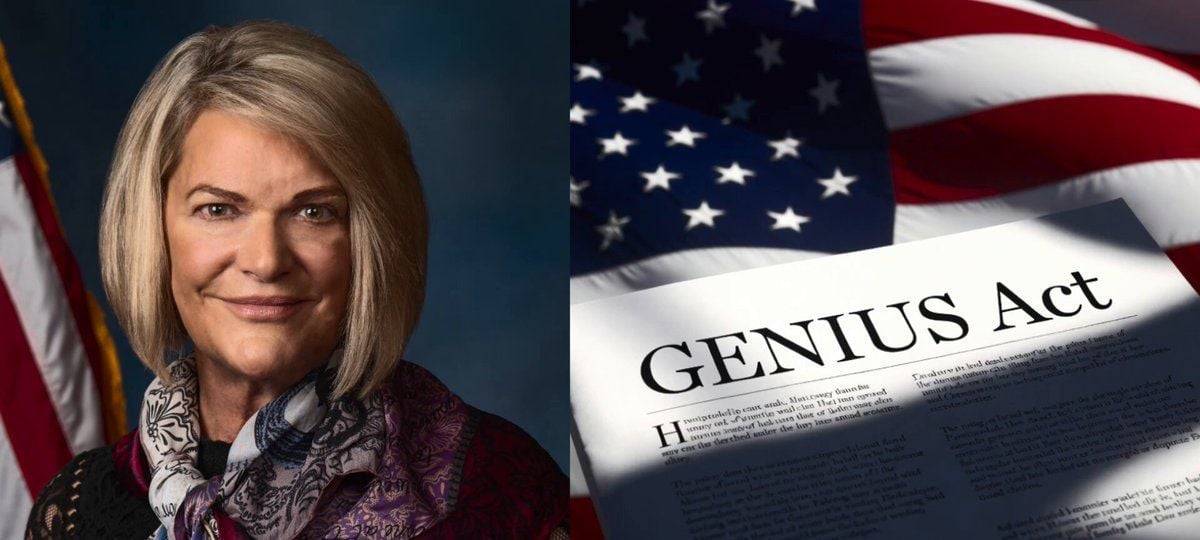
A bipartisan group of U.S. senators, led by Senator Cynthia Lummis, has written to Treasury Secretary Scott Bessent urging the department to clarify how states can qualify to regulate stablecoin issuers under the GENIUS Act. The letter, sent on Tuesday, warns that the Treasury's current implementation proposals leave state regulators without a defined path forward.
The Treasury's proposed rulemaking did not address a timeline and standards for stablecoin issuers to be regulated by states, creating a lack of clarity that "creates uncertainty for States," the senators said. The lawmakers argue that without clear procedural guidance, the state-level oversight framework envisioned by Congress risks being sidelined entirely.
Republican Senators Bill Hagerty, Kevin Cramer, and Pete Ricketts, along with Democratic Senators Kirsten Gillibrand, Angela Alsobrooks, and Catherine Cortez Masto, also signed the letter. The cross-party coalition underscores the broad legislative interest in preserving a role for state banking agencies in overseeing the emerging stablecoin market.
What the GENIUS Act Actually Allows
Under the GENIUS Act, stablecoins with a market value of $10 billion or less may be regulated by state authorities if a state adopts laws largely similar to the federal standard.Based on market data, only three stablecoins currently exceed that threshold: Tether, USDC, and USDS, meaning most issuers could seek state supervision.
The Treasury solicited public input in April on how to apply the GENIUS Act's state-level provisions, with public comments closing on June 2. The department is expected to draft a final rule for publication in the Federal Register.
The senators argued that the certification process must accommodate the realities of state legislative calendars. "States must be able to develop and seek certification of stablecoin regulatory regimes as demand for these charters materializes and as legislative schedules permit," the senators wrote, adding that "state legislative processes vary significantly, and in some cases operate on biennial cycles" and that a flexible, ongoing certification framework is necessary to ensure states can participate meaningfully over time.
According to the letter, several stakeholders fear that without procedural clarity, the certification process could be interpreted as a limited-time opportunity that effectively prevents future state participation. The senators' position is that the Treasury must build a flexible, ongoing framework rather than a rigid, time-limited window that could lock out states still aligning their laws with federal standards.
President Donald Trump signed the GENIUS Act into law in July 2025, establishing a federal framework for stablecoins and a conditional pathway for state supervision. How the Treasury resolves the state certification question will shape whether that dual oversight structure becomes a practical reality or remains largely theoretical.
Sources:CoinDesk: U.S. Senators Urge Treasury Not to Leave States Out of GENIUS Act Stablecoin ProcessThe Block: Bipartisan Senators Push Treasury to Uphold States' Authorities Under the GENIUS ActCrypto Times: Bipartisan Senators Press Treasury to Clarify State Stablecoin Oversight