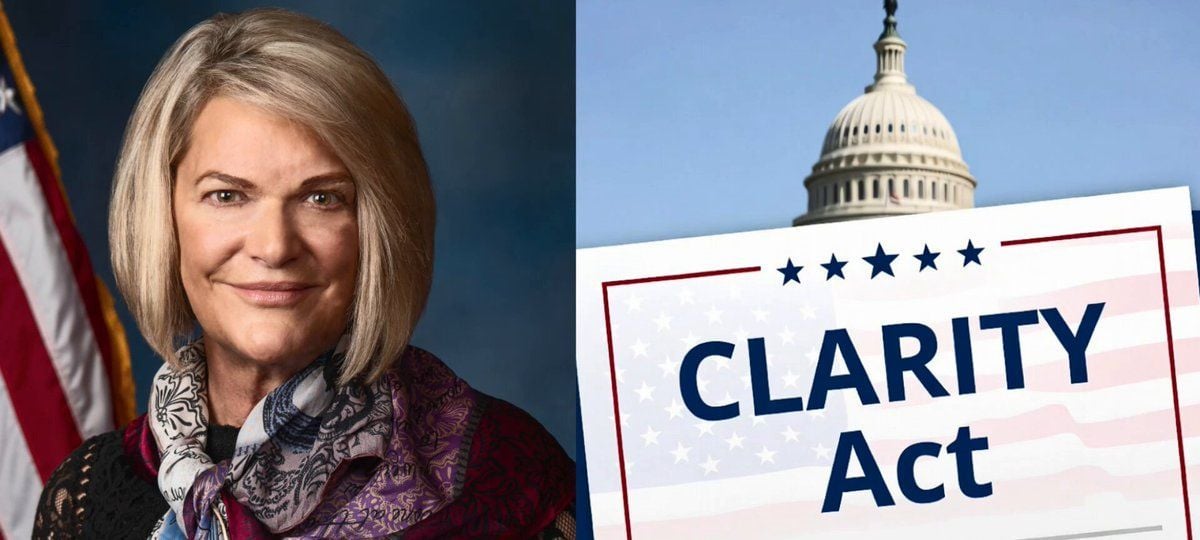
Sen. Lummis Says CLARITY Act Ends Crypto Regulatory Chaos
Lummis Makes the Case for Regulatory Clarity Senator Cynthia Lummis (@SenLummis) is pressing lawmakers to pass the CLARITY Act, arguing the bill would put an end to years of regulatory confus
A
AnonymousCryptoCompass newsroom
June 15, 2026
2 min read
NEWS
CryptoCompass editorial visual for policy coverage.
Lummis Makes the Case for Regulatory Clarity
Senator Cynthia Lummis (@SenLummis) is pressing lawmakers to pass the CLARITY Act, arguing the bill would put an end to years of regulatory confusion that has weighed on the digital asset industry. Speaking publicly on the legislation, she said the bill would establish firm boundaries between the Securities and Exchange Commission and the Commodity Futures Trading Commission, replacing a system she described as driven by enforcement rather than clear rules.
The comments reflect a broader frustration with the status quo. The SEC and CFTC have often treated the same asset differently, leaving companies to guess which rulebook applied and litigate the answer years later. Lummis has argued that defined rules are necessary to protect Americans who want to participate in the digital economy, and that the current uncertainty puts domestic firms at a disadvantage.
Where the Bill Stands
The CLARITY Act seeks to provide structure to the regulation of digital assets, and importantly aims to resolve regulatory friction between the SEC and the CFTC by defining the boundaries of each agency's jurisdiction. Under the framework, the CLARITY Act would grant the CFTC exclusive jurisdiction over digital commodity spot markets, while maintaining SEC jurisdiction over investment contract assets.
Senate Banking Subcommittee on Digital Assets Chair Cynthia Lummis celebrated the bipartisan passage of the Digital Asset Market Structure Clarity Act of 2025 out of the Banking Committee by a 15 to 9 vote. She is now urgently pushing for a full Senate floor vote on the bill.
Without regulatory clarity, digital asset firms may shift operations to places like Dubai or Singapore, the senator has warned, adding that the consumer protections being built into the US framework go further than those in competing jurisdictions. A full Senate vote now hinges on three unresolved fights: stablecoin yield, DeFi oversight, and an ethics provision aimed at officials profiting from crypto.
The debate comes at a pivotal moment for US digital asset policy. The legislation reflects growing bipartisan momentum, with outsized support from the Trump administration for comprehensive digital asset legislation and a recognition that US competitiveness is only possible with a tailored approach to crypto market regulation.
Key Highlights HYPE surged to an all-time high of $88, registering gains exceeding 51% over the past 30 days An unidentified large holder has amassed 2.9 million HYPE tokens valued at more th
TLDR Bitcoin experienced a decline exceeding 2% following robust U.S. employment figures that amplified Federal Reserve rate hike speculation BTC retreated from $81,300 to reach a session low
Key Highlights Elon Musk has verified that Tesla’s Cybercab will allow direct connections for PlayStation and Xbox gaming consoles The autonomous vehicle includes a massive 22-inch touchscree