During a Senate Banking Committee hearing focused on U.S. affordability, Cody Carbone, CEO of the cryptocurrency advocacy group The Digital Chamber, argued that digital assets could reduce co
During a Senate Banking Committee hearing focused on U.S. affordability, Cody Carbone, CEO of the cryptocurrency advocacy group The Digital Chamber, argued that digital assets could reduce costs in payments and make it easier to own and move value. Carbone’s testimony, however, drew limited follow-up from most lawmakers, with only a small number of senators engaging directly on specific questions tied to stablecoins and foreign remittances.
The exchange came as Congress continues to weigh the Digital Asset Market Clarity (CLARITY) Act, a proposal advanced by the committee earlier this year. While the bill is widely expected to reach a broader Senate vote soon, additional political and regulatory concerns—particularly around ethics requirements and cross-sector regulatory treatment—are creating uncertainty around timing and final scope.
Key takeaways
- Cody Carbone used the hearing to argue that digital assets could improve affordability through faster, cheaper transactions and reduced frictions in asset ownership and transfers.
- Most lawmakers did not question him on digital assets; Senators Tim Banks and John Kennedy were among the only members to engage directly.
- Carbone linked his affordability argument to the Senate’s progress on the CLARITY Act, which committee leaders moved forward in May.
- Beyond ethics debates, external industry groups are pressing for clarifications that the bill would not expand the Commodity Futures Trading Commission’s reach over certain prediction-market activities.
Testimony on affordability and pressure on payment rails
In the Tuesday hearing titled The Affordability Agenda, Carbone presented digital assets as a potential competitive counterweight to incumbent payment systems. He argued that the industry could support affordability outcomes by enabling faster and less costly settlement, applying “competitive pressure” on existing rails, and lowering barriers to purchasing and transferring digital assets.
For institutional stakeholders, the key compliance-relevant aspect of this framing is not the affordability concept itself, but the policy implication that lawmakers may increasingly view digital-asset infrastructure as part of the broader U.S. financial-services toolkit. If Congress advances that approach, firms may need to anticipate tighter legislative integration between digital assets and existing regulatory expectations covering consumer protection, disclosures, and market integrity.
Carbone’s reception on the Senate floor also highlighted the uneven level of legislative attention to crypto-specific implementation details in general policy hearings. Other than questions focused on stablecoins and remittances, senators largely did not interrogate the evidence or compliance mechanisms underlying Carbone’s claims.
Limited engagement from lawmakers, with stablecoin and skepticism
Senators Tim Banks and John Kennedy provided the most direct responses during the hearing. Banks asked Carbone about the cost of foreign remittances relative to options involving U.S. dollar–pegged stablecoins, suggesting an interest in how stablecoin-mediated transfers might affect end-to-end costs for cross-border payments.
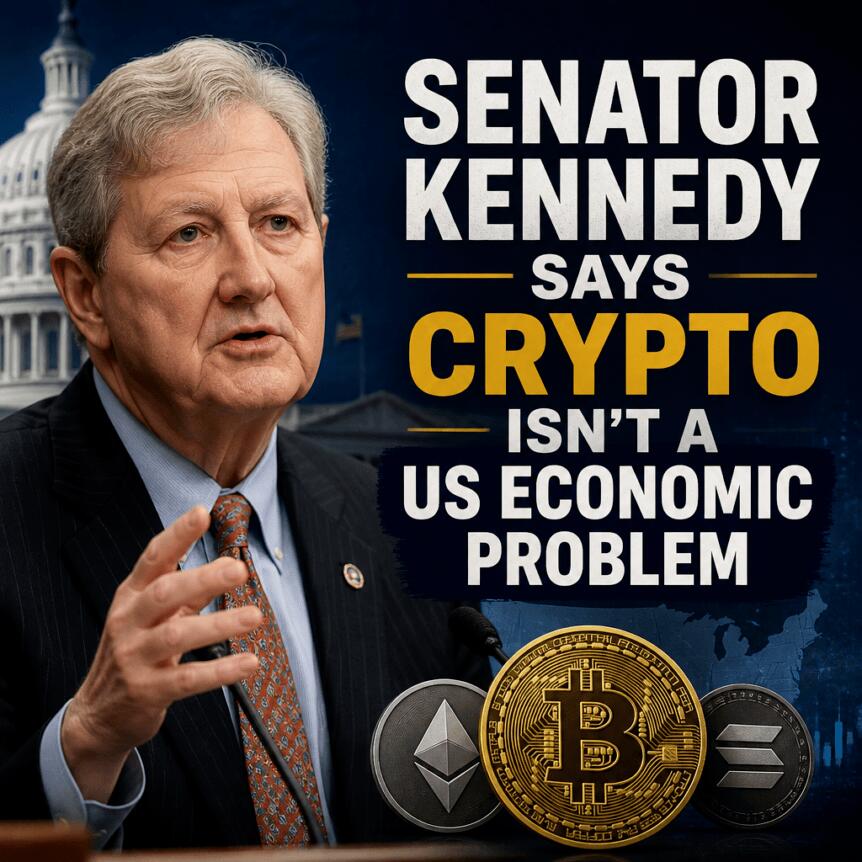
Kennedy’s remarks were more dismissive. He told Carbone, “Mr. Carbone, you seem to be here to promote cryptocurrency,” adding that he did not believe digital assets were the core driver of the economic issues the hearing addressed.
This split underscores a continuing challenge for the industry: affordability narratives may resonate rhetorically, but legislative scrutiny may still hinge on whether digital-asset mechanisms deliver measurable consumer and financial-stability benefits in practice—and on how regulators would oversee those mechanisms.
CLARITY Act advances, but ethics and scope disputes persist
Carbone’s testimony centered on the CLARITY Act, which the Senate Banking Committee advanced in May. Committee momentum is important because it signals that at least one major congressional venue views clearer digital-asset market rules as a priority. Still, passage is not guaranteed.
According to reporting on the bill’s committee movement, lawmakers are calling for additional ethics provisions. Such provisions can affect how the legislation is drafted and implemented, including how conflicts of interest, industry influence, and governance standards are addressed in any framework that authorizes or regulates market participants.
Meanwhile, timing remains fluid. Some lawmakers have expected the Senate to consider the bill before the chamber breaks for an August recess, but as of Tuesday, there was no scheduled floor vote.
For compliance teams and financial institutions, this phase matters because it can determine whether firms will need to adapt operational and governance policies in advance of enactment or only after final language is finalized. Ethics-related amendments can also influence how regulators interpret standards and enforce obligations once the statute is in effect.
Industry pushback on prediction markets and CFTC jurisdiction
Separate from ethics disputes, gambling industry groups have reportedly urged the Senate to clarify that the CLARITY Act would not allow the CFTC to pursue sports betting oversight in prediction markets. The concern stems from regulator statements regarding “exclusive jurisdiction” over certain platforms, including examples cited in public discussion such as Kalshi and Polymarket.
The underlying policy issue is jurisdictional boundaries—how a new legislative framework might interact with the existing Commodity Exchange Act and the CFTC’s authority. For firms operating in or adjacent to prediction markets, the uncertainty can have concrete compliance consequences: categorization of products, registration expectations, marketing restrictions, and enforcement risk can all shift depending on how Congress defines regulatory responsibility.
These disputes also illustrate the cross-border and cross-regulatory complexity of crypto-adjacent markets. A bill intended to address digital-asset market structure can inadvertently affect adjacent sectors—particularly where digital tokens, derivatives, or exchange-like trading are involved—requiring careful drafting to avoid unintentionally broad regulatory coverage.
Cointelegraph previously reported that gambling organizations sought clarity on this point as the CLARITY Act advanced, aligning with broader concerns that market structure legislation can produce second-order effects beyond digital-asset trading itself.
Closing perspective: a bill that could reshape oversight priorities
Carbone’s appearance at the affordability hearing points to a legislative strategy that connects digital assets to broader financial policy goals, but the path for the CLARITY Act remains unsettled. The next developments to watch are whether senators agree on ethics amendments and whether the bill’s final text resolves prediction-market jurisdiction concerns without expanding enforcement authority in ways that stakeholders view as unanticipated.
This article was originally published as Senator Kennedy Says Crypto Isn’t a US Economic Problem on Crypto Breaking News – your trusted source for crypto news, Bitcoin news, and blockchain updates.