If you hold your Shiba Inu balance on Shibarium and have seen nothing but error messages in your wallet over the past few days, you have not lost any funds. The Shibarium team replaced the ne
If you hold your Shiba Inu balance on Shibarium and have seen nothing but error messages in your wallet over the past few days, you have not lost any funds. The Shibarium team replaced the network's public access points entirely in September 2026. The old public RPC endpoints are permanently switched off, a new set of nodes has taken their place, and the block explorer is currently reindexing the chain. Anyone who does not update their wallet simply sees nothing on Shibarium any more.
This article sorts out what really happened between September 12 and September 20, which network details apply now, why transactions can be missing from the explorer, and what waiting time to plan for if you want to bring BONE back to Ethereum over the bridge. The SHIB price plays the smaller part in this: on Tuesday morning SHIB was quoted on Kraken at $0.00000565 and €0.00000498, down 0.44 percent over 24 hours, with a daily low of $0.0000055010 and a daily high of $0.0000057600. The infrastructure beneath the token is moving considerably more than its price right now.
What is an RPC endpoint, and why does your wallet depend on it?
RPC stands for remote procedure call. An RPC endpoint is the address of a server your wallet talks to in order to read balances and send transactions to the network. Your coins do not sit on that server but in the blockchain; the endpoint is only the window your wallet looks through. Remove the window and the wallet shows zero, even though nothing about the balance has changed.
That is exactly what has happened. Shibarium is a self-contained layer 2 chain with its own set of nodes, and that set of nodes was replaced. The official network details at docs.shib.io today give rpc.shibarium.shib.io as the main endpoint. Anyone still holding one of the old addresses in MetaMask or another wallet gets no answer at all.
The switch in September 2026: three dates worth knowing
The rebuild ran in stages, and it affected more than the endpoints.
- September 12: shib.io, ShibaSwap and the documentation at docs.shib.io moved to Cloudflare, including IPv6 support. That is purely an infrastructure measure and has nothing to do with your balances, but it explains why individual pages were reachable differently for a time.
- September 15: the full peer rotation across the two layers, Bor and Heimdall, was completed. For operators of their own nodes that meant loading new static peer files or being left without a connection. Nodes that kept the old lists reported a peer count of zero, according to Coingape's reporting.
- September 19: developer Kaal Dhairya confirmed that the chain reorganisation had been resolved. Community operator Mazrael passed the message on with the words: "Kaal says reorg is solved. The remaining step is for DRPC to complete the same transition in the new environment." crypto.news quotes that passage from the September 19 post.
A reorganisation, reorg for short, is a state in which the network discards an already distributed chain of blocks and replaces it with another. Transactions that looked confirmed slip back into pending as a result. For holders that is unpleasant, but it is neither theft nor a fault in your wallet.
The last step is still open. The provider dRPC has yet to complete its move into the new environment before wallet connections run fully stable again. There is no public target date for that so far, and the Shibarium documentation names none either.
Chain ID 109, BONE and Shibariumscan: the network details in plain terms
If you are adding or correcting the network in your wallet, you need four details. The chain ID is 109, the network ID is 109 as well. The native currency you pay fees with on Shibarium is BONE, not SHIB. The block explorer is Shibariumscan at shibariumscan.io. The RPC endpoint is the address from the official documentation.
The point about BONE is regularly underestimated. Anyone holding SHIB on Shibarium without BONE in the same account can move nothing: every transaction needs gas, and gas on this chain is paid in BONE. Anyone who finds after the switch that they hold a small SHIB balance and no BONE has to obtain gas first before they can reallocate anything at all.
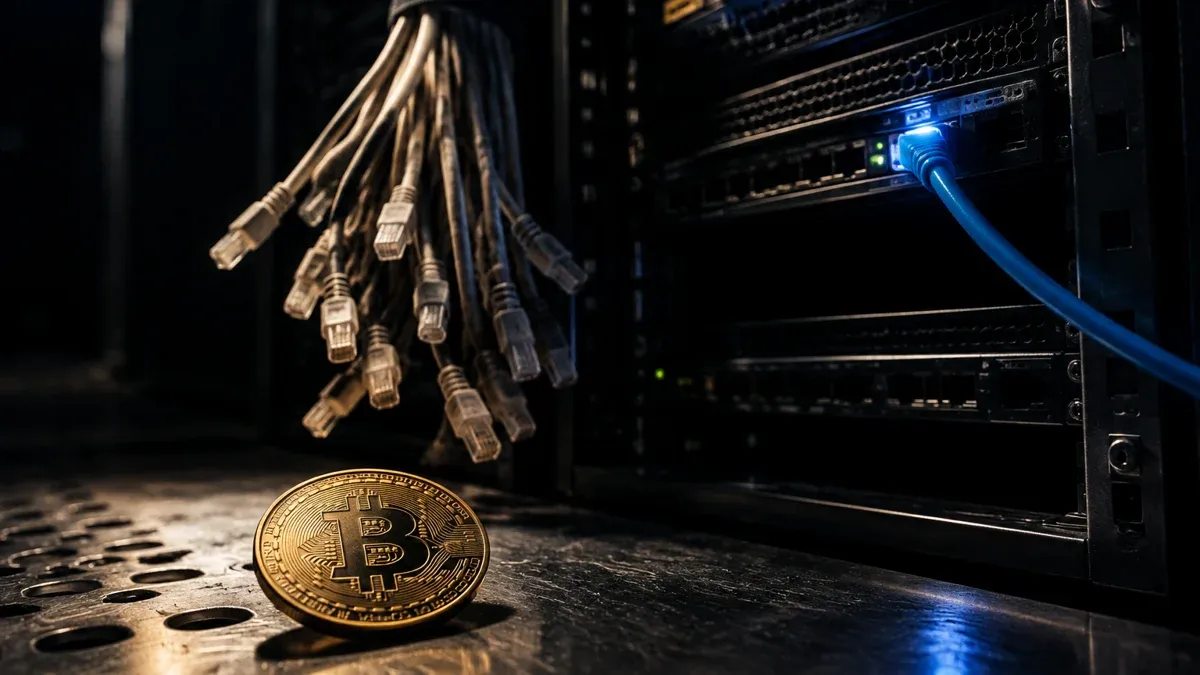
The old public access nodes are switched off and a new set has taken their place. For the wallet that changes the address, not the balance.
Why Shibariumscan is swallowing transactions right now
As of September 20, the block explorer was reindexing around 53 percent of blocks. An explorer is a database that rebuilds the chain so that people can search it. For as long as that rebuild is running, transaction counters and address counters are incomplete. A transfer missing from the explorer can still be in the chain.
What matters is how that percentage is read: it measures the progress of the explorer database, not the health of Shibarium. Anyone reading the 53 percent as "the network is only half restored" is reading it wrong. The chain is producing blocks; the catalogue of them is still being built.
In practice that means: when in doubt, verify a transfer by the transaction ID in your wallet and not only by the explorer view. And hold off on the conclusion that "my money is gone" until the rebuild is through.
Seven days of lock-up: the BONE withdrawal over the bridge
Anyone bringing BONE from Shibarium back to Ethereum goes over the Plasma bridge. Since the security measures introduced after the bridge incident in September 2025, every BONE Plasma withdrawal carries a binding lock-up period of seven days. That period is not a technical backlog but deliberate: during this challenge window, operators and security teams can still stop suspicious activity.
For you as a holder that has two sober consequences. First, the bridge is not an emergency exit. If you want to react to a market move, a withdrawal that takes a week is no help. Second, once the period expires you need a second operation to collect the balance, and that operation costs fees on Ethereum. Add up the cost of both steps before you send a small amount on the journey at all.
For context: Shib Daily reported in May 2024 that a bridge improvement had temporarily pushed the waiting time for BONE down to around 45 minutes. That reduction no longer applies; the security architecture introduced after the incident has superseded it. Repayment to affected users runs through the SOU system launched in February 2026 and, on the reporting available, is not yet complete.
Self-custody, exchange or bridge: where your SHIB sits most quietly in this phase
In a rebuild phase the dullest option is usually the best. SHIB on Ethereum in your own wallet is not affected by the Shibarium switch at all, because the ERC-20 token sits on the main chain and has its own endpoints there. Only those who bridged to Shibarium depend on the new set of nodes.
If you were planning to move your holdings out of exchange custody into self-custody anyway, a hardware device is the route with the smallest attack surface, because the private key never leaves the device. Which models are regularly available in Germany and how they differ is set out in the hardware wallet comparison. One thing holds in any case: recovery words belong on paper or metal, never in a photo and never in cloud storage.
Anyone staying with an exchange, by contrast, does not have to follow the switch themselves. The exchange runs its own nodes and has probably completed the change already. MEXC, for one, confirmed according to the reporting that its own node had already migrated. The price of that convenience is well known: you hold a claim against a company, not a key.
Seven days of challenge period on the BONE withdrawal: the bridge is deliberately built slow, not broken.
Holding period and bridge: why a wrap restarts your one-year clock
One point German investors regularly overlook with bridges is the tax deadline. For crypto assets held privately, the one-year period of Section 23 of the Income Tax Act still applies: after more than twelve months of holding, a disposal gain remains tax-free. The federal cabinet's draft for an income tax reform act for 2027, dated September 2, 2026, leaves crypto assets out, so the period stands for now. The assessment of that is set out in the piece on the crypto holding period staying in place.
The catch lies in the swap. The German finance ministry's letter of March 6, 2025, reference IV C 1 - S 2256/00042/064/043, records in margin number 55 that the periods under Section 23(1) sentence 1 number 2 of the Income Tax Act begin anew after every swap. Anyone swapping a coin for a wrapped version is, on that reading, swapping one asset for another. Whether a bridging operation falls under that in an individual case depends on the specific technical arrangement and belongs in front of a tax adviser, not in a rule of thumb.
What you can do yourself is secure the evidence: export and keep the timestamps, transaction IDs and values of every bridging operation. Anyone reconstructing that in March of the following year is searching for data in an explorer that may well be reindexing again.
How to spot a fake Shibarium endpoint
Every network switch is an invitation to fraudsters. The pattern is always the same: "official new RPC addresses" appear in forums, under posts and in direct messages, which in truth point to an attacker's server. A manipulated endpoint can show you false balances and push you towards a signature that releases your holdings.
Three features help. First, you take the network details exclusively from the official documentation, never from a reply on a social network. Second, the chain ID has to be 109; if it differs, it is not Shibarium. Third, no reputable network operator asks for your recovery words, ever, on any pretext and in no support channel.
If a wallet asks you after the switch for a signature you did not trigger yourself, abort. A signature is not a confirmation but an authorisation.
Burn balance and price situation: the backdrop to all of this
Alongside the rebuild, SHIB burning has been weak of late. On Shibburn data picked up by Finbold and KuCoin, the burn rate fell 91.31 percent on September 28, from 3,887,908 SHIB to 338,050 SHIB within 24 hours. In total that puts around 410.8 trillion SHIB out of circulation, roughly 41.08 percent of total supply.
That figure sounds more monumental than its effect. The bulk of that amount was already destroyed in 2021 in a single operation; what is burned daily since then moves in the range of millions of tokens, and therefore in the per-mille range of the float. Anyone reading the daily burn rate as a price driver is overrating it. More interesting is the connection with Shibarium itself: part of the burning is fed by chain fees, and a chain being rebuilt generates fewer fees.
Also unresolved is the fault in validator staking, which according to the status page has been open since April 17, 2026. The team gives no completion date there. Anyone who had counted on staking income on Shibarium is better off putting that item at zero for now.
Shibarium switch: the key points for your decision
Three steps put the situation in order without any need to reallocate in haste.
- Correct the network details before you send anything. Enter the endpoint from the official documentation, check chain ID 109 and keep a little BONE ready as gas. If you hold SHIB only on Ethereum anyway, this step does not concern you. Where to obtain SHIB and BONE in Germany under the European MiCA rulebook is shown in the overview of regulated crypto exchanges.
- Decide on custody rather than postponing it. Self-custody means your own key and your own responsibility; exchange custody means convenience against counterparty risk. Which providers are available in Germany and where their fees sit is set out in the comparison of crypto exchanges.
- Secure the records while the explorer still shows them. Export the transaction data and values of your bridging operations and file them. Tools that record this continuously can be found among the tax tools and portfolio trackers.
The switch is maintenance work, not an emergency. The mistake that costs money in phases like this is rarely waiting. It is the hasty reaction to a wallet that is merely looking through a closed window.
(As of September 29, 2026. This article is not investment advice. Prices and fee structures change; check the terms with the provider before you buy.)
