Shinhan Asset Management has signed a four-party agreement to test a Korean won tokenized fund on Solana, an early-stage pilot that puts one of South Korea's asset managers behind an on-chain
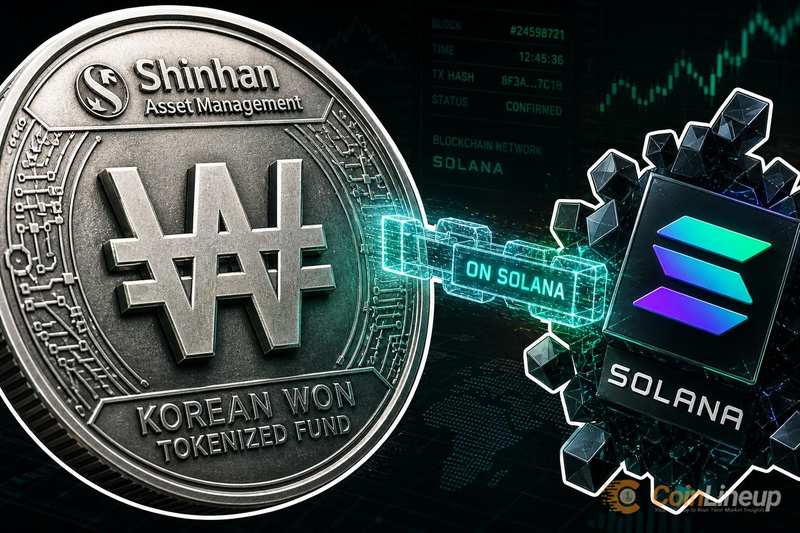
Shinhan Asset Management has signed a four-party agreement to test a Korean won tokenized fund on Solana, an early-stage pilot that puts one of South Korea's asset managers behind an on-chain fund experiment rather than a live commercial product.
What the four-party agreement is designed to test
The arrangement is a test, not a full commercial launch. It brings together four parties in a coordinated pilot centered on a single product: a Korean won denominated tokenized fund, according to Solana's announcement of the agreement. For related coverage, see Fed's Daly Maps Longer Inflation Path, Leaving Bitcoin's Rate Tailwind Conditional.
The four-party structure matters because it signals shared responsibility across the participants rather than a closed trial run by a single firm. The immediate scope is narrow: prove that a won-based fund can be issued and handled on-chain. For related coverage, see FBI Brings Back Alleged $165M Crypto Ponzi Mastermind After Fiji Escape.
Because the research on this agreement is limited, the specifics of each party's role and the size of the fund are not established. The verifiable core is the agreement itself and its stated purpose.
Why Solana is central to the tokenized fund pilot
The pilot is being run on Solana specifically, not on a generic or unnamed blockchain. That detail is one of the defining features of the announcement, since a tokenized fund depends directly on the underlying network to issue, record and move fund units.
Network selection carries weight in tokenized asset experiments because settlement speed, cost and transparency are functions of the chain a fund is built on. Broader activity and value locked on the network are tracked publicly on Solana's DeFi dashboard, but Solana here is enabling infrastructure, not the subject of the story.
This remains a fund test rather than a broader Solana market story. The pilot's outcome speaks to whether a regulated-style fund structure can operate on the network, not to token price or trading activity.
What the move could signal for tokenized finance in South Korea
An asset manager taking part in an on-chain fund pilot points to growing institutional exploration of tokenized financial products. The focus on a won-denominated fund ties the experiment directly to South Korea's domestic currency and local market rather than a dollar or stablecoin proxy.
The institutional angle echoes wider moves by regulated firms into digital assets, similar in spirit to how brokerages have pursued licensed crypto expansion in other jurisdictions. Balance-sheet experiments can also swing sharply once live, as shown when Cosmos Health reported its crypto treasury fell 46% by the end of June.
A pilot, however, does not guarantee commercialization or regulatory approval. Tokenized products also sit alongside evolving tax and compliance scrutiny, an area highlighted when HMRC sent tens of thousands of crypto tax warnings in 2025/26.
For now, the concrete facts are narrow: a four-party agreement, a Korean won tokenized fund, and a test on Solana. Further detail on the pilot's scope and timeline has not been published.
Additional source references: source document 1.
Disclaimer: This article is for informational purposes only and does not constitute financial or investment advice. Cryptocurrency and digital asset markets carry significant risk. Always do your own research before making decisions.
Read original article on coinlineup.com