Shinhan Asset Management has signed a four-way agreement with the Solana Foundation, Etherfuse and Orca to test tokenized fund issuance, marking a fresh institutional push into on-chain produ
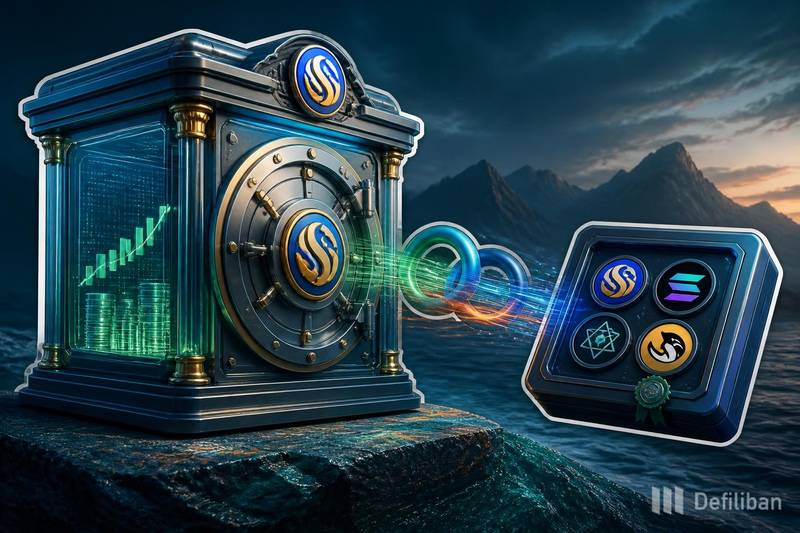
Shinhan Asset Management has signed a four-way agreement with the Solana Foundation, Etherfuse and Orca to test tokenized fund issuance, marking a fresh institutional push into on-chain products in South Korea.
The partnership pairs a major Korean asset manager with three Solana-aligned participants to pilot the issuance of a tokenized fund, according to Seoul Economic Daily. The arrangement is framed as a test rather than a live commercial product. For related coverage, see Fed’s Daly Signals Longer Inflation Fight as Bitcoin Rate Tailwind Stays Conditional.
Beyond the fact of the collaboration and its focus on tokenized fund issuance, confirmed details remain limited. The available reporting does not specify a fund structure, launch date or regulatory pathway, and this article does not infer those specifics. For related coverage, see Optimism Redirects $49.7M in Airdrop Reserves After Governance Vote.
The move follows earlier Solana-based experimentation from the broader Shinhan group, including a plan to pilot stablecoin payments on a Solana testnet, underscoring the group's recurring interest in the network for regulated use cases.
How the Solana Foundation, Etherfuse and Orca fit in
Each of the three counterparties is explicitly named as a partner in the effort, though the reporting does not assign formal responsibilities to any of them. What follows describes their likely function based on their known roles, not confirmed duties. For related coverage, see Arbitrum Activates Elara With Optional Compliance Filters for Dedicated Chains.
The Solana Foundation is the ecosystem body behind the Solana network, making it the probable settlement layer for any tokenized units. Etherfuse, which has focused on tokenized real-world assets, is a plausible issuance or tokenization partner. Orca, a Solana decentralized exchange, would be the likely venue for on-chain liquidity.
Multiple counterparties are common in tokenized issuance because the workflow spans distinct layers: the base chain, the tokenization and asset-servicing stack, and secondary liquidity. The four-way structure reported here reflects that division rather than a single vendor relationship. Solana's role was also noted in coverage of the South Korea partnership.
A regulatory-flavored institutional test, not a protocol event
This is a partnership announcement tied to a fund pilot, which places it as a straight news development rather than a protocol or infrastructure story. No exploit, staking change, liquidity migration or network upgrade is involved.
The presence of the Solana Foundation and Orca does not make this a protocol story; the news value lies in a regulated asset manager testing on-chain issuance. Institutional tokenization efforts have been building elsewhere too, such as Ripple backing an RLUSD credit fund, which frames the category Shinhan is now probing.
The immediate significance is that a mainstream Korean asset manager is committing to a live test of tokenized fund mechanics with named Solana ecosystem partners. Further detail on scope and timing will depend on additional disclosures from the parties.
Disclaimer: This article is for informational purposes only and does not constitute financial or investment advice. Cryptocurrency and digital asset markets carry significant risk. Always do your own research before making decisions.
Read original article on defiliban.io