Finally, Nigerian regulators are formally embracing crypto as an economic instrument. Yet, the steep price of this legitimacy threatens to strangle the very innovation it seeks to govern. The
Finally, Nigerian regulators are formally embracing crypto as an economic instrument. Yet, the steep price of this legitimacy threatens to strangle the very innovation it seeks to govern. The recently published Proposed Rules on Digital and Virtual Asset Operations, Custody and Markets by the Securities and Exchange Commission (SEC) require a billion-naira capital threshold for traders.
In an exclusive chat with Technext, Mela Claude Ake, president of the Stakeholders in Blockchain Technology Association of Nigeria (SiBAN), warned that the state’s aggressive financial posturing could prove fatal for indigenous crypto startups.
“The proposed SEC rules talk about registration fees in the hundreds of millions, minimum capital requirements in the billions, and taking some percentage of turnover,” Ake observed.
Any entity seeking registration as a Digital Asset Exchange (DAX) or a Digital Asset Custodian (DAC) is now required to maintain a minimum paid-up capital of N2 billion. Those looking to operate Digital Asset Offering Platforms (DAOP) or Real-World Asset Tokenisation Platforms (RATOP) must command a N500 million capital floor. Standard Virtual Asset Service Providers (VASPs) face a minimum capital requirement of N200 million.
“When you combine that with the NRS’s virtual assets taxation guidelines, which mandate a 1.5% stamp duty on every single crypto transaction, you can see already that the government runs the risk of milking a cow that is not yet fully mature, and that is dangerous.”
The SiBAN president expanded on this agricultural metaphor to highlight the sheer disconnect between government expectations and startup reality. “So, the government is trying to eat a crop that has not yet started to yield enough for a harvest,” Ake stressed.
The financial demands stretch far beyond the initial capital.
The SEC prescribes an N30 million registration fee for major platforms. Entities must also navigate the Accelerated Regulatory Incubation Programme (ARIP), which attracts a supervisory fee calculated at 0.015% of adjusted turnover for exchanges and 0.0075% for other platforms. Once fully registered, these supervisory fees increase to 0.025% of turnover quarterly for the DAX and 0.015% for other platforms.
 Emomotimi Agama, Director General, Security and Exchange Commission (SEC)
For a burgeoning ecosystem historically driven by young, bootstrapped developers, these numbers are paralysing.
“The challenge is that the vast majority of innovators in this sub-sector do not come from big money,” Ake explained. “So, creating minimum capital requirements in the billions and registration fees in the hundreds of millions is still quite problematic for innovation in the sector.”
What changes with SEC’s new regulations
The government’s posture represents a fascinating shift from outright hostility to aggressive monetisation. Just a few years ago, the Central Bank of Nigeria instituted a comprehensive ban in 2021 that severed crypto operators from the formal banking sector.
The narrative only began to changewith the introduction of the National Blockchain Policy in 2023, which formally recognised blockchain as critical digital infrastructure.
The regulatory push intensified by mid-2024 when the Securities and Exchange Commission (SEC) introduced the Accelerated Regulatory Incubation Programme (ARIP) framework to aggressively onboard platforms into a compliance net, subsequently granting approval-in-principle to firms like Quidax and Busha.
In a bid to bring digital asset operators under a more formal regulatory framework, the SEC raised the minimum capital requirement for digital asset exchanges from N500 million to N2 billion in January 2026, giving affected firms until June 30, 2027, to comply.
The ecosystem’s oversight was further strengthened in July 2026 when President Bola Tinubu signed the Virtual Assets Coordination Executive Order, creating a CBN-led Virtual Asset Council to coordinate supervision across government agencies.
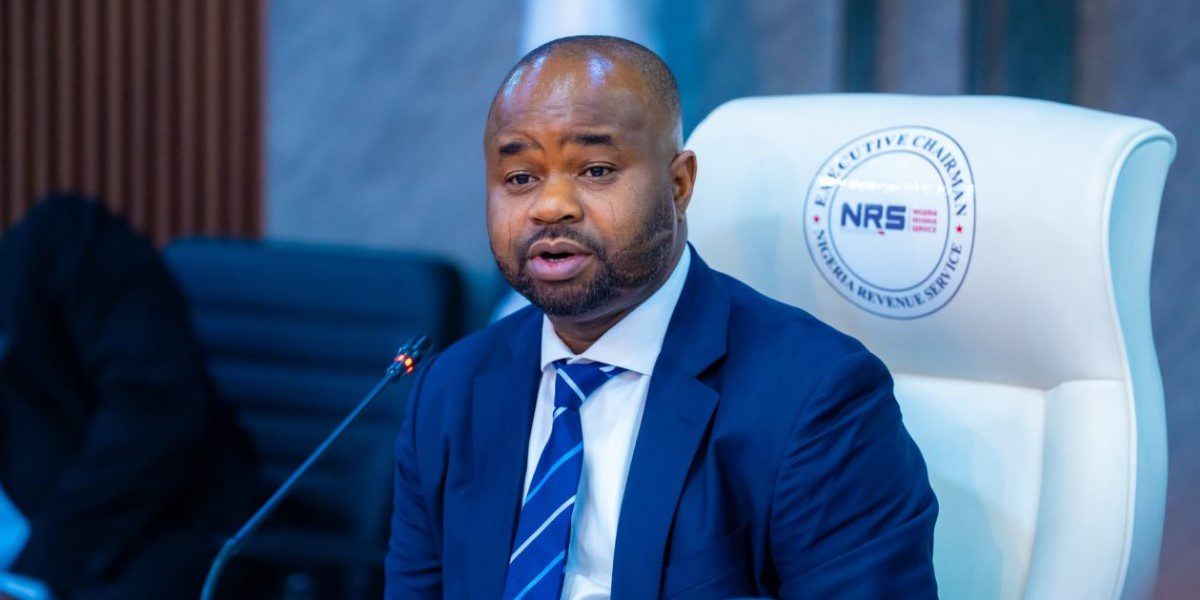 Zacch Adedeji, Executive Chairman of the Nigerian Revenue Service (NRS)
This sweeping formalisation culminated in August 2026, when the Nigeria Revenue Service rolled out its Guidelines on the Taxation of Virtual Assets, outlining how crypto transactions, stablecoins, NFTs, staking rewards, DeFi income and other virtual asset activities will be treated for tax purposes.
Despite the punishing financial hurdles, Ake acknowledged the value of this regulatory pivot. The sheer existence of the SEC document erases the debilitating legal grey area that previously clouded the sector. “We definitely are appreciative of the fact that the government, the policymakers in government, and the legislature are embracing blockchain and virtual assets.”
“I mean, by virtue of the fact that you create laws and rules and all of that, it sends the right signal, which is that there's no longer a regulatory grey area. It signals to both domestic and global investors that the government has brought that sector into the economic mainstream. The government no longer sees it as a criminal enterprise, unlike the signal sent when all crypto- and blockchain-related activities were banned. So, that is the positive from this.”
But that positive signal is heavily diluted by the assumption that the local Web3 space is already brimming with taxable wealth.
The SEC rules impose stringent operational controls alongside the financial ones. Retail investors are restricted to a maximum investment of N1 million per digital asset issuer, with a strict aggregate ceiling of N10 million across all digital asset offerings within 12 months.
Furthermore, the framework dictates rigid collateral requirements for stablecoins. Naira-backed stablecoins must hold 100% of their outstanding liabilities in cash or central bank instruments. Crypto-backed stablecoins face punishing over-collateralisation requirements ranging between 150% and 200%.
“The government may have the perception that there is so much money to be made in the sector, and for that reason, some may interpret these rules to mean that the government is coming to take its own cut of the perceived largesse,” Ake argued.
 Mela Claude Ake, president of the Stakeholders in Blockchain Technology Association of Nigeria (SiBAN)
The current trajectory leaves Nigerian blockchain founders with a bleak choice: find massive venture capital instantly, operate illegally, or leave.
While the sub-sector or the sector of virtual assets holds a lot of promise, and that is not in contention, the truth remains that it is still a nascent sector. Ake admonishes that the government nurtures this seed before it eats it:
“It is still growing. It still needs a lot of support, and this is the time to sow and to invest in it. The government needs to be gentler in its policy-making around the industry, more paternal, and more protective of the industry, rather than trying to extract”, he concluded.