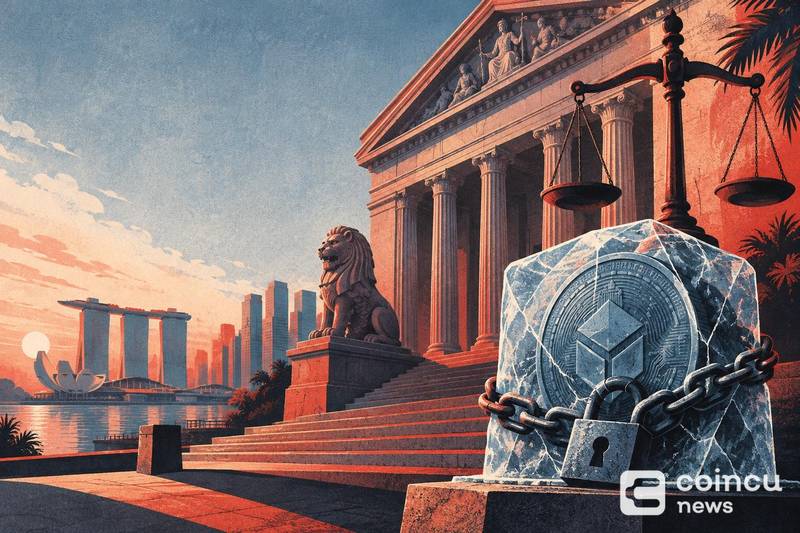
A Singapore court has issued an asset-freezing order against the founder of cryptocurrency exchange Tokenize Xchange and his ex-wife, according to initial reports, marking a significant legal
A Singapore court has issued an asset-freezing order against the founder of cryptocurrency exchange Tokenize Xchange and his ex-wife, according to initial reports, marking a significant legal development for one of the city-state's licensed digital-asset platforms amid Singapore's expanding regulatory scrutiny of the sector.
Singapore court freezes assets linked to Tokenize Xchange founder
The court order names the Tokenize Xchange founder and his ex-wife as the parties subject to the asset freeze, per reports of the development. Singapore courts may issue such orders, formally known as Mareva injunctions, to prevent named individuals from dissipating or transferring assets ahead of civil or criminal proceedings, though the specific legal basis for this order had not been confirmed at the time of publication. For related coverage, see Fintech Revolution Summit –Singapore 2027.
Tokenize Xchange holds a Major Payment Institution licence from the Monetary Authority of Singapore, making it one of a limited number of exchanges authorized to offer digital-payment token services in the jurisdiction. The company's licensed status places it under MAS supervision, though it is not yet clear whether the court action involves regulatory proceedings, a private dispute, or criminal allegations. For related coverage, see Gate Money Launches Financial-Services Platform for Assets, Funds and Payments.
What an asset-freezing order means in practice
An asset-freezing order prohibits the named parties from moving, selling, or otherwise disposing of specified assets, typically up to a stated monetary ceiling, without court permission. Critically, a freeze is a precautionary measure, not a finding of guilt or liability; the affected parties retain legal ownership of the frozen assets while the underlying case progresses. The order's scope, the ceiling value of assets covered, and the duration of the freeze had not been publicly disclosed as of publication. For related coverage, see CFTC Chairman: Crypto Markets to Adopt Margin Controls.
Singapore has emerged as a closely watched hub for digital-asset regulation, with the MAS tightening licensing requirements and enforcement posture over the past two years. Singapore's on-chain crypto economy grew 55.4% to $284 billion, according to Chainalysis data, underscoring the scale of assets now under the city-state's regulatory perimeter and the growing stakes of enforcement actions involving licensed operators.
What is confirmed and what remains unclear
Confirmed per initial reports: a Singapore court has issued an asset-freezing order naming the Tokenize Xchange founder and his ex-wife. Not yet specified or independently verified: the monetary value of assets subject to the freeze, the case number and presiding court, the legal basis or allegations underpinning the order, the scheduled next hearing date, and whether the freeze extends to assets held outside Singapore. Court filings or official statements from Tokenize Xchange, the MAS, or the named parties could clarify these points.
The development comes as Singapore's broader financial infrastructure undergoes rapid institutionalization, with DBS, OCBC, and UOB joining tokenized deposit payment pilots alongside the MAS, signaling that enforcement actions against individual exchange operators are increasingly set against a backdrop of high-stakes institutional integration.
Key questions for this case
Who is named in the order? The Tokenize Xchange founder and his ex-wife, per reports. Full names and case identifiers had not been confirmed at publication.
What does the freeze restrict? Asset-freezing orders typically bar the named parties from transferring, encumbering, or disposing of covered assets, whether held in bank accounts, property, or digital-asset wallets, up to the court's specified limit.
Does the freeze determine the final outcome? No. A Mareva injunction is interim relief designed to preserve assets pending resolution of the underlying dispute or proceedings. Courts may lift, vary, or extend such orders as the case develops.
Where can readers find verified updates? Official case records through Singapore's Supreme Court or State Courts systems, MAS enforcement notices, and direct statements from Tokenize Xchange represent the authoritative channels for confirmed developments.
FAQ
What happened in Singapore? A Singapore court issued an asset-freezing order against the founder of Tokenize Xchange and his ex-wife, according to reports published as of October 2026. The precise scope and legal basis of the order await independent verification from court documents.
Whose assets were frozen? The named parties are the Tokenize Xchange founder and his ex-wife. The exact assets, their value, and any third-party accounts covered by the order had not been publicly detailed at time of publication.
Is an asset freeze the same as confiscation? No. Freezing preserves assets while a legal matter is resolved; it does not transfer ownership or constitute a penalty. Courts can unfreeze assets if the underlying claim fails or is settled.
What details are still unknown? The monetary ceiling of the freeze, the legal allegations, the case number, the next court date, and whether any MAS regulatory proceedings run parallel to the court action are all unconfirmed as of this report. Subsequent court filings or official statements may materially change the picture.
Additional source references: source document 1, source document 2.
Disclaimer: This article is for informational purposes only and does not constitute financial or investment advice. Cryptocurrency and digital asset markets carry significant risk. Always do your own research before making decisions.
The post Singapore Court Freezes Tokenize Xchange Founder Assets was initially published on Coincu.