A new Solana governance vote has put the network's token economics back in play, pairing a proposal to raise the amount of SOL burned each day with a separate measure to slow the rate at whic
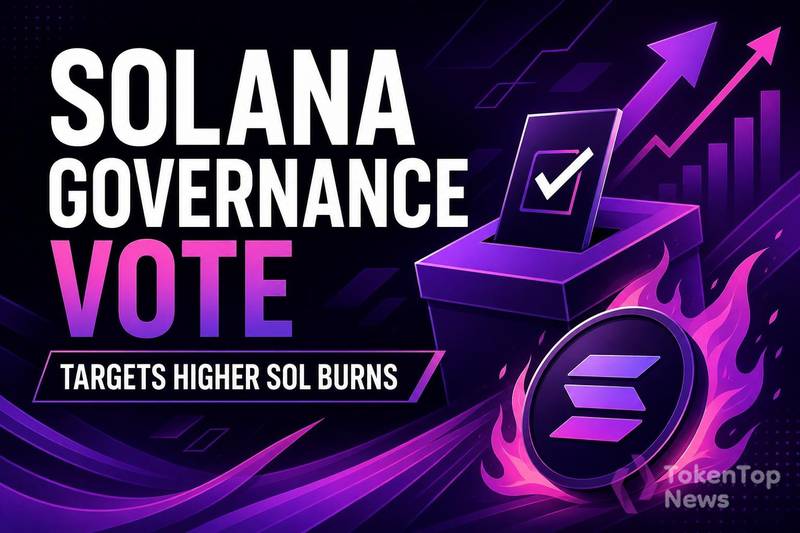
A new Solana governance vote has put the network's token economics back in play, pairing a proposal to raise the amount of SOL burned each day with a separate measure to slow the rate at which new tokens are created. Both are still under review, not live changes, but together they frame a debate over how Solana manages long-term supply.
What the Solana governance proposal would change
The measure is a proposal under governance review, meaning validators and stakeholders are being asked to vote on it rather than reacting to a change that has already shipped to mainnet. For related coverage, see Term Labs Governance Exploit Hits Vaults for $8.5M.
On the burn side, the relevant Solana Improvement Document is a resource fee burn proposal. Higher daily SOL burns means a larger share of network fees is permanently removed from circulating supply rather than recycled, tightening how much SOL exists over time.
The issuance side is governed by a separate double disinflation proposal. Slower new token creation refers to accelerating Solana's disinflation schedule, so the pace at which fresh SOL enters the system through staking rewards declines faster than under the current curve.
Why higher burns and slower issuance matter for Solana economics
The two levers interact directly. Burns subtract from existing supply while issuance adds to it, so raising one and cutting the other pushes Solana's net supply trajectory in the same direction, toward tighter growth or outright contraction.
The tradeoff lands on validators. Slowing issuance under the disinflation proposal reduces the inflationary staking rewards that fund network security, which is why the change is a governance question rather than a routine parameter tweak.
Because both proposals touch supply policy, the outcome carries beyond a single vote. Changes to burn mechanics and issuance set precedent for how Solana's economic design evolves, and they matter to the same validator and staking infrastructure that already faces operational stress, as seen when Marinade reported roughly 29% of stake went offline during a recent routing fault.
How the proposal fits into Solana's market and ecosystem setup
The local research did not confirm any specific price move tied to the vote, so the market picture here is a baseline rather than a measured reaction. Solana's spot market data is tracked on its CoinGecko market page.
Ecosystem relevance is why the vote is being watched at all. Solana continues to attract institutional and consumer rails, from Bitwise's move to tokenize a Solana staking ETF to Kalshi tapping the network for market data and Cash App adding Solana to MoonPay checkout, all of which raise the stakes on how the chain sets its supply policy.
The concrete thing to watch next is the governance outcome itself. Until the vote resolves, higher burns and slower issuance remain proposals, and the direction of Solana's tokenomics stays an open question decided by stakeholders rather than by code already in production.
Disclaimer: This article is for informational purposes only and does not constitute financial or investment advice. Cryptocurrency and digital asset markets carry significant risk. Always do your own research before making decisions.
Read original article on tokentopnews.com