Solana 1.0 Upgrade Arrives: How Will the Solana Mainnet Update Work? Solana officially launched Solana 1.0 on November 16, 2026. The update retires the Mainnet Beta label the network has used
Solana 1.0 Upgrade Arrives: How Will the Solana Mainnet Update Work?
Solana officially launched Solana 1.0 on November 16, 2026. The update retires the Mainnet Beta label the network has used since 2020 and replaces it with a simpler name, Solana Mainnet. The Solana Foundation says the change recognizes the network’s technical progress and gives it a shared protocol version.
Most readers want to know one thing. Does this affect SOL holdings, transactions, or apps? According to the Foundation, it does not. This article explains what changed, why it happened, and who needs to do anything.
Solana Mainnet Upgrade: What Changes With the Solana 1.0 Launch?
The Solana Mainnet name now replaces Mainnet Beta. The Solana Foundation coordinated the change with the Anza and Firedancer teams.
The bigger shift is how the network tracks its own growth. Solana is adopting one protocol version that stands apart from validator client software. Clients such as Agave and Firedancer keep their own release numbers. Solana 1.0 describes the shared rules those clients follow.
In short, this is a naming and versioning update. No network migration is involved.
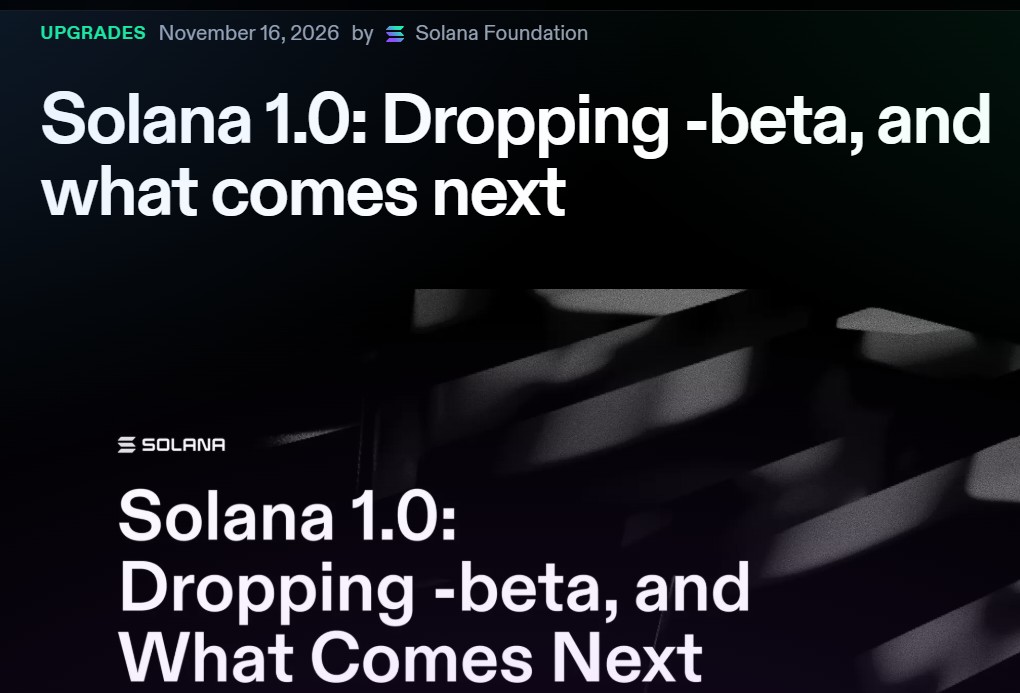 Source: Official Blog Post
At a Glance
Key Detail
Information
New designation
Solana Mainnet
Previous designation
Mainnet Beta
New protocol version
Solana 1.0
Announcement date
November 16, 2026
Coordinating organization
Solana Foundation
Development teams
Anza and Firedancer
User impact
No migration required
SOL holdings
Unaffected
Why Is Solana Dropping the Mainnet Beta Label Now?
As per official X Post, the network has run as a live production chain since genesis in 2020. It has supported real transactions, apps, and assets the whole time. The beta tag never changed to reflect that.
Two recent milestones made the timing feel right. The first is the mainnet activation of Alpenglow. The second is the deployment of Firedancer. Together, they point to gains in speed, resilience, and developer experience. The Solana Mainnet name now matches that reality.
Alpenglow and Firedancer: Major Developments Behind Solana Mainnet
Alpenglow Upgrade
Alpenglow changes how validators reach agreement on the state of the chain. The Foundation says it enables transaction finality of roughly 150 milliseconds.
Finality is the moment the network treats a transaction as settled. After that point, it is not expected to be reversed. Faster finality means users wait less for confirmation.
Firedancer Deployment
Firedancer is a validator client built independently from Agave. Having two separate codebases adds diversity to the software that runs the network. That helps in three ways:
The network relies less on one codebase.
A bug in one client has a smaller impact.
Overall resilience improves.
Solana Protocol Versioning Explained: Agave vs. Firedancer
A protocol is the set of rules every validator must follow. A client is the software that puts those rules into practice. As more clients appear, keeping the two ideas apart matters more.
Feature
Solana Protocol
Validator Client
Purpose
Defines shared network rules
Implements protocol rules
Examples
Solana 1.0
Agave and Firedancer
Versioning
Shared protocol version
Independent software versions
Updates
Network-level changes
Client-specific releases
Importance
Coordinates network evolution
Determines software compatibility
Different client releases can support the same protocol version while keeping their own numbers. Naming a protocol version also does not switch on every related feature at once. Each improvement still follows its own release and activation timeline.
Does the Solana Mainnet Upgrade Affect SOL Holders?
For SOL Holders and Everyday Users
No action is required. Your SOL, accounts, assets, apps, and transaction history stay the same. Any improvements will reach you through underlying upgrades and the apps that adopt them.
For Developers
Review changes that touch the APIs, SDKs, and infrastructure your apps use. The weekly Solana Changelog tracks these updates. Documentation and tooling teams should also update network references as the new name rolls out.
For Validators and RPC Operators
Check which client releases support each protocol rollout. Then follow the upgrade and activation steps in the Agave or Firedancer documentation.
Solana Price Today
On November 16, 2026, SOL Token Price near $71.64, down 0.8% over 24 hours. Market cap stood at about $42.41 billion, with $2.64 billion in 24-hour volume. The Solana Mainnet rename is a naming change and does not guarantee future gains.
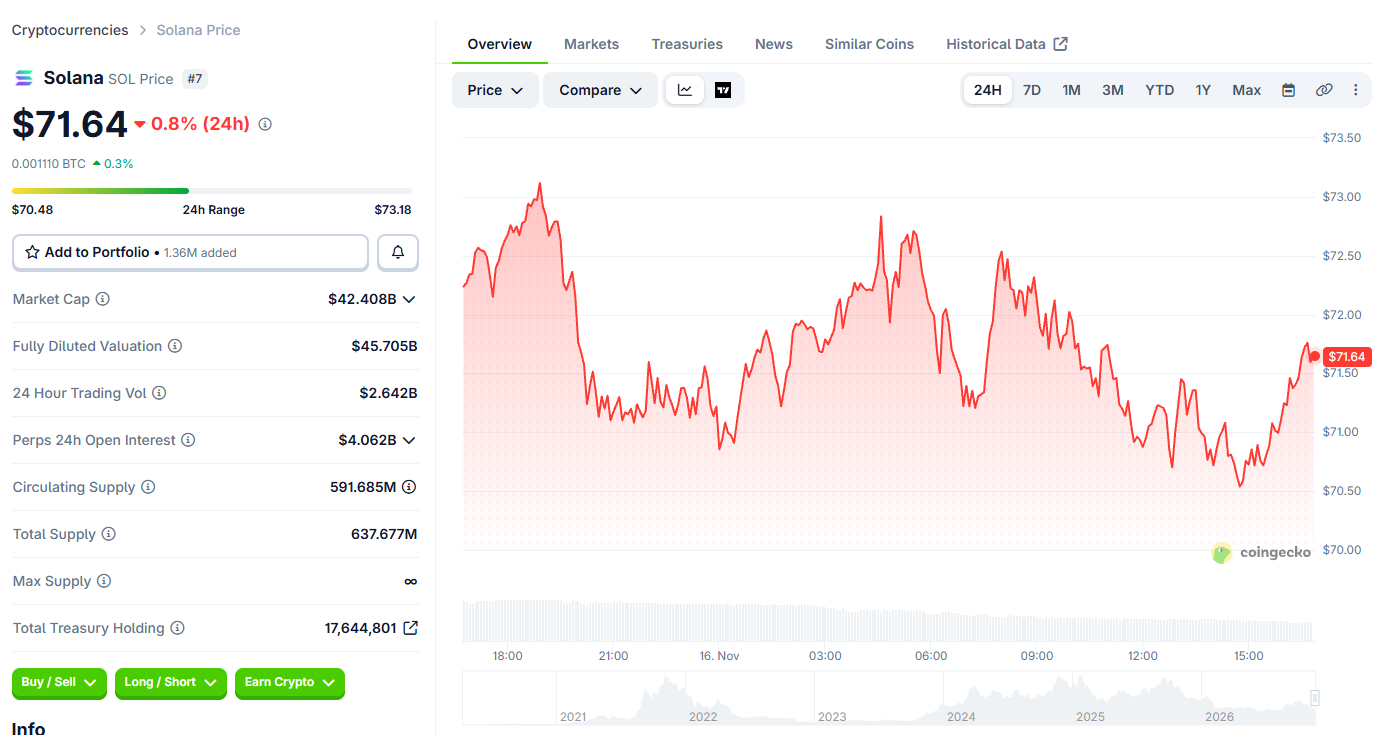
Source: CoinGecko Data
Solana Mainnet Transition: Key Rollout Timeline and Next Steps
2020: Mainnet Beta launch. The network begins operating as a live production blockchain under the Mainnet Beta label.
November 16, 2026: Solana 1.0 announced. Solana retires the beta label and adopts the Solana Mainnet name.
After the announcement: documentation updates. Websites, explorers, and ecosystem tools will gradually show the new designation.
Upcoming protocol rollouts: continued development. Developers and operators should watch for compatible client releases, feature activations, and technical guidance on the Solana Upgrades page.
Conclusion
Solana news today is moving from Beta to Mainnet because the label no longer matched what the network does. Solana 1.0 is a naming and protocol-versioning milestone, not a migration. Alpenglow’s faster finality and Firedancer’s independent client both support the case for the change. Together, they show a network that is maturing and building a more resilient ecosystem.
Disclaimer: This article is for informational purposes only and is not investment or financial advice. The Solana Mainnet announcement does not guarantee SOL price gains or future returns. Crypto assets are volatile. Always do your own research and consult a licensed financial advisor before making decisions.