Quick Overview While XRP commands a larger market capitalization at approximately $69B compared to Solana’s $45B, Solana demonstrates significantly broader onchain utility With roughly 38 bil
Quick Overview
- While XRP commands a larger market capitalization at approximately $69B compared to Solana’s $45B, Solana demonstrates significantly broader onchain utility
- With roughly 38 billion tokens yet to enter circulation, XRP faces a fully diluted valuation approaching $111B
- By May, Solana’s network hosted over $2.8B in real-world assets alongside approximately $16.4B in stablecoin liquidity
- Galaxy Digital received $50M in commercial paper from J.P. Morgan directly on Solana’s blockchain using USDC settlement
- XRP Ledger hosted a collaborative pilot involving Ripple, J.P. Morgan’s Kinexys platform, Mastercard, and Ondo Finance centered on tokenized Treasury products
Among the largest digital assets beyond Bitcoin and Ethereum, XRP and Solana stand out as major players drawing significant institutional attention. Despite their prominence, these networks serve fundamentally distinct purposes in the crypto landscape.
XRP functions primarily as a cross-border payment solution and settlement layer for financial institutions. Conversely, Solana operates as a comprehensive blockchain platform enabling decentralized trading venues, digital dollar infrastructure, asset tokenization protocols, and mainstream applications.
Market Capitalization Analysis
Currently, XRP maintains a market capitalization hovering around $69 billion, while Solana registers approximately $45 billion. From this perspective, XRP appears to command greater market recognition.
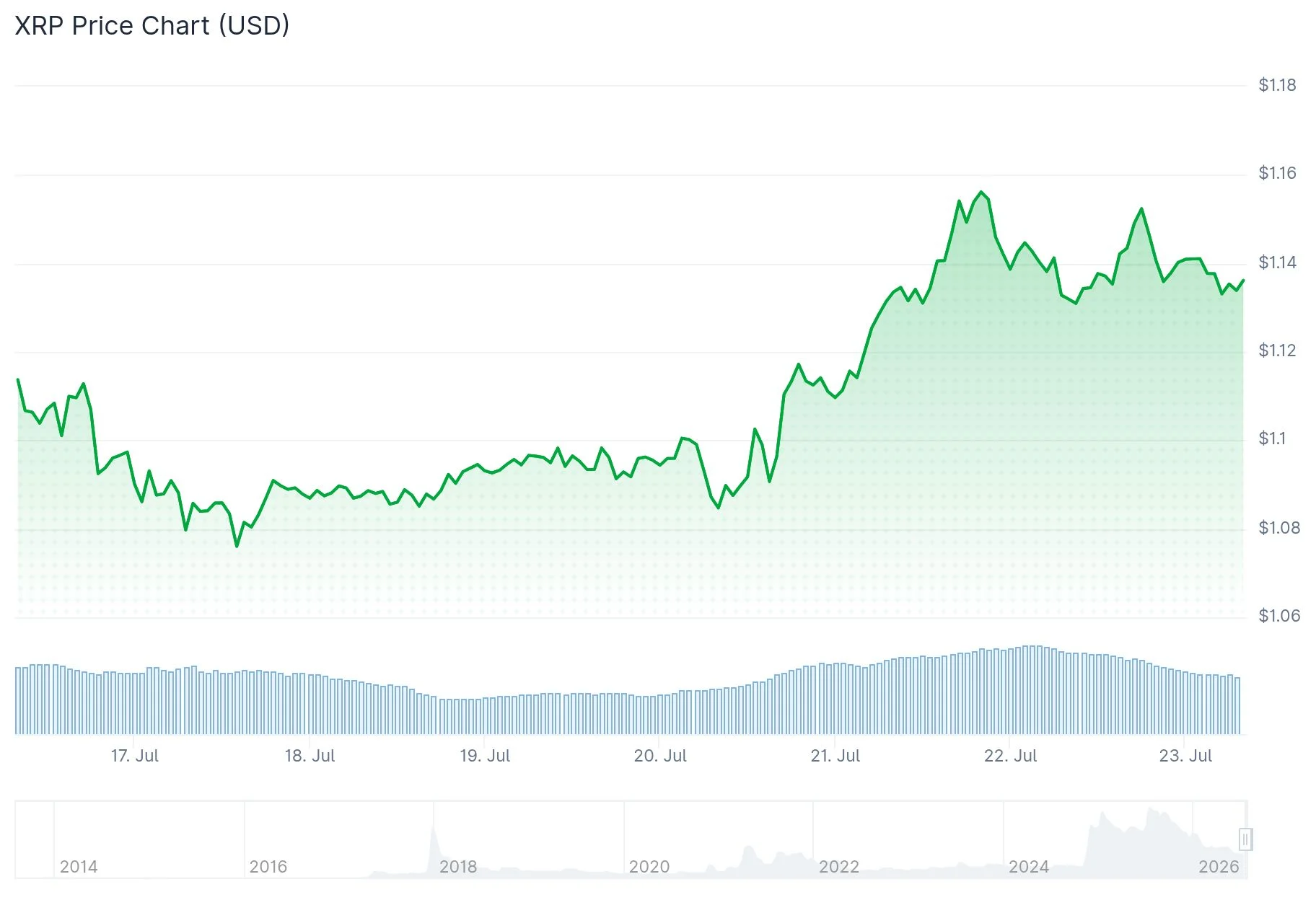
However, examining fully diluted valuations reveals a more nuanced picture. XRP’s FDV extends to roughly $111 billion due to approximately 38 billion tokens remaining outside active circulation. In contrast, Solana has approximately 583 million of its 631 million maximum token supply already in circulation, resulting in minimal FDV divergence from current market cap.
This positioning provides Solana with a more transparent valuation framework. While XRP doesn’t face traditional inflation mechanisms—all 100 billion tokens were created at genesis—the substantial locked supply presents ongoing dilution considerations for investors.
Corporate and Banking Partnerships
Recent months have witnessed both blockchain networks securing meaningful institutional engagement.
Ripple collaborated with J.P. Morgan’s Kinexys infrastructure, alongside Mastercard and Ondo Finance, executing a proof-of-concept demonstrating accelerated redemption processes for tokenized U.S. Treasury instruments on the XRP Ledger. Notably, portions of the settlement workflow still required conventional banking channels.
For Solana, J.P. Morgan facilitated a $50 million commercial paper issuance for Galaxy Digital executed entirely on-chain. Coinbase and Franklin Templeton served as purchasing entities. The entire transaction lifecycle—issuance through redemption—occurred on Solana using USDC stablecoin infrastructure.
Additionally, data from the Solana Foundation indicates the network captured 97% of all cumulative on-chain tokenized equity trading volume.
May ecosystem metrics for Solana revealed real-world asset values exceeding $2.8 billion, complemented by stablecoin reserves totaling approximately $16.4 billion.
XRP’s competitive advantage lies in its specialized application focus. Payment rails, international money transfers, and institutional settlement represent clear, well-defined value propositions. Ripple has simultaneously diversified into custody services, stablecoin products, and tokenized financial instruments.
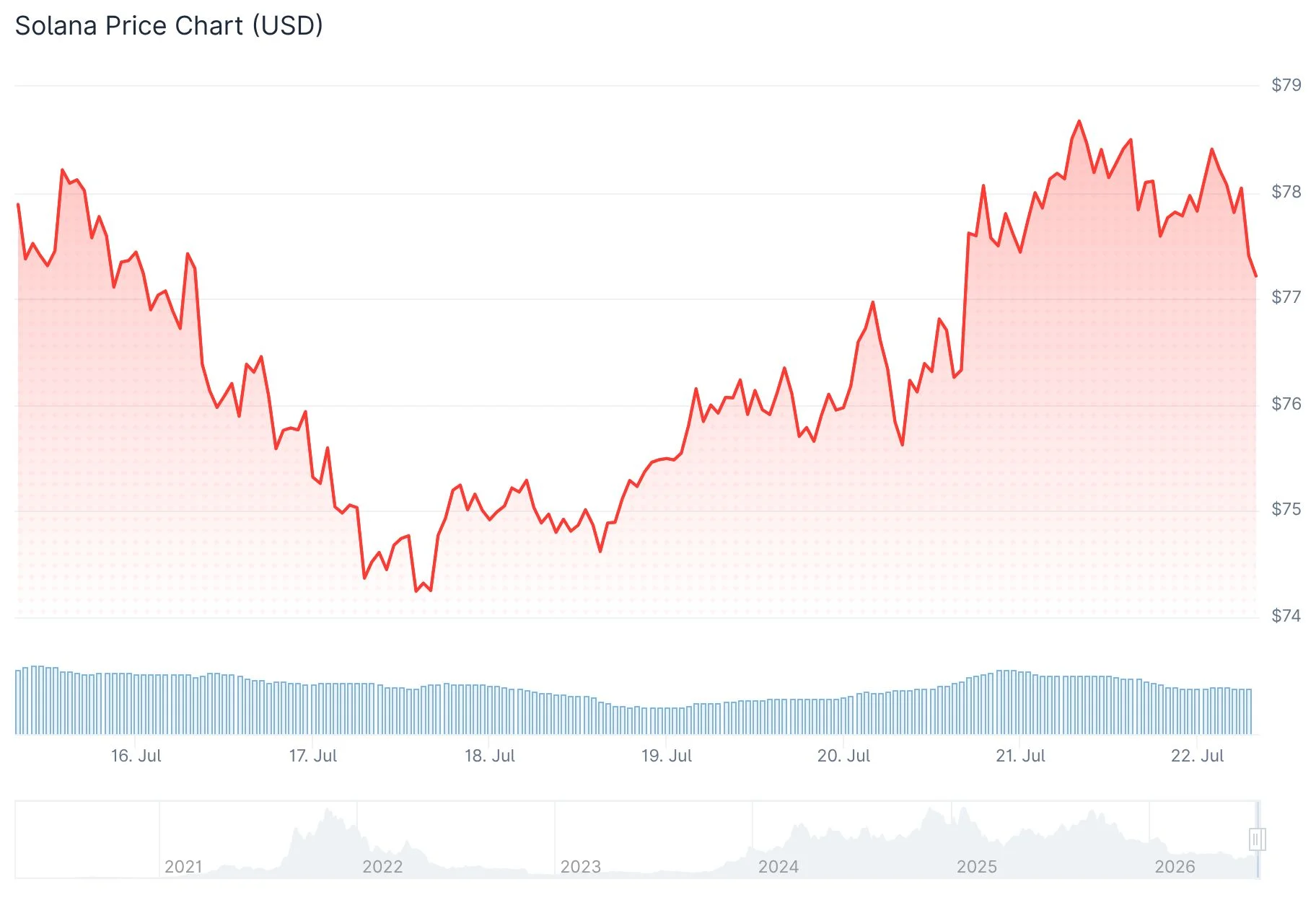
Solana presents higher volatility characteristics. Token value correlates directly with ongoing network usage, developer engagement, and stablecoin ecosystem expansion. Declining transaction activity could materially impact token demand fundamentals.
For risk-averse investors, XRP potentially delivers a more stable investment narrative. Its payment-centric positioning provides clarity, supported by a permanently capped token supply.
Investors comfortable with elevated volatility will find Solana offers multiple expanding growth vectors spanning stablecoins, tokenization infrastructure, and institutional financial applications. Additionally, Solana presents superior fully diluted valuation transparency alongside robust ecosystem development momentum as 2025 progresses.
The post Solana (SOL) vs XRP: Which Cryptocurrency Offers Better Value in 2025? appeared first on Blockonomi.