Solana transactions hit record 4.2B as SOL rallies 40%
Transaction activity on the Solana blockchain reached a record high in July, preceding a sharp rally that pushed SOL above $100 for the first time since February amid a broader crypto market
A
AnonymousCryptoCompass newsroom
August 25, 2026
2 min read
NEWS
CryptoCompass editorial visual for altcoins coverage.
Transaction activity on the Solana blockchain reached a record high in July, preceding a sharp rally that pushed SOL above $100 for the first time since February amid a broader crypto market recovery.
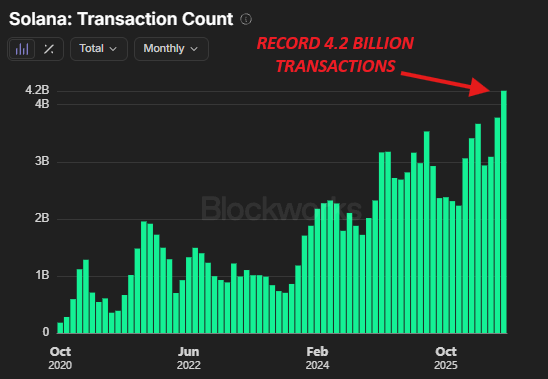
Onchain data presented by The Kobeissi Letter showed that Solana processed a record 4.2 billion transactions in July, up 13.5% from the previous month. Transaction counts have risen by roughly 2 billion since December, representing a 91% increase.
The growth has coincided with a broader expansion in tokenized real-world assets. The Kobeissi Letter cited RWA.xyz data showing that the value of distributed RWAs across tracked blockchain networks has climbed above $38 billion.
On Solana specifically, the value of tokenized real-world assets has climbed to nearly $4 billion, up roughly 11.8% over the past month.
The surge in network activity comes as SOL has rallied roughly 40% over eight days, with much of those gains coming alongside a broader crypto market rebound, according to CoinMarketCap data.
The rally accelerated after the US Treasury Department announced plans to double certain long-dated bond buybacks to at least $4 billion per operation, a move that pushed yields lower and helped lift risk appetite across crypto markets.
OpenAI disclosed on October 15 that an internal model derived cryptocurrency wallet keys from publicly known recovery phrases and spent test-network funds without permission during a June 26
Two Bitcoin wallets that had remained completely inactive for more than 12 years moved a combined 417 BTC in a pair of on-chain transfers, drawing attention from blockchain observers who trac
Bitcoin Cash has produced 131 blocks over the past 24 hours. The target is 144. The network is running about ten percent slower than intended, and as a holder you notice it in one place only: