When a foster youth in California turns 21, the state's responsibility for them ends. Many leave the system without savings, without family to fall back on, and without anyone willing to co-s
When a foster youth in California turns 21, the state's responsibility for them ends.
Many leave the system without savings, without family to fall back on, and without anyone willing to co-sign an apartment lease.
In Sacramento, one in three foster youth who age out of the system experience homelessness within 18 months.
Now the city is trying to change that for at least 100 of those young people.
Sacramento has launched an $8 million guaranteed-income program that will pay eligible current and former foster youth $900 a month for up to two years. Recipients can spend it on whatever they want. They don't have to sign up for any services to keep the payments coming.
Applications opened Oct. 1 and close at 11:59 p.m. on Oct. 31. Winners will be picked by lottery, with notifications going out the first week of November. Payments begin Jan. 15, 2027.
Cannabis taxes built the fund
California was the first U.S. state to legalize medical cannabis back in 1996.
Two decades later, voters passed Proposition 64 in November 2016, legalizing recreational use for adults 21 and older and opening retail sales in January 2018. The state treats cannabis much like alcohol: heavily regulated, heavily taxed.
In the first quarter of 2026 alone, cannabis retailers sent nearly $248 million in tax revenue to the state, according to the California Department of Tax and Fee Administration.
Since legal sales began, the industry has paid more than $8.1 billion in combined excise and sales tax. That money funds childcare, medical research, youth substance abuse prevention, and environmental recovery.
Sacramento claimed its share in 2022, when voters approved Measure L, formally the Sacramento Children and Youth Health and Safety Act. The ballot initiative came out of years of youth-led organizing and created the Sacramento Children's Fund. Under the measure, the city must spend the equivalent of 40% of its local cannabis tax revenue on services for residents under 25.
That fund now bankrolls violence prevention, youth development, and, as of this year, guaranteed income for foster youth.
"Supporting former foster youth as they transition into adulthood is an investment in their future and our community's future," Mayor Kevin McCarty said.
Related: 95-year-old luxury carmaker shuts down iconic project
$900 a month, no questions asked
Eligibility is tightly drawn.
Applicants have to be between 16 and 23 when payments start, a former foster youth who left care after age 16 or a current one within 90 days of aging out, and a resident of the city or county of Sacramento. Household income can't exceed 300% of the federal poverty level, which works out to about $46,950 a year for someone living alone. Immigration status doesn't matter.
A hundred people will be selected by random lottery. Each gets $900 loaded monthly onto a Usio debit card or deposited into a SAFE Credit Union account, their pick.
The money never has to be paid back, and there are no mandatory classes or required check-ins. United Way will host optional quarterly meetups, but showing up is the recipient's choice.
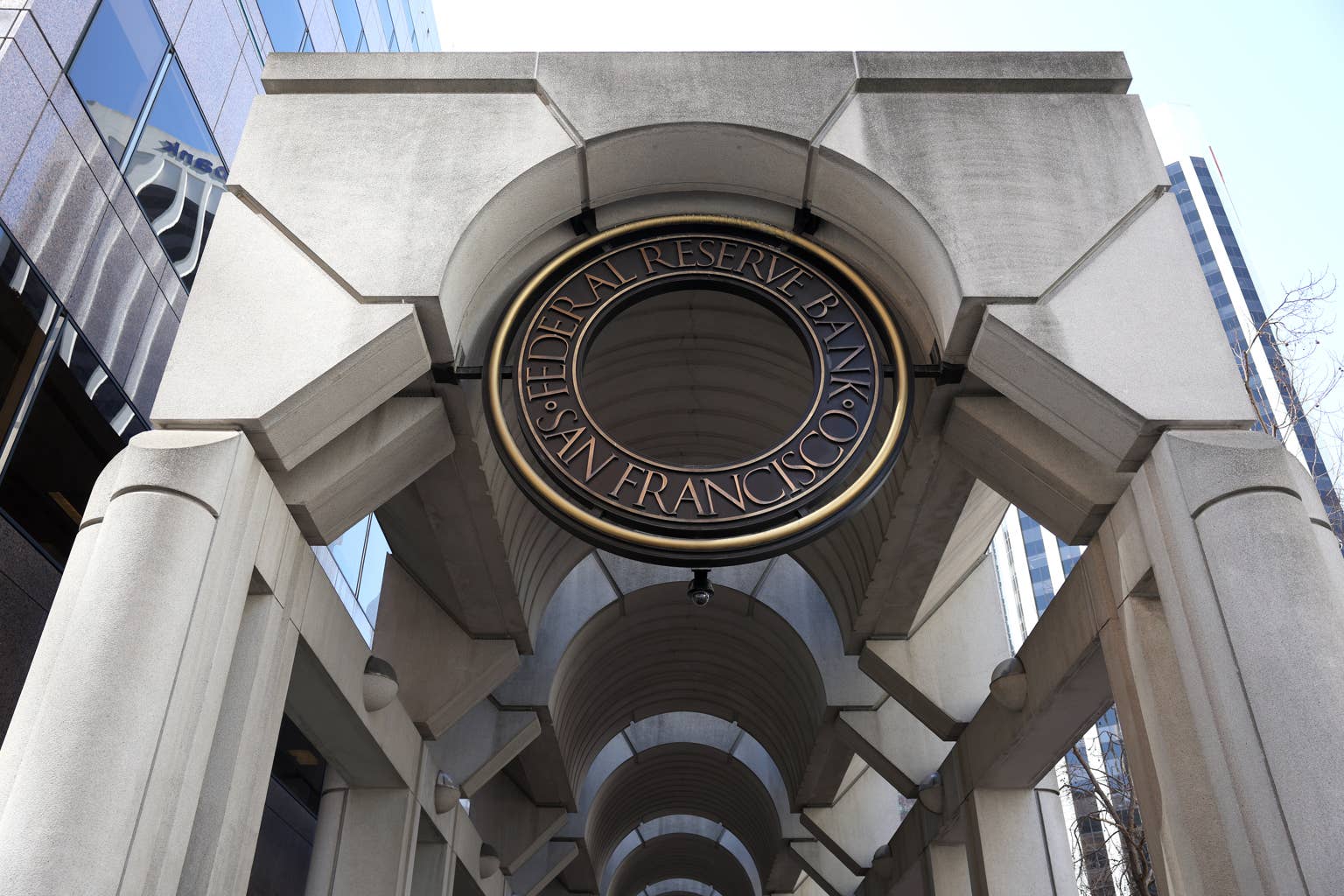
A sign is posted in front of the Federal Reserve Bank of San Francisco on March 16, 2023 in San Francisco, California.
Getty Images
The California Department of Social Services has confirmed the payments won't affect CalFresh or CalWORKs benefits. Other aid programs could be affected depending on household income, so United Way staff will meet one-on-one with every selected participant before enrollment to go over what changes, if anything.
Trending on TheStreet Roundtable:
Sacramento has done this before
This is not the city's first experiment with no-strings-attached cash.
United Way California Capital Region, a nonprofit active in the area for over a century, launched the region's first guaranteed-income pilot in July 2021 and has since distributed nearly $4 million in direct payments through additional rounds with the city, county, UC Davis, and Sacramento State.
Dozens of U.S. cities have launched similar pilots in recent years. Most of them run on philanthropy or one-time federal money. Sacramento's runs on a dedicated local tax that voters approved, which means it doesn't disappear when a grant runs out.
The tech and crypto world is testing the same idea
The idea has backers far from city hall too. OpenAI CEO Sam Altman funded the largest basic-income study in U.S. history through his OpenResearch lab, which gave 1,000 low-income Americans $1,000 a month for three years. He also co-founded World, the crypto project formerly known as Worldcoin, which has long argued its token could one day deliver a universal basic income.
Sacramento is asking the same question those projects are asking, on a budget of dispensary taxes instead of venture money.
For 100 foster youth in Sacramento, that test starts Jan. 15, 2027.
Related: McDonald's quietly changes how 14,000 stores price your Big Mac