A stablecoin is supposed to be the boring part of crypto. One token, one dollar. That's the whole idea. But something unusual happened in South Korea this week. Sky Protocol's USDS stablecoin
A stablecoin is supposed to be the boring part of crypto. One token, one dollar. That's the whole idea.
But something unusual happened in South Korea this week.
Sky Protocol's USDS stablecoin, designed to maintain a $1 value, briefly traded for nearly $6 on Upbit, one of the country's largest cryptocurrency exchanges.
The surprising part was that the same token was still trading near $1 on global exchanges.
Related: Before the bell: Wall Street goes Black Friday shopping. Is Bitcoin on the list?
Why a $1 stablecoin reached $5.80
On Nov. 24, USDS surged to 7,835 South Korean won, approximately $5.80, on Upbit, according to Yonhap News Agency. It had traded around 1,340 won before deposits were halted, then jumped to 5,435 won within about two hours on Nov. 23.
The price later fell to 3,630 won, or roughly $2.70, but remained well above its global reference price of 1,341 won. On Bithumb, USDS traded between 1,600 and 2,200 won.
The price movement followed a decision by South Korea's major cryptocurrency exchanges to restrict USDS deposits.
On Nov. 23, Upbit, Bithumb and Coinone placed USDS on trading-warning lists and suspended deposits from 8 p.m. local time. Upbit and Bithumb also flagged SKY, which is Sky's governance token.
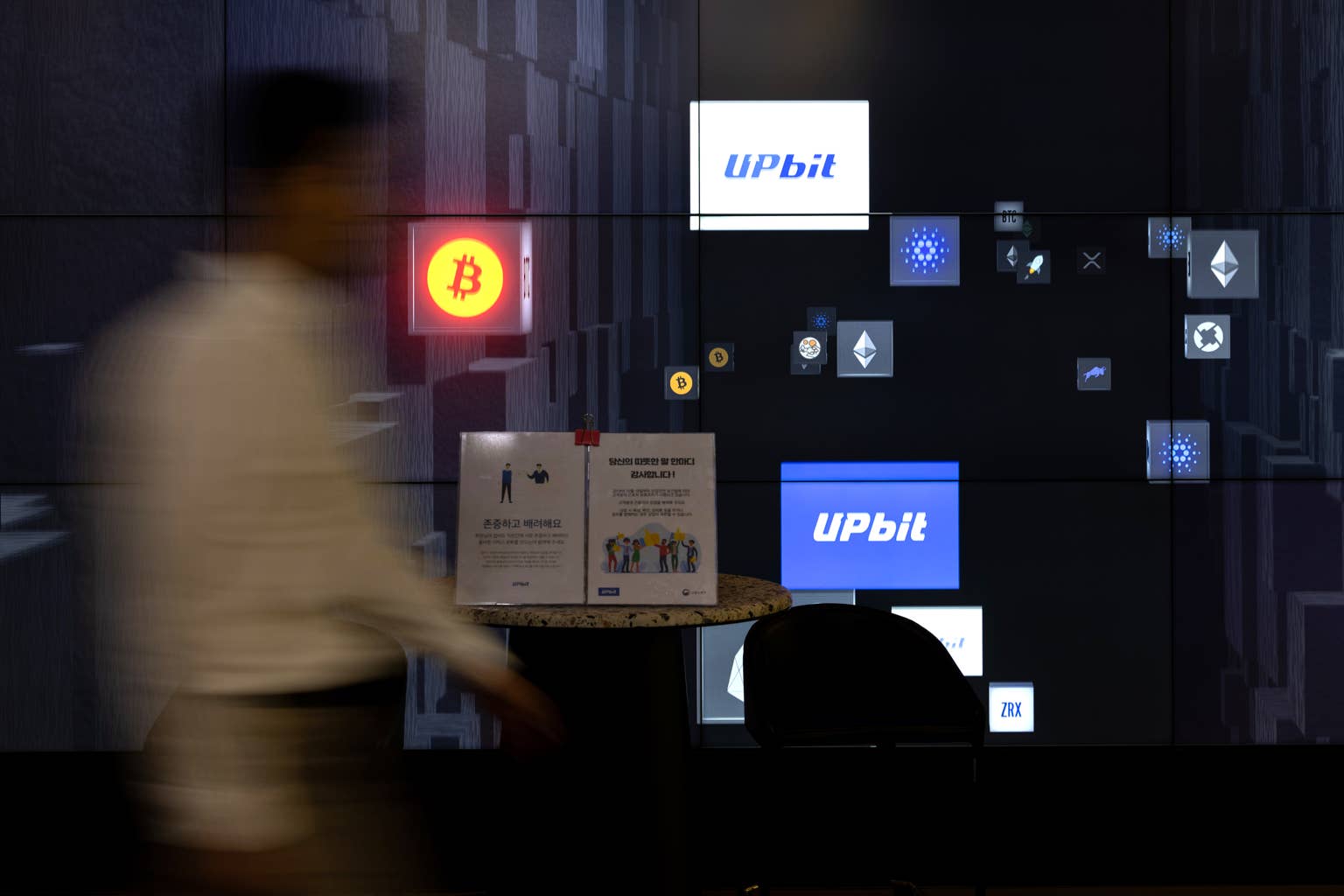
A screen displays signages for Upbit and other crypto currencies at Upbit Lounge in Seoul, South Korea.
However, trading remained open, resulting in an unusual situation. Investors who already held USDS on these exchanges could sell their tokens at elevated prices, while traders elsewhere could not transfer additional USDS onto the platforms to take advantage of the difference.
Trending on TheStreet Roundtable:
Normally, traders would buy the token for $1 elsewhere and sell it at a higher price until the gap disappeared. But with deposits suspended, that was no longer possible.
The restricted supply and continued demand helped drive prices higher.
According to Chosun Biz, retail investors unaware of the situation rushed to buy USDS as its price climbed, while short-term speculators also entered the market.
What caused the USDS trading restrictions?
The exchanges' warnings followed a separate liquidity problem involving stUSDS, a Sky product that allows users to deposit USDS and earn returns.
On Nov. 23, Coinone warned that changes to Sky's terms limiting liquidations of collateralized loans could expose stUSDS holders to losses and prolonged withdrawal restrictions.
Sky co-founder Rune Christensen also acknowledged problems with the lending pool. In a Nov. 23 statement, Christensen said he had repaid 3 million USDS but still owed approximately 77 million. He said he was exploring selling part of his SKY tokens to institutional investors to repay the rest.
"This is on me," he wrote, acknowledging that his borrowing contributed to the liquidity shortage.
At the time, nearly all of the pool's $159 million in assets had been lent out, leaving depositors unable to withdraw their funds.
Sky proposes emergency vote to address liquidity crisis
Sky has proposed an out-of-schedule transfer of 25 million USDS to the Sky Frontier Foundation to help repay outstanding debt.
The proposal had not passed as of the latest check.
An out-of-schedule executive proposal would transfer 25 million USDS to the Sky Frontier Foundation to pay down debt. If it passes, the transfer takes effect after a 48-hour delay.
Upbit said it would review USDS's trading status during Dec. 21–24. Coinone set its warning period at about one month.
For traders who bought USDS near $5.80, the risk remains significant. If deposits reopen and the local price returns to its global level, those buyers could face substantial losses.
Related: Couple behind scam targeting immigrants must pay over $1 billion to New York