South Korea will extend civil debt-recovery rules to cryptocurrency from November 1, bringing both exchange-held assets and directly held coins and tokens within the scope of court-ordered en
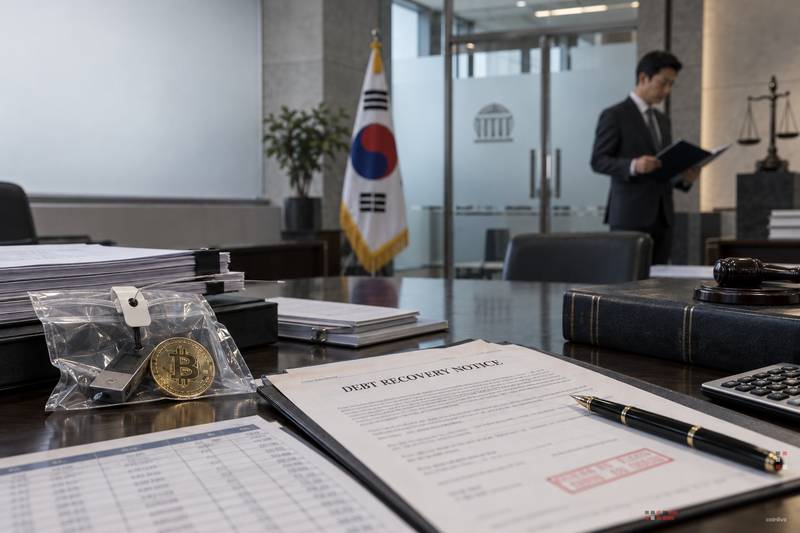
South Korea will extend civil debt-recovery rules to cryptocurrency from November 1, bringing both exchange-held assets and directly held coins and tokens within the scope of court-ordered enforcement, according to reporting by CryptoSlate.
What changes on November 1
The incoming rules expand South Korean debt recovery to treat cryptocurrency as a seizable asset class. Courts will be able to act on crypto regardless of custody arrangement, whether the assets sit on a registered exchange or in a wallet controlled directly by the holder, per CryptoSlate's reporting on the announcement. For related coverage, see South Korea's new president is crypto-pleasant.
The November 1 effective date closes a gap that previously left creditors without clear legal grounds to pursue crypto assets under civil enforcement. South Korean authorities have shown sustained attention to how digital assets move through the financial system, including detecting $1.48 billion in illegal cryptocurrency transactions overseas in a separate enforcement action. For related coverage, see South Korea detects $ one.48 billion in unlawful cryptocurrency transactions overseas.
Exchange-held and directly held assets both in scope
The dual coverage is the headline detail. Exchange-held assets are typically identifiable through know-your-customer records, presenting a more straightforward enforcement path for creditors. Directly held assets, stored in self-custodied wallets, have historically been harder to reach under traditional debt-recovery frameworks. For related coverage, see FNB South Africa Launches Crypto Trading for 9M Customers.
Including both custody arrangements means the new rules apply to a broader share of crypto holdings than an exchange-only scope would. The announcement does not, by itself, confirm the precise court procedures for identifying or freezing self-custodied wallets, and operational guidance from implementing authorities had not been confirmed in reporting available at time of writing. Further search results tracking the rule's implementation can be monitored here. For related coverage, see Best Crypto Sports Betting Sites October 2026: Champions League and NFL Season Guide.
Regulatory context in South Korea
This development fits into a broader South Korean policy shift toward formal crypto oversight. The country's current president has taken a crypto-friendly stance, and has separately favored relaxing certain cryptocurrency regulations. The debt-recovery expansion is framed as civil enforcement rather than punitive restriction, consistent with that direction.
What to watch before November 1
Key implementation details remain unconfirmed: specific court procedures for locating and freezing self-custodied wallets, exchange obligations when a freeze order is issued, and whether asset types or minimum thresholds fall outside the rules' scope. Holders and exchanges operating in South Korea should monitor official guidance as the effective date approaches.
Disclaimer: This article is for informational purposes only and does not constitute financial or investment advice. Cryptocurrency and digital asset markets carry significant risk. Always do your own research before making decisions.
Read original article on coinlive.me