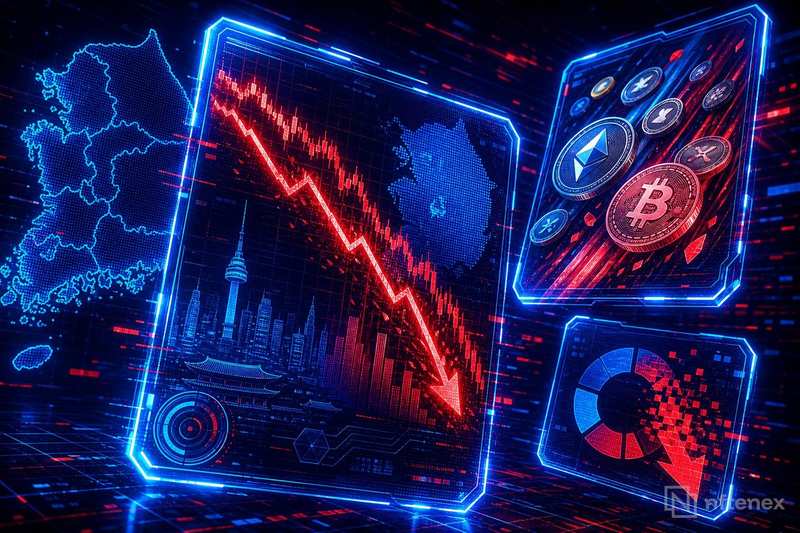
South Korea's crypto trading volume fell 54.6% in the first half of the year, pointing to a sharp slowdown in activity across one of the world's most active retail markets. The decline is the
South Korea's crypto trading volume fell 54.6% in the first half of the year, pointing to a sharp slowdown in activity across one of the world's most active retail markets. The decline is the single confirmed datapoint in this story, and it signals materially weaker participation rather than any single confirmed cause.
TLDR KEYPOINTS
- South Korea crypto trading volume fell 54.6% in H1, the first half of the year.
- Lower volume points to reduced market activity and thinner participation.
- The key thing to watch is whether volume stabilizes, rebounds, or falls further in H2.
The headline figure describes the first half of the year, or H1, and marks a drop of more than half from the comparison period, as reported by Yahoo Finance. A move of that size is large enough to register as a structural shift in trading behavior rather than routine week-to-week noise. For related coverage, see South Korea Reviews Plan to Scrap 22% Crypto Tax After Petition.
Why Lower Crypto Trading Volume Matters
Trading volume is a direct measure of how much activity is flowing through a market. A 54.6% decline means less turnover, and it typically reflects fewer participants or smaller position sizes moving through exchanges over the period. For related coverage, see SEC Crypto Rules Could Move Ahead If CLARITY Act Stalls.
The confirmed data supports only the fact of the decline, not its drivers. Interpretations tied to South Korea's maturing crypto market should be read as context, not as verified explanations for the H1 drop. For related coverage, see House Oversight Chair Launches Insider Trading Probe Into Kalshi and Polymarket.
Macro conditions can weigh on risk appetite in any market. South Korea's central bank raised its base rate to 2.75%, a backdrop that historically pressures speculative activity, though the brief does not link that move directly to the volume figure.
Domestic policy debates add further uncertainty for traders. South Korea has reviewed a plan to scrap its 22% crypto tax after a public petition, a decision that shapes how retail participants approach the market.
What to Watch After South Korea's H1 Slowdown
The first-half decline sets up a clear question for the second half: does volume stabilize, rebound, or fall further. Each path carries a different read on whether the slowdown is temporary or a longer trend in local market activity.
Exchange-level signals will be the most direct indicators. New listings and pairs, such as when Upbit opened KRW, BTC, and USDT trading for OriginTrail, offer a granular view of whether trader engagement on domestic venues is recovering.
For now, the confirmed picture is limited to the H1 figure itself. Readers tracking South Korea's market should focus on second-half volume prints and exchange activity rather than treating any single cause as settled.
Disclaimer: This article is for informational purposes only and does not constitute financial or investment advice. Cryptocurrency and digital asset markets carry significant risk. Always do your own research before making decisions.
Read original article on nftenex.com