When Naver agreed to acquire Dunamu—the operator behind South Korea’s Upbit—it didn’t just focus on buying shares. The structure of the deal also aimed to preserve influence over Naver Financ
When Naver agreed to acquire Dunamu—the operator behind South Korea’s Upbit—it didn’t just focus on buying shares. The structure of the deal also aimed to preserve influence over Naver Financial, the financial arm associated with the transaction, even before lawmakers finalized the rules around corporate voting power.
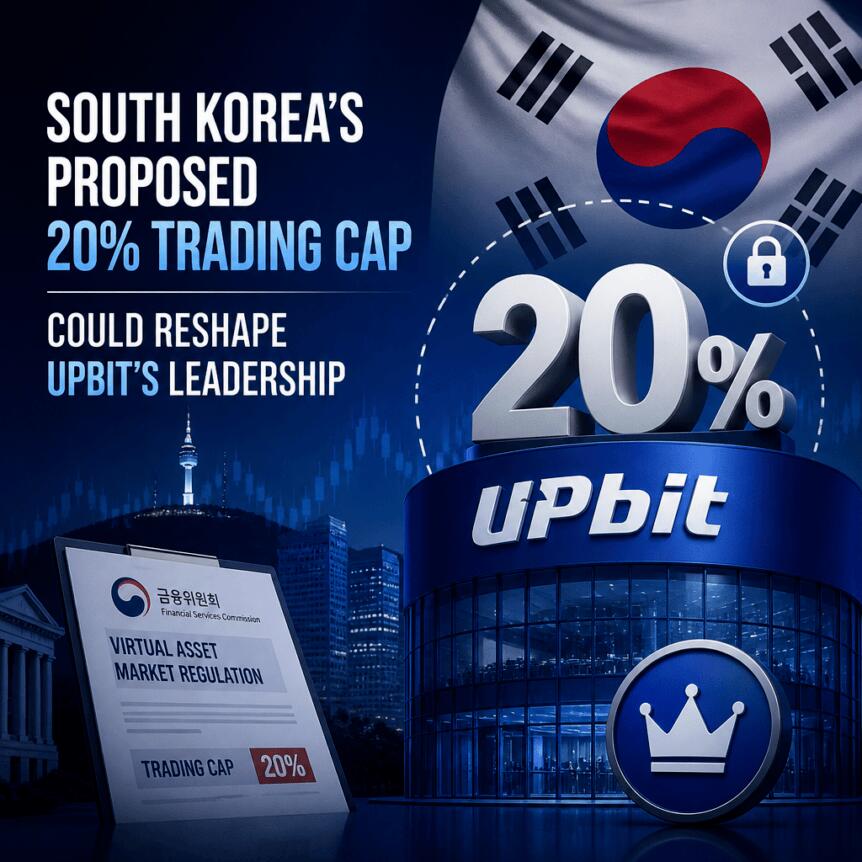
At the center of the issue is South Korea’s proposed ownership cap for major holdings. If the bill passes as drafted, share votes tied to ownership above the 20% threshold could be stripped—potentially changing how control works in the Dunamu-related portion of Naver’s strategy, despite what looks to be a straightforward equity purchase.
Key takeaways
- Naver Financial’s voting control of itself was designed through agreements with two Dunamu executives, giving 46.5% of the votes while Naver Financial would own only 17%.
- The proposed South Korean ownership cap could limit voting power on shareholdings above 20%, complicating the “own it outright” assumption for the Dunamu stake.
- If regulators cannot directly compel asset sales under the draft, Naver Financial might still retain all Dunamu shares while losing the majority of votes.
- The practical question for investors is less about headline ownership and more about which governance rights determine board appointments and earnings consolidation.
How Naver’s deal tried to secure control
According to the deal structure described around Naver’s acquisition of Dunamu, Naver had already identified a way to retain control of Naver Financial even when its equity stake would be comparatively small. The mechanism relies on agreements with two Dunamu executives. Under those arrangements, Naver would be positioned to secure 46.5% of the votes in Naver Financial while owning just 17% of it.
This matters because, in corporate governance, voting power often determines decision-making authority more than share ownership alone. Naver’s approach for Naver Financial appears to account for that reality, effectively separating “economic interest” from “control.”
By contrast, the logic for control over Dunamu itself was described as simpler: the financial entity would own Dunamu outright. In that framing, investors could reasonably expect that control would flow from equity ownership in the normal course.
The proposed 20% voting cap changes the control equation
South Korea’s proposed ownership cap threatens to disrupt that second part of the plan. Under the draft bill, if enacted, shares representing ownership above a 20% cap would lose their votes. In other words, even if an investor holds more than 20% of a company, the voting rights associated with the portion above that threshold would be diluted or eliminated.
The implication is straightforward: while Naver might still be able to hold a larger stake, its ability to steer outcomes via shareholder voting could be restricted. The draft suggests a shareholder could vote up to 34% in a scenario aligned with the rules, but the bill provides no explicit power for regulators to order a sale of the excess shares.
That asymmetry—voting rights constrained without an automatic requirement to divest—creates a governance gray area. Naver Financial could potentially keep every Dunamu share, but find that it cannot reliably translate that ownership into influence through votes. For an $11.2 billion deal, that gap between ownership and control is far from academic.
Earlier coverage from Cointelegraph also highlighted how South Korea has been tightening aspects of crypto-related policy, including rules related to withdrawal freezes amid hacking threats, underscoring that regulation is shaping operational realities for crypto businesses in the country.
Why investors are left with unanswered governance questions
The purchase price alone cannot resolve how power will actually work after the cap. The more immediate concern becomes: who appoints and oversees the directors responsible for supervision of Upbit?
Corporate structure and contractual rights likely play a decisive role. Even if Naver Financial loses voting power on the majority of Dunamu shares due to the cap, other mechanisms—such as board appointment rights or contractual governance provisions retained by Naver Financial—could still determine how directors are selected and how managerial oversight functions.
Another key dimension is the ability of Naver Financial to consolidate Dunamu’s earnings in its financial statements. In many corporate and accounting frameworks, control—whether through voting, board authority, or contractual arrangements—can affect whether a parent company includes subsidiary results. The article describes the possibility that “the board and contractual rights Naver Financial retains” could determine whether earnings from Dunamu can be counted in Naver’s accounts.
That distinction matters because it affects investor perception of the deal’s economic impact. If consolidation is weakened or disputed, markets may question not only governance outcomes but also how much value the transaction effectively brings to Naver Financial’s balance sheet.
What remains uncertain as lawmakers consider the bill
The core uncertainty is procedural as much as it is structural. The draft gives regulators no explicit power to force a sale, meaning enforcement could focus on voting rights rather than stripping ownership. That approach can leave corporate control in a reduced-function state: large shareholders may retain economic exposure while losing the leverage typically used to direct corporate strategy.
For Naver and its stakeholders, the most important variables to watch next are how the bill is finalized and how it is applied in real corporate filings. Investors should also pay close attention to any clarification on board appointment mechanisms, director selection rules, and how contractual arrangements interact with statutory voting caps.
Until lawmakers clarify the final text—and until governance details are tested against it—this deal’s headline “outright ownership” framing may not translate cleanly into actual control of Dunamu and, by extension, the oversight structure for Upbit.
Readers should monitor the bill’s final language and any subsequent regulatory guidance on voting rights versus asset control, because that will determine whether Naver Financial’s influence over Upbit is primarily a matter of equity, contractual governance, or the ability to convert voting power into board authority.
This article was originally published as South Korea’s Proposed 20% Trading Cap Could Reshape Upbit’s Leadership on Crypto Breaking News – your trusted source for crypto news, Bitcoin news, and blockchain updates.