South Korea asks crypto exchanges to keep more customer assets offline after Binance hack South Korea has reportedly asked crypto exchanges to keep more customer assets offline after a Binanc
South Korea asks crypto exchanges to keep more customer assets offline after Binance hack
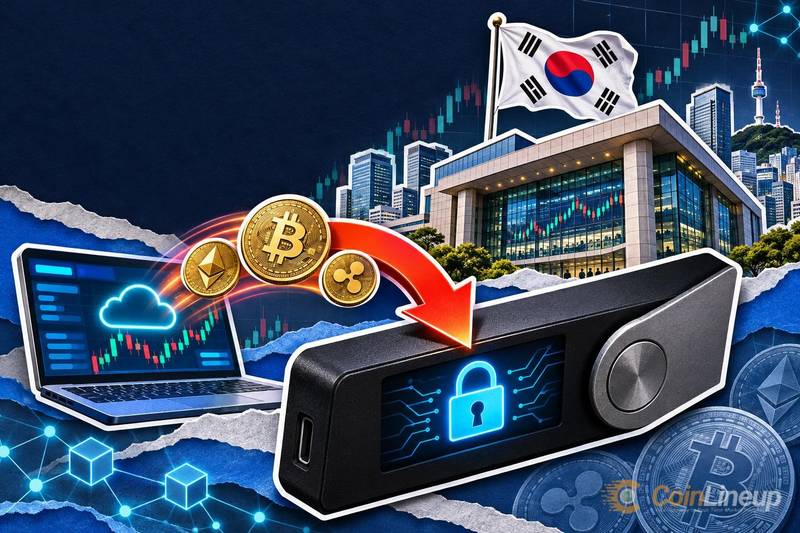
South Korea has reportedly asked crypto exchanges to keep more customer assets offline after a Binance hack. The request matters because an exchange often holds crypto for people who have never managed their own wallet.
The available research supports a narrow point: the reported request concerns offline storage of customer assets. It also identifies the Binance hack as the reported context, without supplying details about the incident, the regulator, or a required storage level. Reporting indexed for the South Korea and Binance search describes that limited connection. For related coverage, see How to File Crypto Taxes Before Year-End 2026: A Beginner Guide.
What “offline” means for crypto held on an exchange
Offline storage, often called cold storage, means keeping the keys that control crypto away from an internet-connected system. An online wallet is more like money kept at a shop counter, while offline storage is closer to money held in a locked back room. The reported focus on offline custody appears in search results covering the request. Context on this theme: CZ Says AI Hacking Fears Miss a Bigger Crypto Risk.
Customer assets are the coins and tokens an exchange holds on behalf of its users. If someone buys Bitcoin through an exchange and leaves it there, the platform normally controls the wallet keys. The reported request therefore puts attention on how the platform stores assets that belong economically to customers. Bing’s indexed results for the reported offline-assets request provide the available external reference.
Keeping more assets offline can reduce the amount immediately exposed to an internet-connected environment. It does not mean that every security question disappears. The evidence supplied for this draft names offline custody as the safeguard, but it does not describe the full controls any exchange uses. The available search record is similarly limited.
What the reported request does and does not establish
The reported request is directed at crypto exchanges, not individual wallet users. It concerns customer assets, so it speaks to platforms that keep custody for clients. The provided evidence does not identify which exchanges received it or explain when any changes would take effect. The available indexed reporting supports no further implementation detail.
It also does not establish a new mandatory rule or a precise offline-storage threshold. Those details would need an official notice or fuller reporting before readers can treat them as confirmed requirements. Coinlineup has separately covered a South Korea proposal involving offline crypto asset storage, but that related coverage should not be read as proof of the terms in this reported request. The supplied reporting query provides no confirmed threshold.
The Binance reference explains why custody safeguards are receiving attention in the reported account. Yet the research package gives no verified facts about the hack itself, including its timing, scope, losses, or affected users. A careful reading should keep the reported policy response separate from unsupported details about the incident. The supplied Bing result feed is the relevant cited record.
What exchange customers can watch
For a person holding a small balance on an exchange, the useful question is simple: who controls the wallet keys, and how does the platform describe its custody setup? A platform’s own security materials may explain whether it uses offline storage, withdrawal checks, or other protections. The reported focus on custody makes those descriptions more relevant to customers. The reported South Korea custody focus is the basis for that practical question.
Customers can also distinguish between holding crypto on an exchange and moving it to a personal wallet. A personal wallet shifts key-management responsibility to the owner, while exchange custody leaves operational control with the platform. Neither option receives a recommendation from the supplied evidence; the key point is to understand which arrangement applies. Available reporting on the request does not provide a user-specific instruction.
Security news also gives users a reason to review basic account protections, such as unique passwords and any security options their exchange offers. That is a general account-safety step, not a claim about the reported request’s terms. Readers interested in how another exchange addressed a security event can see Coinlineup’s coverage of Bitget’s planned Thai exchange acquisition after a hack; it is separate from the South Korea report. The supplied search results provide no account-security instruction.
The practical takeaway
The evidence currently supports one takeaway: South Korea has reportedly asked exchanges to hold more customer crypto offline following a Binance hack. For regular holders, that makes custody worth checking before leaving funds on any platform. The cited report trail does not yet supply enough detail to say exactly how exchanges must respond.
Watch for an official explanation that names the regulator, affected platforms, timing, and any storage standard. Until then, treat claims beyond the reported request with care. For broader context on recent Binance-related events, Coinlineup’s review of crypto events involving Binance is related reading, not confirmation of this report. The available result feed does not supply those details.
Disclaimer: This article is for informational purposes only and does not constitute financial or investment advice. Cryptocurrency and digital asset markets carry significant risk. Always do your own research before making decisions.
Read original article on coinlineup.com