Key Takeaways SpaceX secured AI compute contracts totaling approximately $28 billion in annual revenue from Anthropic, Alphabet, and Reflection AI SPCX shares have declined 32% from their $22
Key Takeaways
- SpaceX secured AI compute contracts totaling approximately $28 billion in annual revenue from Anthropic, Alphabet, and Reflection AI
- SPCX shares have declined 32% from their $225 peak, currently hovering around $153
- The company generated $18.7 billion in revenue during 2025 while recording a $4.94 billion net loss
- CEO Elon Musk expressed confidence that SpaceX will significantly surpass Wall Street’s revenue expectations
- Trading at more than 100x sales, valuation experts like Morningstar estimate fair value near $780 billion — approximately 50% of current market capitalization
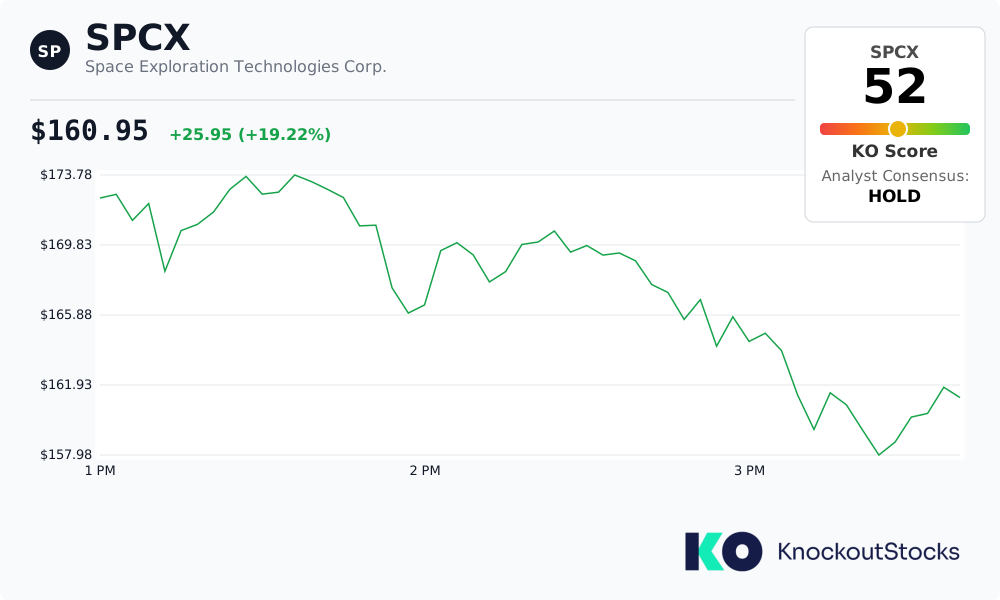
Shares of SpaceX (SPCX) are currently changing hands around $153, representing a sharp 32% retreat from the post-listing high of $225 and sitting just 14% above the $135 initial offering price from its June 12 public market debut.
 Space Exploration Technologies Corp., SPCX
The aerospace manufacturer executed the biggest initial public offering on record, securing $85.7 billion in capital. Shares rallied during the first trading session but have since retreated amid widespread technology sector weakness.
SpaceX increased revenue by 33% during 2025, reaching $18.7 billion. The Starlink satellite internet division generated $11.4 billion — representing approximately 61% of consolidated revenue — climbing 48% compared to the prior year. The Starlink network also surpassed 10 million paying subscribers by the end of March 2026.
Despite robust top-line expansion, SpaceX recorded a net loss of $4.94 billion in 2025. Significant capital allocation toward Starship development initiatives and losses within its xAI business segment weighed on profitability. The artificial intelligence division contributed $3.2 billion in revenue but remains unprofitable.
Strategic Pivot Toward AI Compute Infrastructure
The most significant strategic shift currently underway involves how SpaceX is leveraging its artificial intelligence computing assets.
Instead of exclusively deploying GPU resources for proprietary AI development, SpaceX is leasing substantial computing capacity to external research organizations. Anthropic has committed to monthly payments of $1.25 billion for exclusive access to the complete Colossus 1 facility. Alphabet’s agreement calls for $920 million monthly. Reflection AI is contributing $150 million per month for supplementary capacity.
Combined, these three arrangements represent nearly $28 billion in annualized recurring revenue.
Company leadership disclosed in regulatory filings that existing infrastructure can accommodate all three partnerships while maintaining support for internal AI development efforts. The documents also acknowledged that Grok, SpaceX’s proprietary large language model, is anticipated to serve a limited market segment.
This strategic disclosure is significant. SpaceX is transitioning toward a neocloud business model — providing commoditized computing infrastructure to AI developers rather than directly competing in AI model development.
Valuation Analysis: How Does SpaceX Compare?
Competing neocloud infrastructure providers command substantially lower valuation multiples. CoreWeave maintains a contracted revenue pipeline approaching $100 billion and currently trades at approximately 4.2 times revenue. Oracle holds remaining performance obligations totaling $638 billion while trading near 5 times sales.
SpaceX, conversely, commands a valuation exceeding 100 times trailing twelve-month revenue with a $2 trillion market capitalization.
Morningstar’s analysis suggests a fair valuation around $780 billion — roughly half the present market valuation. The optimistic scenario requires near-flawless execution: sustained Starlink subscriber acceleration, on-schedule Starship milestones, and narrowing xAI losses.
This past Sunday, Elon Musk stated on X that he would be “disappointed” if SpaceX failed to dramatically surpass consensus revenue projections. Earlier in the month, he indicated the company might achieve $1 trillion in annual revenue by 2030 — exceeding Morgan Stanley’s $330 billion forecast by more than three times. Goldman Sachs projects a more bullish $470 billion by 2030, while New Street Research anticipates approximately $195 billion.
SpaceX maintains $100.8 billion in cash reserves as of mid-June and has disclosed plans for a senior unsecured bond issuance. The company’s inaugural quarterly earnings report as a publicly traded entity is scheduled for August 17, covering second-quarter results.
The post SpaceX (SPCX) Stock Plunges 32% From Peak — Time to Buy the Dip? appeared first on Blockonomi.