TLDR SpaceX shares fall 2.58% despite securing historic FCC satellite authorization. FCC approves up to one million SpaceX satellites for orbital computing operations. Starmind aims to addres
TLDR
- SpaceX shares fall 2.58% despite securing historic FCC satellite authorization.
- FCC approves up to one million SpaceX satellites for orbital computing operations.
- Starmind aims to address rising AI computing demand through space-based technology.
- SpaceX expands its AI infrastructure ambitions following its acquisition of xAI.
- SpaceX has yet to reveal Starmind’s satellite deployment timeline or project costs.
Space Exploration Technologies Corp. (SPCX) shares fell 2.58% to $122.56 despite historic federal approval for orbital data centers. The stock lost $3.25 but recovered sharply from an intraday low near $114. Meanwhile, the regulatory decision allows SpaceX to deploy up to one million satellites for computing operations in space.
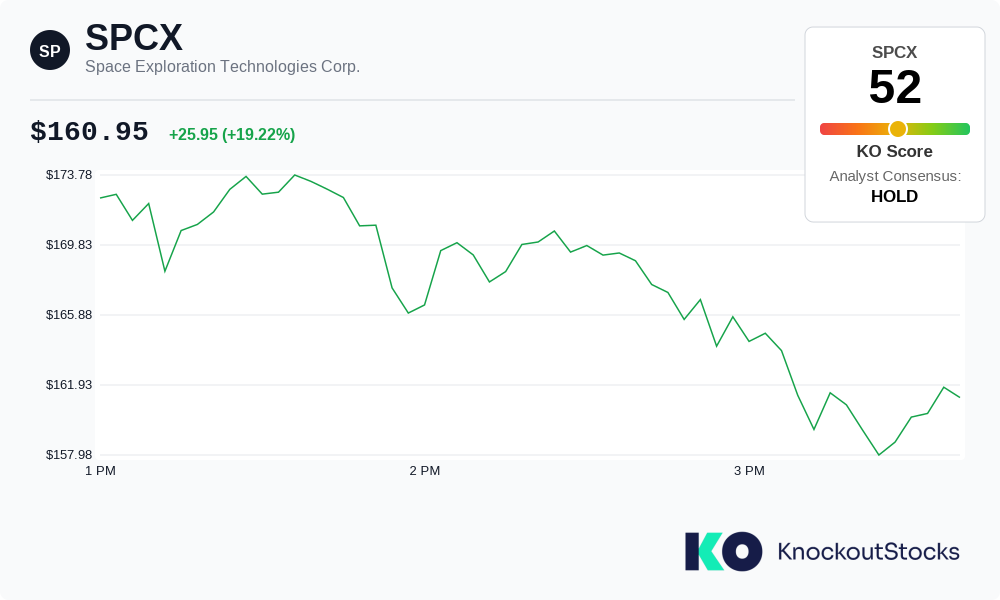
Space Exploration Technologies Corp., SPCX
FCC Grants SpaceX Historic Satellite Authorization
The Federal Communications Commission (FCC) granted SpaceX permission on Wednesday to establish its planned Starmind satellite network. The decision marks the first authorization of its kind in United States history. It also gives the company regulatory clearance to expand beyond its existing satellite internet operations.
SpaceX intends to use the constellation to address growing demand for artificial intelligence infrastructure. Conventional data centers face constraints involving electricity supplies, cooling requirements and available land. Orbital computing offers an alternative location for processing large volumes of data.
However, the authorization establishes a maximum satellite count rather than a confirmed deployment target. SpaceX has yet to announce a launch date for the first Starmind satellites. Additionally, the FCC provided no estimate for the overall cost of establishing the network.
Starmind Network Targets Growing AI Computing Demand
Starmind will use orbital computing modules to process information for applications on Earth. The satellites will primarily exchange data through optical communication systems using laser technology. These connections will support data transfers between individual spacecraft within the constellation.
The FCC authorized radio frequency links for satellite tracking and emergency commands. SpaceX can also use these radio connections as backup systems during disruptions to optical communications. The regulator confirmed the network meets its existing requirements for managing orbital debris.
SpaceX plans to operate Starmind separately from Starlink, its existing satellite broadband network. However, the company’s application outlined potential connections between the two satellite systems. Such connections could support communication between orbital computing infrastructure and the broader Starlink network.
SpaceX Expands AI Infrastructure Following xAI Acquisition
SpaceX acquired Elon Musk’s artificial intelligence company xAI in February as part of its broader computing strategy. The company subsequently pursued regulatory clearance for its proposed network of solar-powered orbital data centers. The initiative extends its commercial activities beyond rocket launches and broadband connectivity.
FCC Chairman Brendan Carr linked orbital computing development to America’s future computing infrastructure needs. The agency continues to assess similar applications from other companies pursuing space-based data processing. It also intends to issue decisions on those proposals quickly.
The approval removes a regulatory barrier for SpaceX’s planned entry into orbital data center operations. The company still needs to manufacture and launch the spacecraft before commercial computing services can begin. The authorization alone does not establish a timetable for generating revenue.
The post SpaceX (SPCX) Stock: Slip Despite Historic FCC Approval for 1 Million Satellites appeared first on Blockonomi.