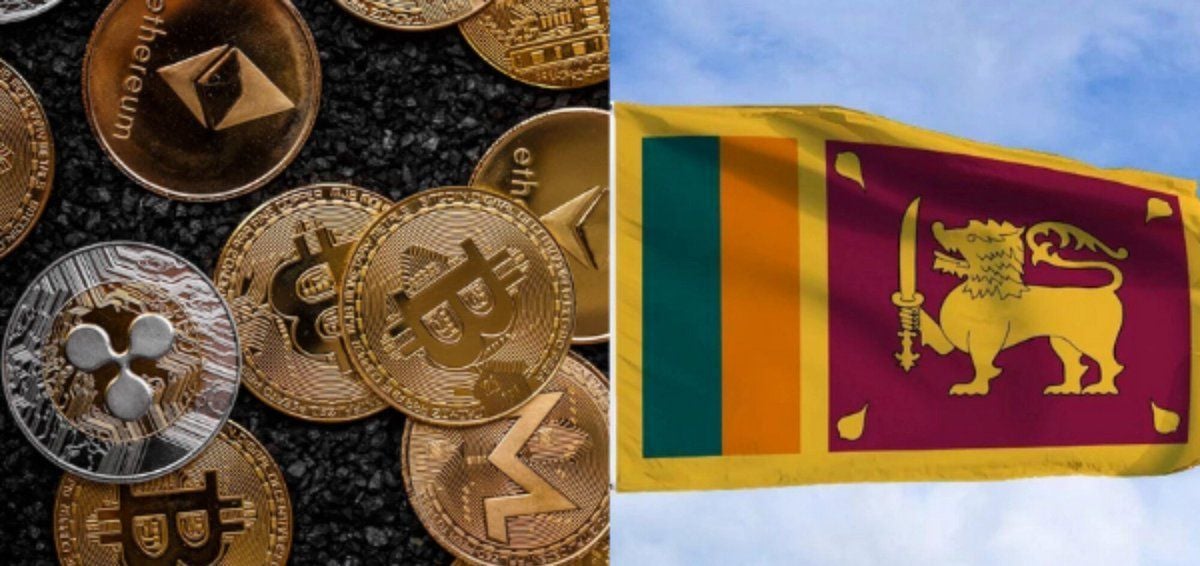
Sri Lanka is moving to bring its cryptocurrency market under formal oversight for the first time. The country's Securities and Exchange Commission (@SEC_SriLanka) and the Ministry of Digital
Sri Lanka is moving to bring its cryptocurrency market under formal oversight for the first time. The country's Securities and Exchange Commission (@SEC_SriLanka) and the Ministry of Digital Economy convened regulators, policymakers, and industry participants this week to map out a virtual asset regulatory framework, marking a significant policy shift for a market that has, until now, operated entirely outside the formal financial system.
A Market Built on Gray Channels
Cryptocurrency in Sri Lanka occupies a legal gray area: it is not officially illegal, but it is also not recognized as legal tender or a protected asset class.A 2021 directive under the Foreign Exchange Act prohibited banks and card payments for crypto transactions, effectively cutting off formal channels and pushing activity into an unregulated gray market. As a result, most local crypto activity runs through peer-to-peer platforms and offshore exchanges, with no licensed operators, no enforceable consumer protections, and no formal data on trading volumes.
An estimated 420,000 Sri Lankans own cryptocurrency, yet not a single operator is licensed, supervised, or subject to enforceable anti-money laundering rules.Virtual assets such as cryptocurrencies and stablecoins currently lack a proper legal structure, and the absence of a framework has led to significant fraud and other wrongful activities.
What the Framework Could Look Like
The regulatory effort draws on models from Singapore, Hong Kong, New Zealand, and Malaysia. The core pillars under discussion include KYC requirements, anti-money-laundering controls, and investor protection standards. The roadmap includes registration of all virtual asset service providers (VASPs), classification of virtual assets as a distinct legal category, and implementation of AML requirements including the FATF travel rule.
The government is preparing to introduce a comprehensive legal and regulatory framework specifically targeting virtual assets, including cryptocurrencies and stablecoins. The initiative aims to address the significant legal vacuum that has left citizens vulnerable to online scams and financial fraud. Regulators want activity currently flowing through offshore and P2P platforms brought onshore and into a supervised environment.
With India, Pakistan, Thailand, and Vietnam all advancing crypto regulation, Sri Lanka cannot afford to sit idle. The push also carries an external deadline: Sri Lanka faces a mutual evaluation by international AML watchdogs, and compliance with global frameworks requires identifying and monitoring cryptocurrency usage.
Sources:Sri Lanka's crypto regulation roadmap: what the 2026 framework actually means (Daily News)Virtual assets: Sri Lanka moves to regulate crypto (The Morning)Sri Lanka's digital crossroads: Why a coherent crypto framework is now a policy imperative (Daily FT)