TL;DR Stablecoin market capitalization fell by about $10 billion from its May peak, with June recording the biggest monthly dollar decline since the 2022 Terra crash. USDT’s supply dropped fr
TL;DR
- Stablecoin market capitalization fell by about $10 billion from its May peak, with June recording the biggest monthly dollar decline since the 2022 Terra crash.
- USDT’s supply dropped from around $190 billion to $184 billion, while USDC declined to approximately $73 billion, leading the overall contraction.
- Despite the headline decline, the stablecoin market shrank by only about 3%, indicating that most of the sector’s recent growth remains intact.
- Even as stablecoin supply declined, tokenized real-world assets reached new highs.
The stablecoin market has recorded its largest monthly contraction since the collapse of TerraUSD in 2022, with total market capitalization falling by roughly $10 billion from its May peak.
While the decline has raised concerns about liquidity across the digital asset market, analysts note that the overall contraction remains relatively modest at around 3%, suggesting the sector continues to retain most of the gains accumulated over the past year.
The retreat comes as crypto markets navigate weaker investor sentiment, persistent ETF outflows, and heightened macroeconomic uncertainty that has weighed on demand for digital assets.
Tether’s USDT, the world’s largest stablecoin, accounted for much of the decline, with its circulating supply falling from roughly $190 billion to $184 billion. USDC also contracted, dropping to around $73 billion during the same period. Together, the two dominant dollar-backed stablecoins represent the overwhelming majority of on-chain liquidity used across centralized and decentralized crypto markets.
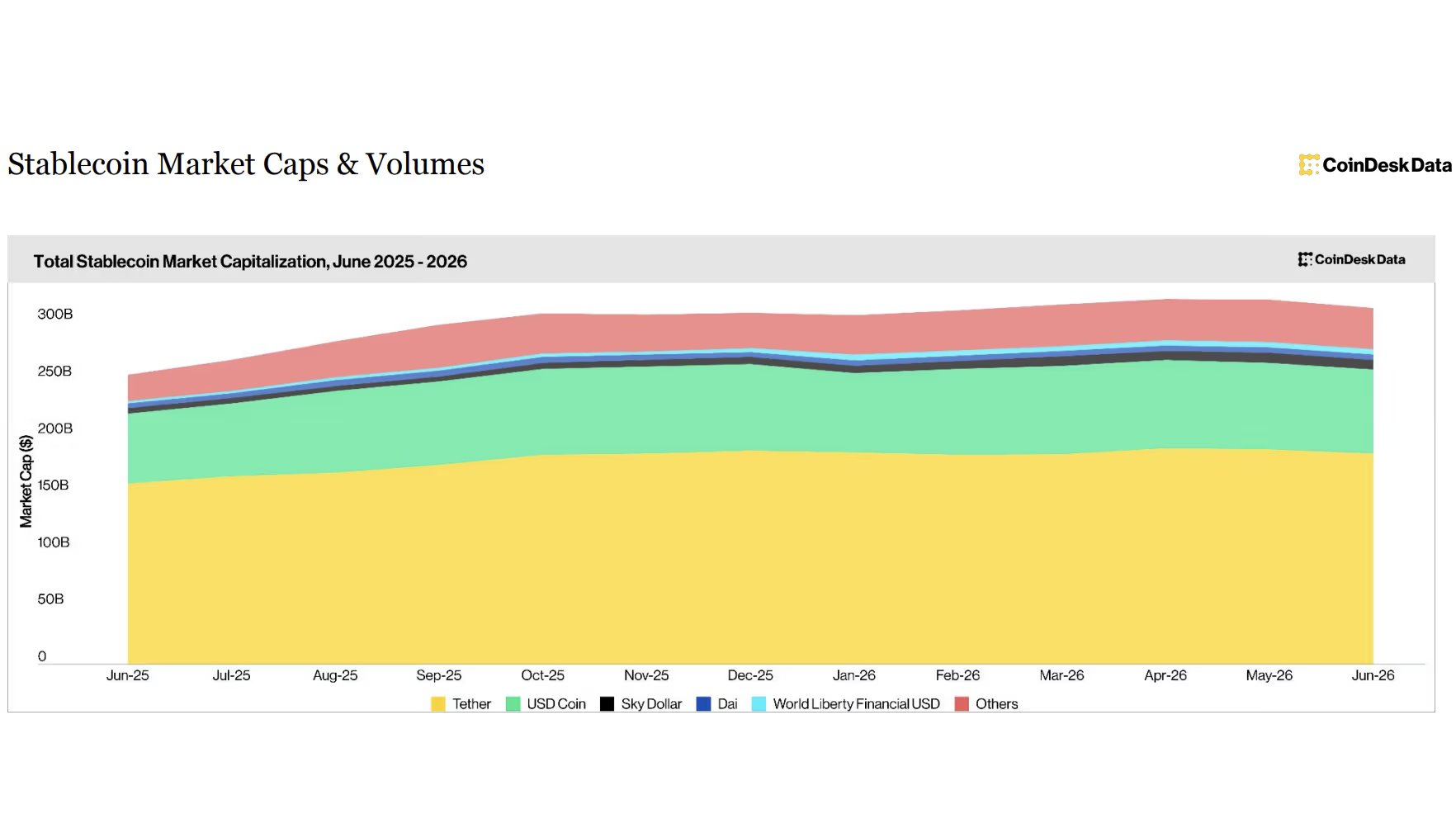
Stablecoin Data | Source:
XAlthough the market lost billions of dollars in capitalization, the overall decline represented only a small percentage of the sector’s total value, highlighting that stablecoin adoption remains significantly higher than it was before the recent expansion cycle.
Stablecoin Market Liquidity Concerns Return to The Spotlight
Stablecoins are widely viewed as the primary source of liquidity within the cryptocurrency ecosystem because they are commonly used to enter and exit positions without converting back into traditional fiat currencies.
A shrinking stablecoin supply is often interpreted as a sign that capital is leaving digital asset markets or remaining on the sidelines. The combined supply of USDT and USDC had been falling since early May, reflecting weaker on-chain liquidity during a period marked by declining crypto prices and softer institutional inflows.
The reduction also coincided with several weeks of net outflows from U.S. spot Bitcoin exchange-traded funds, reinforcing concerns that investor demand cooled during June.
Despite the decline in supply, trading activity remained relatively resilient. Stablecoin trading volume on centralized exchanges rose 10.8% in June to approximately $981 billion, marking the first monthly increase in five months. The increase suggests that stablecoins continue to play a central role in crypto trading even as total circulating supply contracts.
Tokenized Assets Continue Expanding
While stablecoins experienced their sharpest pullback in years, tokenized real-world assets continued moving in the opposite direction.
Recent data found that the total market capitalization of tokenized assets climbed to a record $30.1 billion in June, driven by continued growth in tokenized U.S. Treasuries and public equities. Tokenized Treasury products alone expanded to approximately $17 billion, while tokenized equity trading volumes surged to fresh highs during the month.
The contrasting trends suggest that although short-term liquidity has weakened, institutional interest in blockchain-based financial infrastructure continues to grow.
The broader stablecoin sector is also benefiting from increasing regulatory clarity. Recent developments include new licensing approvals for major issuers and expanding institutional support for dollar-backed digital assets.
Circle, the issuer of USDC, recently received approval to operate as a federally regulated trust bank in the United States, allowing it to directly oversee reserves backing its stablecoin as it now dominates over USDT. The move reflects growing integration between traditional finance and digital asset infrastructure despite the recent market slowdown.
Market participants will now be watching whether stablecoin issuance resumes in the coming months. A return to supply growth would likely signal renewed capital entering the crypto ecosystem, while continued contraction could point to a more cautious investment environment during the second half of the year.
The post Stablecoin Market Sheds $10B Since May in Sharpest Monthly Pullback Since Terra Collapse appeared first on Blockonomi.