Sending 200 dollars via networks using stablecoins costs about 2 dollars, compared to 12.72 dollars with traditional channels. This is according to the quarterly report from Borderless.xyz. I
Sending 200 dollars via networks using stablecoins costs about 2 dollars, compared to 12.72 dollars with traditional channels. This is according to the quarterly report from Borderless.xyz. In addition to reducing fees, these solutions speed up transfers: a few minutes are enough where banking circuits often take several days.
In Brief
- A transfer of 200 dollars costs about 1% of its amount with stablecoins, compared to 6.36% through classical channels.
- In Brazil, Mexico, and Colombia, payments usually arrive in two to three minutes via local networks.
- Reliability varies, however, by country, with a success rate of 98.6% in Mexico, compared to 73% in Costa Rica.
Significantly Reduced Transfer Fees
Stablecoins are gaining ground in international payments. After the initiatives of Western Union to accelerate transfers in stablecoins, the report from Borderless.xyz provides concrete figures on possible savings.
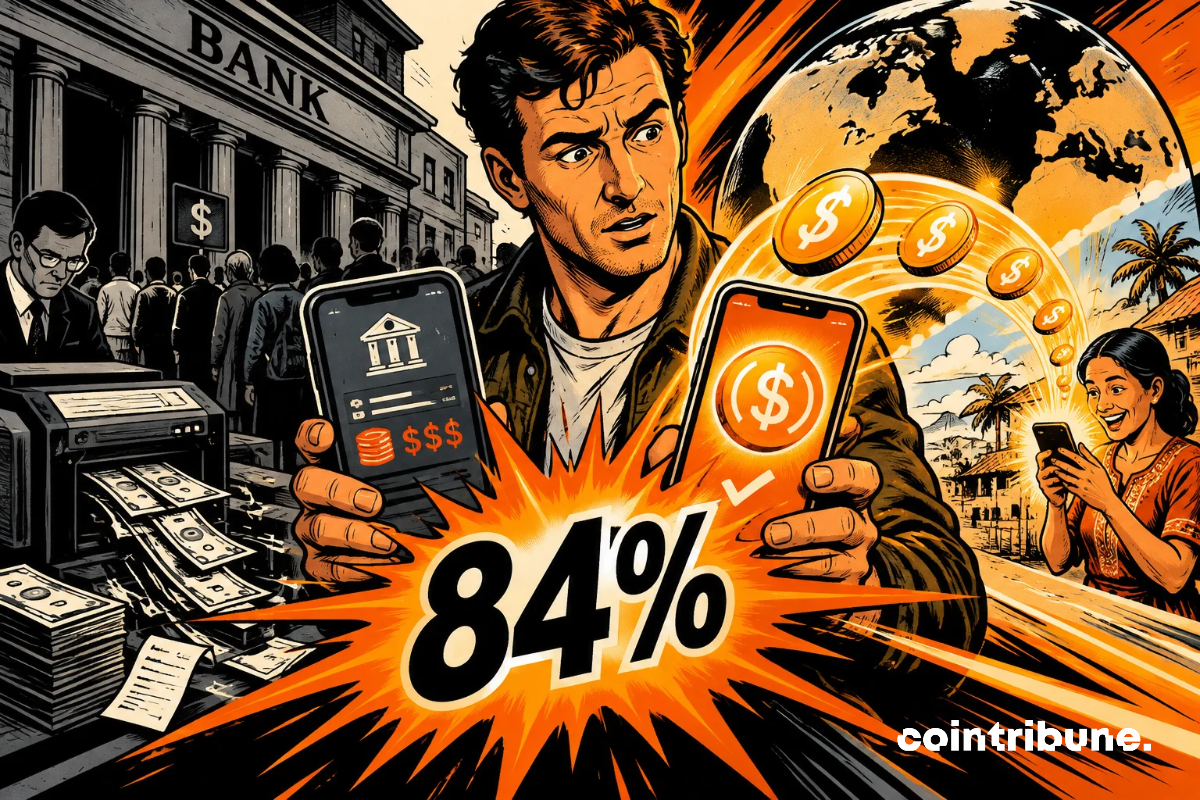
For a transfer of 200 dollars, the company’s data shows a median cost of 2 dollars with networks backed by stablecoins. Traditional channels charge 12.72 dollars, or 6.36% of the amount sent. The gap thus reaches about 84%.
However, it is necessary to take into account a difference in the compared periods: Borderless.xyz uses rates from the third quarter of 2026, while the World Bank provides a reference from the same period in 2025 here. This difference therefore limits the scope of the comparison.
Savings remain particularly interesting in emerging markets. In Sub-Saharan Africa, the average cost falls from 8.46% to 2.9%. In Latin America, it drops from 5.64% to 1.25%.
Businesses can also reduce their expenses. To transfer 10,000 dollars to the Eurozone, the cheapest provider charges 26 dollars, compared to a median of 52 dollars. A bank can ask for between 135 and 150 dollars, including the exchange margin.
A Few Minutes Instead of Several Days
Speed is another advantage. In Brazil, transfers via PIX reach the recipient in a median of two minutes. In Mexico, the SPEI network shows a delay of three minutes, while the Colombian PSE system operates around two minutes.
Conversely, an international bank transfer generally arrives the next business day. For the slowest 10% of transfers, the wait can reach three business days. For businesses, this difference matters: a delayed payment can immobilize part of their cash flow.
However, speed does not always guarantee success. Mexico displays a completion rate of 98.6%, followed by Brazil at 97.8%. Colombia falls to 79%, while Costa Rica reaches only 73%. Local payment networks remain crucial to routing funds to the beneficiary.
Stablecoins Still Have to Convince
The adoption of digital dollars is also progressing in consumer wallets. USDC notably arrives on 82 million Samsung smartphones. On their side, Stripe is developing Tempo, a blockchain dedicated to stablecoin payments.
According to the analyses of Borderless.xyz, the growth of volumes accompanies the development of these infrastructures. However, the presented results cover only part of the international corridors. They do not necessarily take into account all conversion fees nor the difficulties encountered by people without access to banking services.
One question remains in terms of timing. If the measured costs remain stable over time, the argument of transfers could weigh more than that of yield in the adoption of stablecoins. Future reports will say whether the median holds.