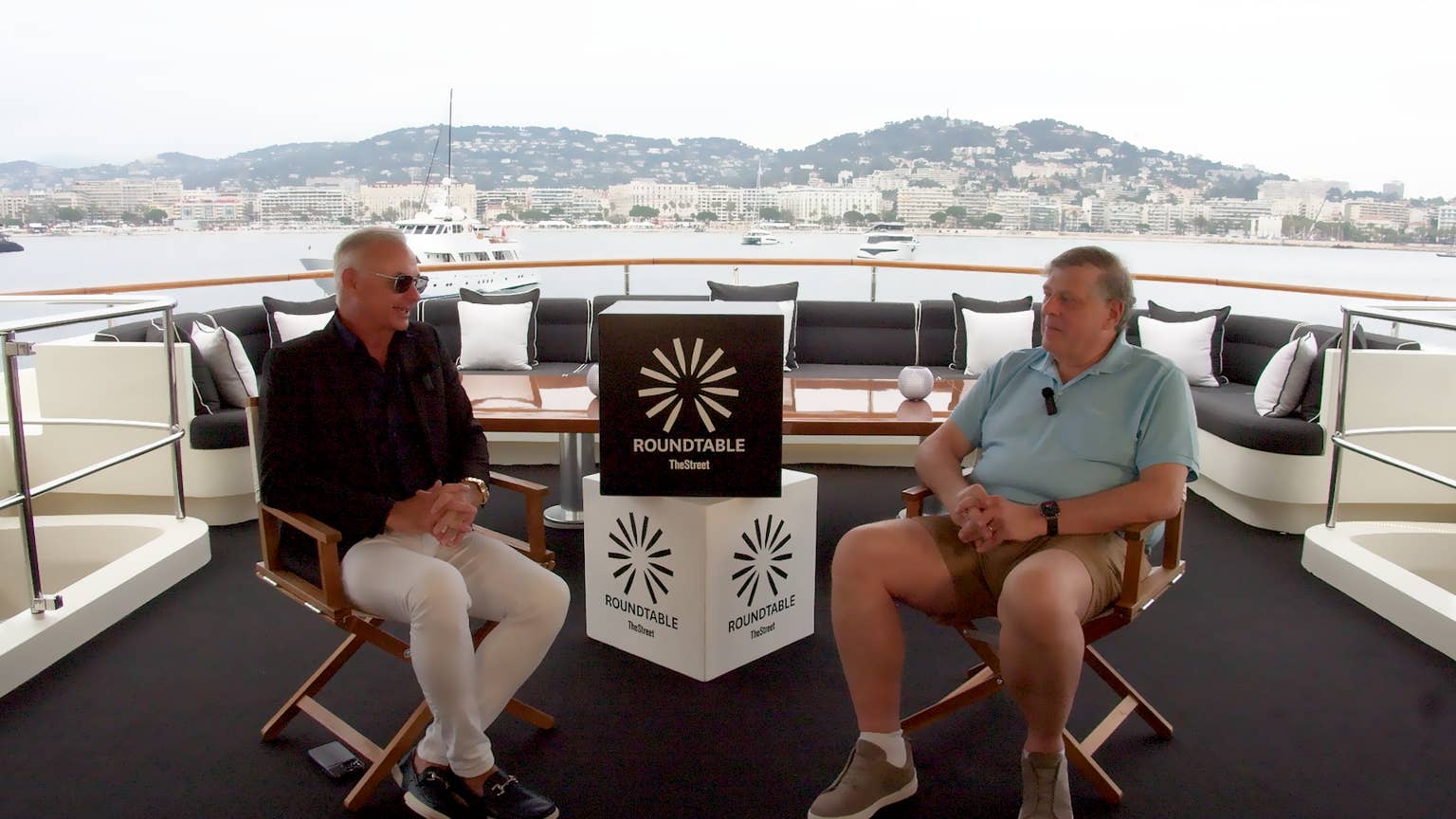
Mark Penn thinks the fear that AI will strip the humanity out of advertising has it backwards. In an interview with Roundtable (NASDAQ: RTB) CEO and founder James Heckman at the Cannes Lions
Mark Penn thinks the fear that AI will strip the humanity out of advertising has it backwards.
In an interview with Roundtable (NASDAQ: RTB) CEO and founder James Heckman at the Cannes Lions festival, the chairman and CEO of Stagwell (NASDAQ: STGW) argued that artificial intelligence will make marketing more personal, not less.
Penn, a former Clinton pollster who founded Stagwell in 2015 with a $250 million anchor investment from former Microsoft CEO Steve Ballmer, said creativity and AI "have to go hand in hand."
▶ Watch the full interview on Roundtable
"As I like to say, when you wanted to show an image of a cat on a mountain, you needed a mountain and a cat. And now you need a computer, and you can manufacture really compelling images. So you're gonna do greater work than ever before," Penn said.
Heckman pushed on the worry that automation could dehumanize creative work. "It feels like the efficiencies are gonna go the other way, less personal," he said. Penn countered with a framework he has used for years.
"We were originally in the Ford economy. The Ford economy was, any color you wanted as long as it was black... Then we moved to what I call the Starbucks economy, which is 155 varieties of something that started out as black... And now we're in the Uber economy. When you call for an Uber, it manufactures a product from point to point. So it's the ultimate in personalization," Penn said. "You probably see two thousand ads a day, and probably one thousand nine hundred and ninety-nine are irrelevant to you."
▶ Watch the full interview on Roundtable
Saving the news
Asked how journalists can survive as their work is scraped and repurposed, Penn pointed to Stagwell's Future of News Initiative, a real effort the company has run since 2024 that studies news advertising and argues brand-safety filters have starved newsrooms of ad dollars.
"We proved conclusively that a lot of this brand safety stuff was way over the top. What started as a good idea became in effect censorship of news," Penn said. "News junkies... are about a quarter of the population... News has been underrepresented, and we affirmatively have this effort to turn that the other way."
Trending on TheStreet Roundtable
Built for these times
Penn argued that Stagwell is structurally different from the legacy holding companies it competes with.
"I was chief strategy officer at Microsoft when I set up Stagwell with Steve Ballmer as my core investor. From day one, we were going to have an innovation team that was devoted to innovating at the company... I've got 12,000 people in 51 countries and I'm growing. I'm only 1% of the market, but I won 30 or 40% of the most recent big pitches in the industry," Penn said.
Stagwell reported nearly 11,900 employees at the end of 2024, up about 16% year over year.
▶ Watch the full interview on Roundtable
He also pointed to a political tailwind. Penn said the coming election cycle will bring "the highest political expenditure in a midterm ever," followed by a presidential "super cycle."
The numbers support him: ad-tracking firm AdImpact projects 2026 U.S. political ad spending will hit a record $11.6 billion, up from about $8.9 billion in the 2022 midterms.
"We're winning more business and going against bigger competition to win it, we've got advanced tech products, we've got a political super cycle coming, and we're just really getting started. We're only 1%," Penn said.