BitcoinWorld Starcloud raises $250M for orbital AI data centers, secures launch capacity amid SpaceX transition Starcloud, a startup developing satellites capable of performing AI inference i
BitcoinWorld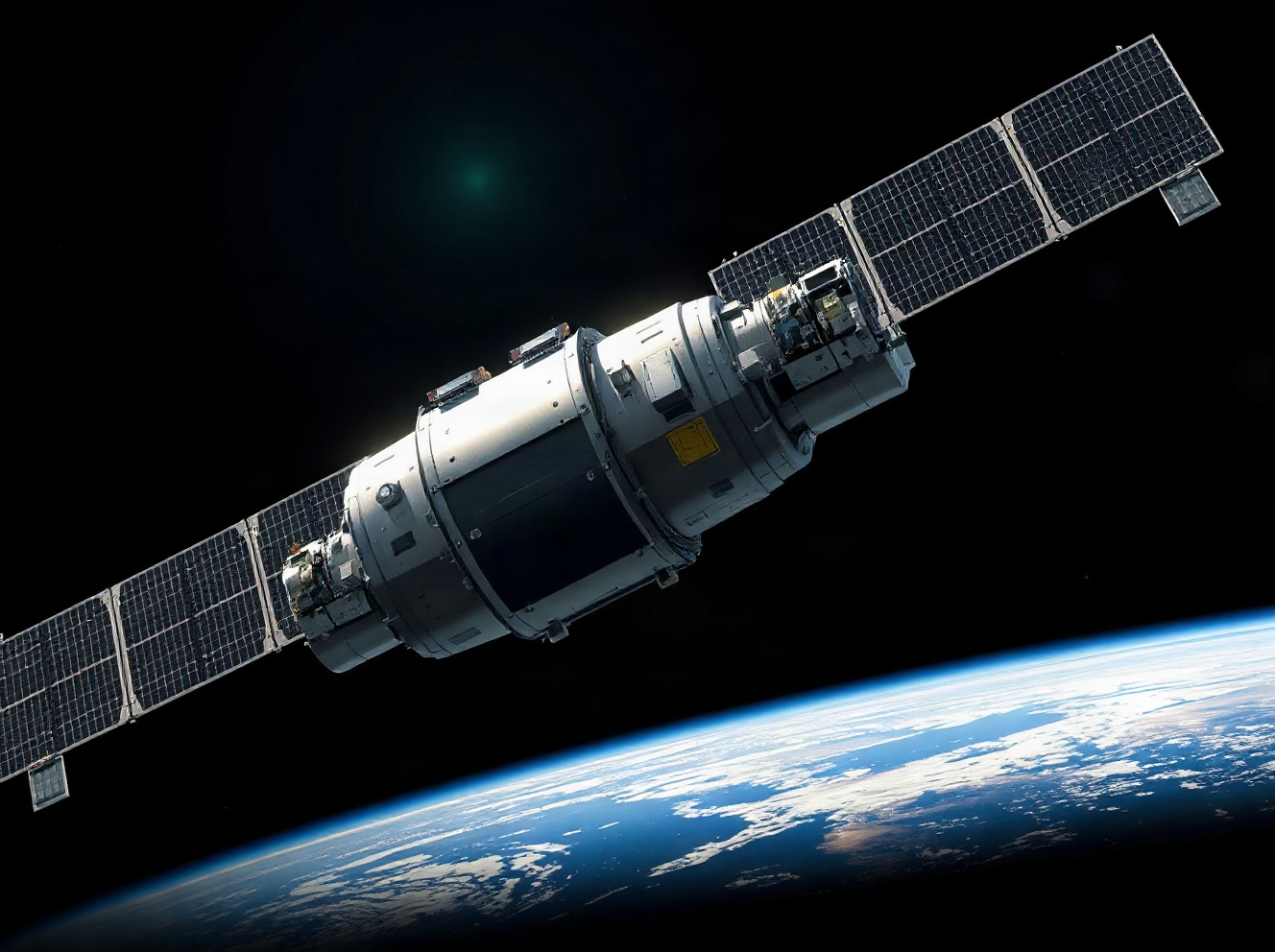 Starcloud raises $250M for orbital AI data centers, secures launch capacity amid SpaceX transition
Starcloud, a startup developing satellites capable of performing AI inference in orbit, has raised an additional $250 million in a Series A extension, bringing its total funding for the round to $420 million and valuing the company at $2.3 billion. The new capital will support the construction of a larger manufacturing facility and the development of its flagship spacecraft, Starcloud-3, designed to launch on SpaceX’s forthcoming Starship rocket.
Funding details and investor confidence
The extension was led by Manhattan West Ventures, with significant participation from Nvidia and Cisco. A person familiar with the deal confirmed that Nvidia contributed $25 million. Other investors included Benchmark, EQT, Soma, NFX, 776, Cedar Capital, Goanna Capital, and Standard Capital. This round follows the initial $170 million Series A announced in March, signaling strong investor confidence in the orbital data center sector.
CEO Philip Johnston highlighted Nvidia’s investment as a critical endorsement, noting that Starcloud is currently the only known company operating an Nvidia H100 terrestrial data center GPU in orbit and the first to train a model using it. This operational experience is being shared with Nvidia as the chipmaker develops its first purpose-built GPU for space, the Vera Rubin Space-1 chip, which Starcloud hopes to fly by late 2028.
Launch market constraints and strategic planning
Johnston is actively securing launch capacity as the market for rocket transportation tightens. “We can see what’s coming—we’re going to need to book an enormous amount of launch,” he told Bitcoin World. The urgency stems from SpaceX’s plan to phase out its workhorse Falcon 9 rocket by 2028, with the larger but unproven Starship system still in development. Competing rockets, such as Blue Origin’s New Glenn and ULA’s Vulcan, are not yet flying regularly, and Rocket Lab’s Neutron has yet to reach the pad.
Starcloud has already requested FCC permission to operate 88,000 spacecraft. For the near term, the company plans to launch two of its new 8 kW compute satellites, dubbed Starcloud-2, on rideshare missions in 2027. These will perform orbital inference tasks for customers, including US government agencies. The company is also considering dedicated Falcon 9 launches and contracts with other providers to support future missions.
Starship’s role in the orbital data center vision
Starcloud’s long-term strategy is built on the potential of SpaceX’s Starship to dramatically reduce launch costs, making an orbital inference layer economically viable. Johnston remains confident in SpaceX’s ability to demonstrate rapid reusability, despite recent delays. This week, SpaceX CEO Elon Musk announced a delay in the next Starship catch attempt, with a re-flight of the vehicle targeted for late 2026 or early 2027. “Obviously if we can’t book any SpaceX launch capacity in 2029, that will be challenging for us,” Johnston acknowledged.
Technical development and manufacturing expansion
Starcloud is currently operating from a 100,000-square-foot facility in Woodinville, Washington, near where SpaceX and Amazon build satellites. The company, which has grown to 25 employees, is developing production lines for its next-generation spacecraft. Engineers are focusing on key design challenges for the space-ready chip, including thermal management, radiation shielding, and ruggedization to withstand the forces of a rocket launch.
Why this matters for the space and AI industries
The orbital data center concept represents a convergence of two rapidly evolving sectors: space infrastructure and artificial intelligence. By moving AI inference workloads to space, companies like Starcloud aim to reduce latency for global applications and bypass terrestrial data center constraints. However, the sector faces significant hurdles, including high launch costs, uncertain rocket availability, and the technical challenges of operating advanced GPUs in the harsh space environment.
Starcloud’s ability to secure substantial funding and key partnerships, particularly with Nvidia, positions it as a leading player in this nascent industry. The company’s progress will be closely watched as it navigates the transition in the launch market and works to demonstrate the viability of orbital compute.
Conclusion
Starcloud’s $250 million funding extension underscores growing investor interest in orbital data centers, even as the broader launch market faces uncertainty. The company’s strategy hinges on the successful deployment of SpaceX’s Starship, while its near-term missions on existing rockets will test the operational viability of space-based AI inference. With Nvidia’s backing and a clear technical roadmap, Starcloud is well-positioned to shape the future of space computing.
FAQs
Q1: What is Starcloud’s primary business?Starcloud develops satellites equipped with high-performance GPUs to perform AI inference in orbit, aiming to create a network of orbital data centers that can complement terrestrial infrastructure.
Q2: Why is launch capacity a major concern for Starcloud?SpaceX plans to retire its Falcon 9 rocket by 2028, and its replacement, Starship, is still in development. Other rockets are not yet flying regularly, making it difficult for satellite operators to secure reliable and cost-effective launch services.
Q3: What role does Nvidia play in Starcloud’s plans?Nvidia is both an investor and a technical partner. Starcloud is currently operating Nvidia’s H100 GPU in orbit, and the two companies are collaborating on the development of a purpose-built space GPU, the Vera Rubin Space-1 chip.
This post Starcloud raises $250M for orbital AI data centers, secures launch capacity amid SpaceX transition first appeared on BitcoinWorld.