Swapping Bitcoin for Stablecoins: Does Austria Charge Tax? Many bitcoin investors move into stablecoins for a while when the market turns volatile. Rather than cashing out into euros, they sw
Swapping Bitcoin for Stablecoins: Does Austria Charge Tax?
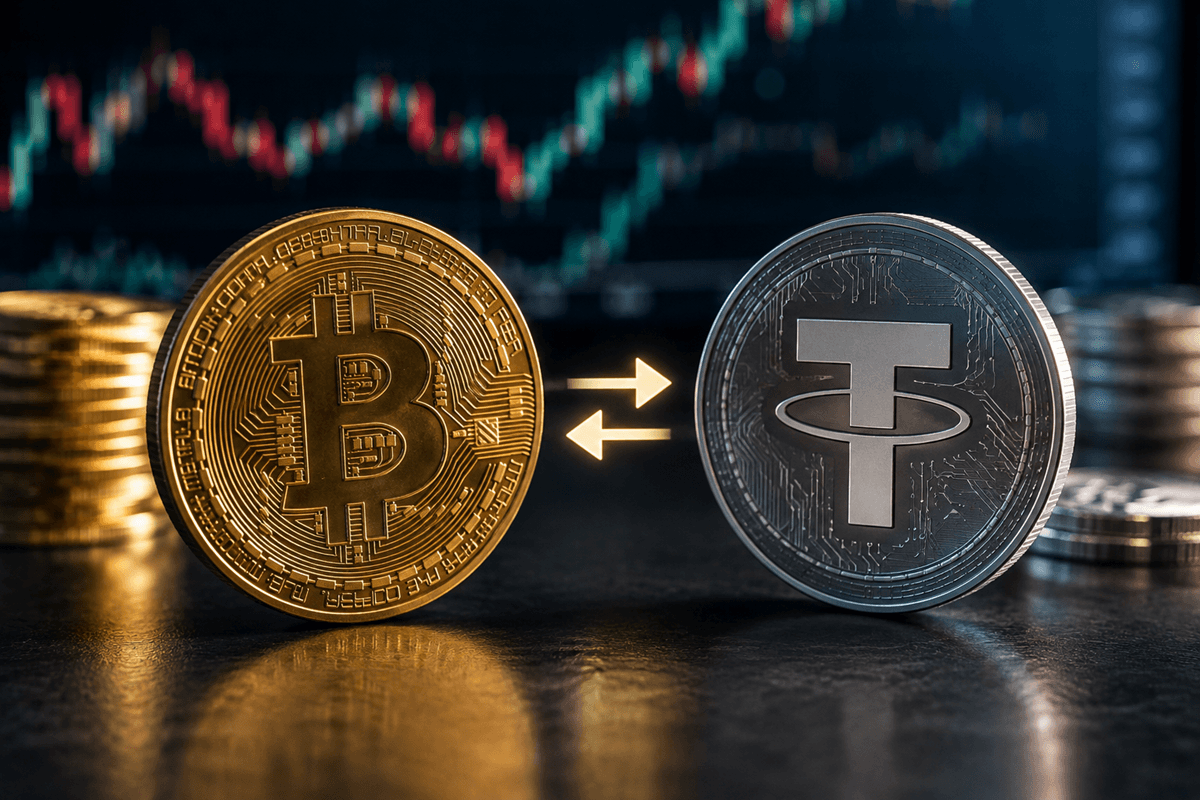
Many bitcoin investors move into stablecoins for a while when the market turns volatile. Rather than cashing out into euros, they swap their bitcoin for a token designed to track the US dollar or the euro as closely as possible. In economic terms the operation looks a great deal like a sale into a state-issued currency.
Austrian tax law draws a decisive distinction here. Where the stablecoin received qualifies as a cryptocurrency within the meaning of the Income Tax Act, a direct swap counts in principle as a crypto-to-crypto transaction. For bitcoin classed as new assets, that step does not yet trigger tax on the price gain accumulated so far.
The liability is deferred rather than cancelled. The historical acquisition costs of the bitcoin carry across to the stablecoins received. Once those stablecoins are later sold for euros or US dollars, the appreciation originally built up in bitcoin can become taxable.
Stablecoins Can Qualify as Cryptocurrencies for Tax Purposes
A stablecoin is meant to hold its value against a reference through a defined mechanism. The US dollar serves as that reference in most cases. Other stablecoins track the euro, different asset classes, or a basket of several values.
According to the Austrian finance ministry, stablecoins can fall under the cryptocurrency definition set out in Section 27b of the Income Tax Act. The ministry names Tether as an explicit example. Among the decisive criteria: the token has to be accepted as a means of exchange and be capable of electronic transfer, storage and trading.

A dollar-pegged stablecoin therefore does not become an actual US dollar for tax purposes. Tracking a state currency changes nothing about the basic position that the investor holds a digital token rather than legal tender.
Classifying a stablecoin as e-money under supervisory law does not automatically rule out treatment as a cryptocurrency either, according to the Austrian income tax guidelines. Tax classification and financial market classification need not line up completely.
A Direct Bitcoin to Stablecoin Swap Is Usually Tax Neutral
Under the crypto tax regime currently in force in Austria, swapping one cryptocurrency for another does not in principle constitute a taxable disposal.
Where a private individual swaps bitcoin directly for a stablecoin that meets the statutory definition of a cryptocurrency, the bitcoin gain accrued up to that point is therefore generally left untaxed at the moment of the swap. The Austrian finance ministry confirms explicitly that no realisation takes place in a crypto-to-crypto swap.
This applies in particular to bitcoin acquired after February 28, 2021, which counts as so-called new assets.
A simplified example:
- Bitcoin bought for 20,000 euros
- Value of the bitcoin at the time of the swap: 60,000 euros
- Stablecoins received: equivalent of 60,000 euros
Although the position shows an economic gain of 40,000 euros, a direct swap into a stablecoin recognised for tax purposes generally attracts no tax at that stage. The investor now holds stablecoins worth 60,000 euros. Their acquisition costs for tax purposes, however, are not automatically 60,000 euros.
The Old Bitcoin Acquisition Costs Travel With You
In a tax-neutral crypto-to-crypto swap, the acquisition costs of the cryptocurrency given up transfer to the cryptocurrency received.
In the example above, the bitcoin was originally bought for 20,000 euros. Those very acquisition costs pass across to the stablecoins in principle.
The tax position then looks like this:
Market value of the stablecoins: 60,000 eurosAcquisition costs carried over: 20,000 eurosAppreciation not yet realised: 40,000 euros
Moving into stablecoins does not reset the tax history. The appreciation achieved so far stays in place and is taken into account at a later taxable realisation.
Seen from Austria, stablecoins are therefore no instrument for locking in a bitcoin gain free of tax for good. They can push back the moment of taxation, yet they generally leave the latent tax burden intact.
Selling the Stablecoins for Euros Triggers the Tax
Once the stablecoins are later sold for euros, the transaction is no longer a tax-neutral crypto-to-crypto step. Swapping a cryptocurrency for euros or for a recognised foreign currency counts as a taxable realisation.
That covers in particular:
- Selling the stablecoin for euros
- Selling it for US dollars
- Redeeming it with the issuer against legal tender
- Using the stablecoin to pay for goods
- Using the stablecoin to pay for a service
- Gains from taxable crypto new assets held privately are generally subject to the special tax rate of 27.5 percent.
Continuing the example:
- Original bitcoin acquisition costs: 20,000 euros
- Swap of the bitcoin into stablecoins: market value 60,000 euros
- Later sale of the stablecoins: 60,000 euros
- Taxable gain: 40,000 euros
- Tax at 27.5 percent: 11,000 euros
The stablecoins themselves gained little to nothing in value, yet the sale captures the gain built up earlier in bitcoin. The reason lies in the acquisition costs of 20,000 euros carried forward.
A Euro Stablecoin Also Remains a Token in Principle
The principle extends beyond dollar stablecoins. A token pegged to the euro can likewise remain a cryptocurrency for tax purposes. Swapping bitcoin for a euro stablecoin is therefore not automatically the same as selling bitcoin for real euros. Where the token meets the definition in Section 27b(4) of the Income Tax Act, a tax-neutral crypto-to-crypto swap can still be in play.
What matters is more than how precisely the stablecoin mirrors one euro. The relevant question is which asset the investor actually receives:
- Real euros in a bank or exchange account: in principle a taxable realisation of the bitcoin
- Euro-pegged stablecoin that counts as a cryptocurrency for tax purposes: in principle a tax-neutral crypto-to-crypto swap
- Token that does not count as a cryptocurrency: possibly a taxable swap against a different asset
Investors should therefore look past the trading name or the ticker of the token.
Not Every Stablecoin Automatically Enjoys the Tax Treatment
The finance ministry chooses its words carefully: stablecoins can fall under the cryptocurrency definition. It follows that the assessment depends on how the individual token is structured.
A tax-neutral swap requires both the bitcoin given up and the token received to be cryptocurrencies within the meaning of Section 27b(4) of the Income Tax Act. Where bitcoin is swapped for a token classed for tax purposes as a security, a receivable, an asset token, a derivative or another economic asset, the exemption for crypto-to-crypto swaps does not apply.
The Austrian finance ministry points out, for instance, that certain asset tokens and NFTs fall outside the cryptocurrency definition. Depending on their structure, different tax rules govern them.
A closer review may be needed for:
- tokenised securities
- tokens on money market funds or bonds
- gold-backed or commodity-backed tokens
- synthetic tokens with a derivative structure
- platform balances that cannot be transferred freely
- tokens that mainly represent a redemption claim
- stablecoins with an unusual legal construction
- The label "stablecoin" on its own therefore guarantees no tax neutrality.

What Applies When the Exchange Settles Technically in Euros?
Some crypto exchanges offer a trading pair between bitcoin and a stablecoin while internally settling the operation through euros or another fiat currency.
The account statement may then show two technical entries, for example:
- Sale of bitcoin for euros
- Purchase of the stablecoin with euros
This does not necessarily produce a taxable intermediate realisation. Under the Austrian income tax guidelines, the operation as a whole can still be treated as a tax-neutral crypto-to-crypto swap where the investor clearly placed an order for such a swap, has no influence over the technical settlement and at no point can dispose of the fiat amount shown in between. The sequence also has to be documented unambiguously.
The picture can differ where the user genuinely sells bitcoin for euros first and then decides independently whether and when to buy a stablecoin with the euro balance.
In economic terms there are then usually two separate operations:
- a taxable sale of bitcoin for euros
- a subsequent acquisition of a stablecoin
The decisive factors are therefore the end result together with the order the user placed and whether a freely available fiat balance accrued to them in the meantime.
Swap Fees Generally Trigger No Additional Tax
Trading or transaction fees often arise on a direct swap of bitcoin into a stablecoin.
Under Austrian administrative practice, expenses directly connected with a tax-neutral crypto-to-crypto swap are irrelevant for tax purposes at the moment of the swap. They count neither as additional acquisition costs, nor does paying them in cryptocurrency generally trigger a taxable realisation of its own.
That sets these fees apart from network fees on a pure wallet transfer. Where bitcoin is merely moved to another address belonging to the same owner and the network fee is paid in bitcoin, the fee coins can constitute a taxable swap against a transaction service.
Fees on the crypto-to-crypto swap itself benefit from a specific exception. Investors should therefore record whether a fee belonged directly to the swap or arose for a separate withdrawal or wallet transfer.

Swapping the Stablecoin Back Into Bitcoin
Where the investor later swaps the stablecoins directly back into bitcoin, that step is in principle another tax-neutral crypto-to-crypto swap, provided both tokens satisfy the statutory cryptocurrency definition.
The original acquisition costs then transfer from the stablecoins to the newly received bitcoin.
Example:
- Bitcoin originally bought for 20,000 euros
- Bitcoin swapped into stablecoins at a value of 60,000 euros
- Stablecoins later swapped back into bitcoin at the same value
After the swap back, the acquisition costs of the new bitcoin generally remain 20,000 euros for tax purposes. The appreciation of 40,000 euros stays untaxed yet stored in the tax record. The gain is generally realised only on a later sale of the bitcoin for euros or on another taxable use.
What Happens When the Stablecoin Loses Its Peg?
Stablecoins carry risk. Their market value can fall below the intended reference value temporarily or permanently. A depeg, as it is known, can carry tax consequences too.
Example:
- Acquisition costs carried over from the bitcoin: 20,000 euros
- Stablecoins received in the swap: market value 60,000 euros
- Stablecoin loses its peg
- Sale proceeds: 45,000 euros
The taxable gain in this case generally amounts to:
45,000 euros in proceeds minus 20,000 euros in acquisition costs = 25,000 euros in gain
The investor has lost 15,000 euros in economic terms against the value at which the stablecoins were acquired, and a taxable gain of 25,000 euros nonetheless remains. The reason is that the original bitcoin acquisition costs were carried forward.
Where the sale proceeds fall below the acquisition costs carried over, a loss relevant for tax purposes can arise.
Example:
- Acquisition costs carried over: 20,000 euros
- Stablecoin sold after a sharp loss in value: 12,000 euros
- Loss for tax purposes: 8,000 euros
Subject to the statutory restrictions, that loss can generally be offset against certain positive investment income. Offsetting it freely against salary or self-employed income is not provided for.
Simply holding a stablecoin triggers no ongoing taxation in principle. The position changes once the tokens are lent out or committed to certain DeFi or yield products.
Consideration for making cryptocurrencies available falls under current income from cryptocurrencies pursuant to Section 27b(2) of the Income Tax Act. This covers lending income in particular, along with certain rewards for supplying tokens to liquidity or lending pools. Such income is generally valued and taxed at the moment it accrues.
What that means:
- Swapping bitcoin into a stablecoin can be tax neutral to begin with.
- Lending out that stablecoin for interest afterwards can generate ongoing taxable income.
- A later sale of the rewards received can produce an additional price gain or loss.
Platforms do not always use terms such as "staking", "earn", "rewards" or "savings" in their tax sense. The actual economic substance governs. Where the arrangement amounts to lending in truth, the yield can be taxable as soon as it accrues.
What Applies to Legacy Bitcoin Holdings?
The tax-neutral crypto-to-crypto rule in Section 27b covers cryptocurrencies acquired after February 28, 2021. Bitcoin from earlier purchases generally counts as legacy assets and remains subject to the previous tax system.
Swapping legacy holdings constitutes, in legal terms, a disposal of the old bitcoin and a fresh acquisition of the stablecoin received. Whether that disposal is actually taxable depends on the earlier tax classification and above all on the speculation period applicable at the time.
For legacy holdings held privately over many years, the former one-year speculation period has usually expired already. In such a case the swap of the old bitcoin can be free of tax. The stablecoin received then generally counts as a new asset. Its acquisition costs are usually set at the market value of the bitcoin given up at the time of the swap. The finance ministry confirms this treatment for comparable swaps involving legacy crypto holdings.
Example:
- Bitcoin acquired in 2020 for 10,000 euros
- Swap in 2026 at a value of 70,000 euros
- former speculation period expired
As far as the old bitcoin is concerned, the swap can remain free of tax. The stablecoins received then count as new assets with acquisition costs of 70,000 euros in principle. Selling them later for 70,000 euros usually produces no further gain.
The situation can look different for business holdings, legacy holdings deployed to earn interest, or other special cases. Legacy holdings should therefore be documented separately from new assets.

Does the Exchange Have to Withhold Capital Gains Tax?
Austrian crypto service providers are generally obliged to withhold capital gains tax on certain crypto income accruing after December 31, 2023. On a tax-neutral swap of bitcoin for a qualifying stablecoin, no withholding tax should generally fall due on the deferred gain.
Once the stablecoin is later sold for euros, an Austrian provider can calculate and withhold the tax using the acquisition costs it has stored or been notified of.
Foreign exchanges frequently apply no Austrian withholding. Taxable gains then generally have to be reported in the income tax return. Since the 2025 calendar year, Austrian withholding agents have had to supply standardised tax reporting for crypto income on request.
Difficulties can arise where the platform does not know the original bitcoin acquisition costs. Where a move between exchanges or wallets fails to carry the full data across, the automatic tax calculation can diverge from the actual outcome.
Which Data Investors Should Document
For a bitcoin to stablecoin swap, the following information in particular should be recorded:
- Date and exact time of the swap
- Quantity and type of the bitcoin given up
- Type and quantity of the stablecoin received
- Market value of both holdings in euros
- Original acquisition costs of the bitcoin
- Acquisition costs carried over to the stablecoin
- Trading and transaction fees
- Name of the specific trading pair
- Evidence of a direct crypto-to-crypto order
- Information on any technical fiat settlement in between
- Later sales, swaps back or transfers
- Income from lending or DeFi use
The chain of acquisition costs matters most of all. Without it, a later stablecoin sale cannot be calculated correctly.
Conclusion: Moving Into Stablecoins Usually Just Defers the Tax
A direct swap of bitcoin for a stablecoin generally triggers no tax in Austria on crypto new assets, provided the stablecoin received itself counts as a cryptocurrency within the meaning of Section 27b of the Income Tax Act.
The bitcoin appreciation accrued up to that point does not disappear, though. The original acquisition costs transfer to the stablecoin. On a later sale for euros, US dollars, goods or services, the deferred gain is generally realised and can be taxed at 27.5 percent.
- Particular attention is required where:
- the token received may not be a stablecoin within the meaning of crypto tax law,
- the exchange actually settles the operation through a freely available fiat balance,
- legacy bitcoin holdings are used,
- the stablecoin loses its peg,
- stablecoins earn interest or are deployed in DeFi protocols,
- historical acquisition costs are missing.
Stablecoins can serve as an instrument for reducing price risk temporarily. What they do not offer in Austria is a way to realise a gain free of tax for good.