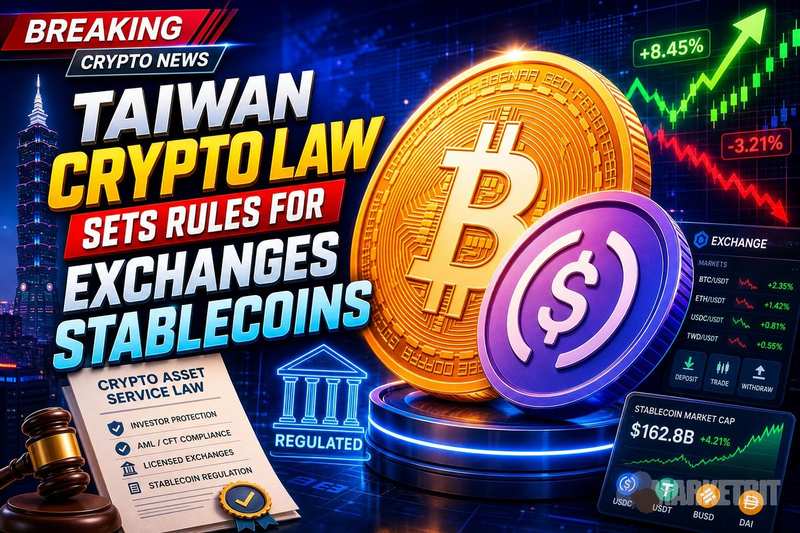
Taiwan's legislature has passed a law establishing a regulatory framework for cryptocurrency exchanges and stablecoins, marking the island's first comprehensive crypto legislation. The Taiwan
Taiwan's legislature has passed a law establishing a regulatory framework for cryptocurrency exchanges and stablecoins, marking the island's first comprehensive crypto legislation. The Taiwan crypto law creates licensing, reserve, and conduct requirements for digital asset service providers operating in the country.
What Taiwan's New Crypto Law Actually Establishes
Taiwan's lawmakers approved the legislation to bring crypto exchanges and stablecoin issuers under a formal regulatory structure. The law, as reported by The Block, passed through the legislature after months of deliberation and positions Taiwan alongside jurisdictions like the EU, Japan, and Hong Kong that have enacted dedicated crypto statutes. For related coverage, see Google Opens Largest AI Engineering Hub in Taiwan.
The framework covers two primary areas: rules governing virtual asset service providers such as exchanges, and separate provisions for stablecoin issuance and reserves. Taiwan had previously relied on guidance from its Financial Supervisory Commission rather than binding legislation, making this passage a significant policy milestone for the island's digital asset sector. For related coverage, see Taiwan Evaluates Bitcoin for National Reserves by 2025.
This move follows broader interest from Taiwanese policymakers in digital assets. Legislators have also explored whether Bitcoin could play a role in national reserves, signaling growing institutional attention to the crypto sector.
How the Framework Reshapes Rules for Exchanges and Stablecoins
The law introduces distinct requirements for exchanges and stablecoin issuers. For exchanges, the legislation establishes licensing mandates, meaning platforms will need formal authorization to operate in Taiwan. CoinDesk reported that the law includes reserve mandates and penalties for non-compliance.
Stablecoin-specific provisions address reserve backing and issuer obligations. Issuers will face requirements around the composition and transparency of reserves, a regulatory approach that mirrors frameworks already in place in the EU under MiCA and in Hong Kong's evolving stablecoin regime.
The compliance burden for exchanges and stablecoin issuers operating in Taiwan is expected to increase substantially. Platforms that previously operated under lighter guidance from the FSC will now need to meet statutory standards, and the legislation includes enforcement mechanisms for violations.
Implementation details, including specific capital thresholds, reserve ratios, and reporting requirements, will likely depend on secondary regulations issued after the law takes effect. Taiwan's earlier work on crypto regulatory frameworks laid groundwork for these more detailed provisions.
What Comes Next in Taiwan's Crypto Regulatory Rollout
Legislative passage is the first step. The Financial Supervisory Commission will play the central role in translating the statute into operating rules, including licensing procedures, examination schedules, and enforcement protocols.
Readers should watch for the FSC's implementing regulations, which will define the specific compliance requirements exchanges and stablecoin issuers must meet. The timeline for these secondary rules has not been publicly confirmed, and the gap between passage and full enforcement could span months.
Taiwan's approach sits within a broader regional push toward crypto regulation across Asia. The island's technology sector, including its role as a semiconductor hub, gives it both the technical infrastructure and the economic incentive to attract compliant digital asset businesses. How aggressively the FSC enforces the new law will determine whether Taiwan becomes a competitive destination for licensed crypto firms in the region.
Disclaimer: This article is for informational purposes only and does not constitute financial or investment advice. Cryptocurrency and digital asset markets carry significant risk. Always do your own research before making decisions.
Read original article on marketbit.net