Key Takeaways Shares of Tenax Therapeutics plummeted 84.2% during pre-market hours on August 10, 2026 TNX-103 failed to achieve statistical significance in improving 6-minute walk distance in
Key Takeaways
- Shares of Tenax Therapeutics plummeted 84.2% during pre-market hours on August 10, 2026
- TNX-103 failed to achieve statistical significance in improving 6-minute walk distance in the Phase 3 LEVEL trial
- Secondary endpoint measuring patient symptom improvement also fell short of targets
- Analysts had set optimistic price targets reaching $50 prior to the trial results
- Exploratory subgroup analysis identified potential efficacy in patients with more advanced disease
Shares of Tenax Therapeutics experienced a catastrophic decline of 84.2% in pre-market trading on August 10, 2026, following the announcement that its pivotal Phase 3 LEVEL clinical trial missed both primary and secondary objectives.
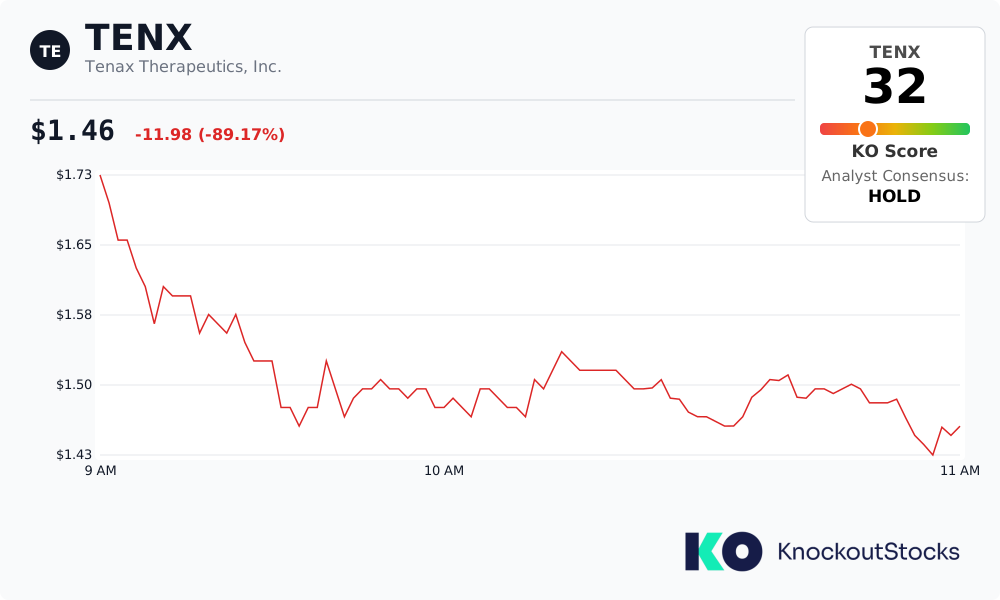 Tenax Therapeutics, Inc., TENX
The study evaluated oral levosimendan as a treatment for patients suffering from pulmonary hypertension associated with heart failure with preserved ejection fraction (PH-HFpEF). Results demonstrated failure to achieve the primary efficacy measure—a statistically significant improvement in 6-minute walk distance compared to placebo—with only a 3.5-meter least-squares mean difference and a disappointing p-value of 0.63.
To put this in perspective, clinical trials generally require a p-value of 0.05 or less to demonstrate statistical significance.
Adding to the disappointment, TNX-103 also failed to achieve its principal secondary endpoint, which assessed changes in the Kansas City Cardiomyopathy Questionnaire total symptom score. The dual failure devastated investor sentiment.
The collapse was particularly striking given the optimistic Wall Street sentiment preceding the data release. Major financial institutions including Chardan, Guggenheim, Piper Sandler, Canaccord, and Evercore ISI had recently initiated coverage or upgraded their price objectives on TENX stock, with some projections soaring to $50 per share.
Further underscoring the company’s confidence, Tenax had recently appointed a Chief Commercial Officer to prepare for commercialization. That strategic move now appears premature.
Detailed Trial Results
Despite the primary failures, the trial data wasn’t entirely discouraging. TNX-103 demonstrated an acceptable safety profile and was generally well tolerated throughout the patient population.
Additional exploratory endpoints revealed that TNX-103 achieved a 49% reduction in NT-proBNP levels, a biomarker indicating cardiac wall stress. The treatment also yielded a 3.5 mmHg placebo-adjusted decrease in right ventricular systolic pressure.
Most significantly for the company’s future strategy, subgroup analysis of patients with baseline 6-minute walk distances below the median threshold of 333 meters showed a clinically meaningful 26.3-meter improvement versus placebo. This finding will likely form the foundation of Tenax’s discussions with regulatory authorities moving forward.
Management indicated plans to engage with regulators regarding a potentially refined development strategy targeting patients with more severe PH-HFpEF manifestations.
The dramatic selloff in TENX shares occurred independently of general market conditions. On Monday’s trading session, S&P 500 futures indicated modest gains in pre-market activity, buoyed by weaker-than-anticipated July employment data released the previous Friday. The Nasdaq climbed 0.2% while the S&P 500 advanced 0.03%.
The TENX collapse was purely driven by company-specific news.
PH-HFpEF represents a significant unmet medical need with no currently approved treatment options, which had formed a cornerstone of the investment thesis supporting TNX-103 development.
The most recent analyst recommendation on TENX maintained a Buy rating with a $35.00 price objective, although this rating predated the trial disclosure.
Prior to the trial announcement, Tenax operated without generating revenue while reporting expanding losses. The company carried a market capitalization of $503 million before the pre-market collapse.
The company’s future trajectory depends critically on whether regulatory agencies will accept a more targeted development pathway focusing on the severely affected patient subset where TNX-103 demonstrated potentially meaningful clinical benefit.
The post Tenax Therapeutics (TENX) Shares Collapse 84% on Failed Phase 3 Trial Results appeared first on Blockonomi.



 KEY CLINICAL RESULTS (PHASE 3 LEVEL)
 Trial: LEVEL Phase 3