Tether has blacklisted a set of USDT wallet addresses connected to outflows from CoinDCX, the Indian cryptocurrency exchange, according to reporting by The Defiant. The move activates one of
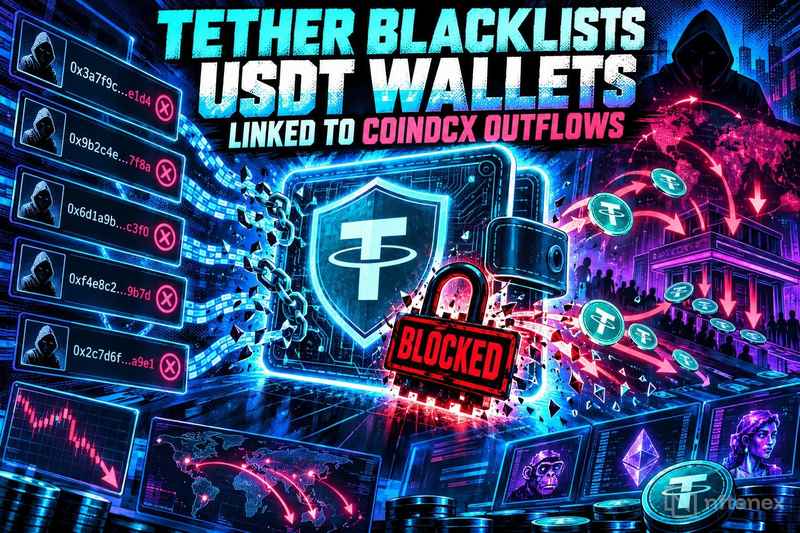
Tether has blacklisted a set of USDT wallet addresses connected to outflows from CoinDCX, the Indian cryptocurrency exchange, according to reporting by The Defiant. The move activates one of the most consequential controls a stablecoin issuer can exercise: freezing specific addresses at the protocol level so that the USDT held in them cannot be transferred.
What the Reported Action Means for Affected Wallets
When Tether blacklists an address, the USDT balance at that address is rendered unmovable. The tokens remain on-chain, visible in any block explorer, but the smart contract rejects any attempt to send them. No exchange, bridge, or DeFi protocol can move those funds until Tether removes the restriction. For related coverage, see Upbit to List Conflux's CFX in KRW, BTC and USDT Markets.
This mechanism is built directly into the USDT contract and has been used in prior enforcement situations. Tether has detailed more than $4.2 billion in USDT freezes since 2023, demonstrating that address-level blacklisting is an established, recurring tool rather than a rare escalation. For related coverage, see Tether Gold Receives Shariah Certification: What It Means.
The Defiant reported the CoinDCX-linked blacklisting as a discrete enforcement action, though the report did not include specific wallet addresses, the total USDT value frozen, or an official statement from either Tether or CoinDCX at the time of publication.
What Remains Unconfirmed
The research brief underlying this article reached its source-fetch limit before recovering transaction hashes, frozen balances, or on-chain timestamps. The precise reason Tether flagged these wallets, whether a security incident, a compliance trigger, or a law enforcement request, has not been confirmed by either party as of publication.
An address-level action is also not, by itself, evidence of wrongdoing by every party whose funds touched those addresses. Wallets can receive USDT from multiple sources, and a blacklisting may target proceeds at a specific hop in a transaction chain rather than an exchange's primary cold storage.
The CoinDCX Connection and What Users Should Monitor
CoinDCX is one of India's largest regulated crypto exchanges. The reported link between the blacklisted wallets and CoinDCX outflows raises immediate questions for users who hold USDT on the platform or recently withdrew it to self-custody. Users whose withdrawal transactions passed through a now-frozen intermediate address could face complications moving those funds onward.
The situation also carries broader implications for how stablecoin issuers coordinate with exchanges on fund recovery and compliance. USDT's expanding role in institutional and cross-border treasury flows means that blacklisting events carry reputational weight beyond the immediate wallets involved.
Details to Watch Next
The most important forthcoming disclosures are an official statement from CoinDCX explaining the outflows and any confirmation from Tether on the scope of the freeze. On-chain analysts who can trace the flagged addresses through block explorers will likely surface transaction counts and USD-equivalent values before either company issues a formal response.
Users of USDT across multiple chains should also note that a blacklist enforced on one chain does not automatically extend to wrapped or bridged versions on others, making chain-specific tracking essential as this story develops.
Any exchange operating with significant USDT reserves should treat this development as a reminder that stablecoin issuers retain unilateral, on-chain power to freeze assets. That power is exercised without a court order, and its scope can expand faster than affected parties can respond.
Additional source references: source document 1.
Disclaimer: This article is for informational purposes only and does not constitute financial or investment advice. Cryptocurrency and digital asset markets carry significant risk. Always do your own research before making decisions.
Read original article on nftenex.com