Tether has announced an investment in Peso, a payments-focused company, with the stated objective of expanding USD₮ payment infrastructure across Latin America. The move positions Tether dire
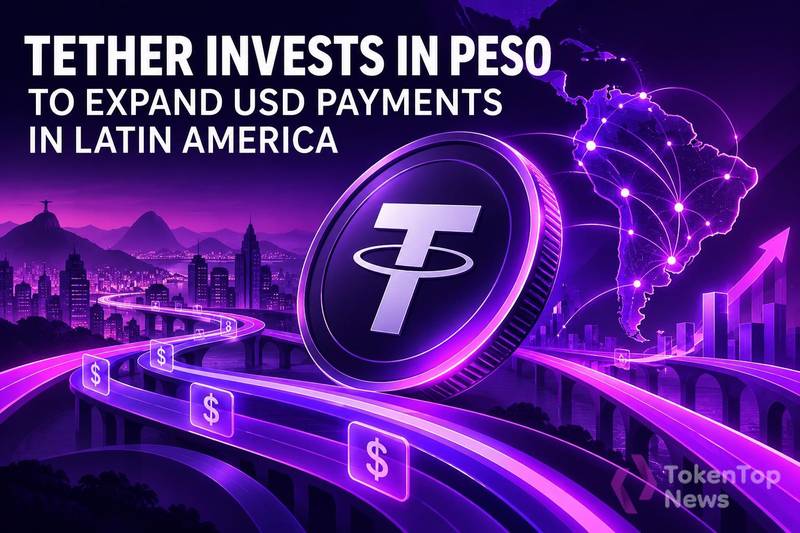
Tether has announced an investment in Peso, a payments-focused company, with the stated objective of expanding USD₮ payment infrastructure across Latin America. The move positions Tether directly in the regional payments stack at a time when dollar-denominated stablecoin demand has grown across countries navigating currency volatility. The announcement was made via Tether's official X account.
Tether Takes a Direct Stake in Peso to Build Out USD₮ Rails
Tether's investment in Peso marks a deliberate push to embed USD₮ into the payment layer used by everyday businesses and consumers across Latin America. Rather than relying on third-party integrations alone, the investment signals a strategy of backing infrastructure companies that can distribute USD₮ natively through their payment products.
Peso is identified in the announcement as the recipient of Tether's investment. The stated purpose of the deal is expanding USD₮ payment infrastructure across Latin America, though Tether has not publicly disclosed the investment amount, ownership stake, or the specific markets and product integrations targeted in the initial rollout.
The framing of the deal around "infrastructure" rather than end-user adoption is notable. Infrastructure investment typically precedes consumer-facing rollouts, suggesting this is an early-stage effort to build the rails on which USD₮ payments would eventually run, rather than a completed deployment of services.
Why USD₮ Payment Infrastructure Matters in Latin America
Latin America has consistently ranked among the highest regions globally for stablecoin usage relative to local currency volatility, driven by persistent inflation and limited access to dollar-denominated financial accounts in several countries. Payment infrastructure that natively settles in USD₮ gives merchants and consumers a path to transact in dollars without holding a traditional bank account denominated in a foreign currency.
The distinction between infrastructure expansion and user adoption is important when evaluating an announcement like this. Infrastructure investment builds the connective layer: APIs, settlement rails, merchant integrations, and compliance pipelines. User adoption is what follows when that infrastructure is operational and accessible. Tether's announcement establishes the former as the current focus; the latter remains a future milestone.
Peso, as a payments company, brings an existing network of merchant relationships and payment flows to the partnership. Tether's capital and USD₮ liquidity complement that network by providing the stablecoin denomination through which transactions would settle. The combination, if executed, creates a pipeline where regional payment volume flows through USD₮ rather than local currency or legacy wire transfers.
Payment infrastructure in Latin America has historically been fragmented, with different rails dominant in different countries. A regional USD₮ infrastructure play requires either building country-by-country or partnering with a company that already has multi-market reach. The announcement does not specify which approach Tether and Peso intend to take, or which countries will see services first.
What the Announcement Does and Does Not Confirm
Based on the announcement sourced from Tether's official statement, the confirmed information is limited to three facts: Tether has invested in Peso, the investment is aimed at expanding payment infrastructure, and the geographic scope is Latin America. Everything beyond those three points, including deal size, product timelines, integration partners, and regulatory status, has not been publicly disclosed as of this report.
This matters because the gap between an investment announcement and operational payment infrastructure can span months or years. Readers should treat the announcement as a signal of strategic intent, not a confirmation of deployed services.
What to Watch After the Tether-Peso Announcement
Several disclosures would meaningfully clarify the scope and timeline of the Tether-Peso partnership. The most immediately useful would be a breakdown of which Latin American markets are targeted first, since regulatory treatment of USD₮ as a payment instrument varies significantly by jurisdiction across the region.
Product-level details, specifically which payment integrations Peso plans to build or expand using Tether's investment, would indicate whether the infrastructure focus is on merchant point-of-sale, remittance corridors, B2B settlement, or consumer wallets. Each of those product categories carries different competitive dynamics and compliance requirements.
The disclosed investment terms, including any equity stake Tether holds in Peso and whether Tether maintains exclusive or preferred distribution rights for USD₮ within Peso's network, would also shape how the market interprets the strategic depth of the relationship versus a straightforward minority investment.
Finally, rollout timing for any live payment products would mark the transition from infrastructure investment to operational service. Until Peso announces specific product launches with USD₮ settlement, the Tether investment remains a commitment of capital and intent rather than a completed expansion of payment infrastructure.
Tether has made a series of strategic investments in recent years across payments, communications, and financial infrastructure. The Peso deal fits that pattern: backing companies with regional reach and payment-layer positioning where USD₮ could displace local currency settlement at scale. Latin America, given its combination of large payment volumes and persistent demand for dollar-denominated assets, is a logical region for that thesis to be tested.
Additional source references: source document 1, source document 2.
Disclaimer: This article is for informational purposes only and does not constitute financial or investment advice. Cryptocurrency and digital asset markets carry significant risk. Always do your own research before making decisions.
Read original article on tokentopnews.com