Tether News Today: 20% Fee to Unfreeze Hacked Funds Faces Backlash Imagine losing $50 million in a hack, waiting five years, and then being told you owe a fee to get your own frozen money bac
Tether News Today: 20% Fee to Unfreeze Hacked Funds Faces Backlash
Imagine losing $50 million in a hack, waiting five years, and then being told you owe a fee to get your own frozen money back. That's the story behind the latest Tether news today, after Bloomberg reported that Tether had asked some crypto hack victims to pay up to 20% in "reissuance fees" before releasing frozen USDT.
The report has pulled the news into sharp focus, right as the stablecoin issuer is also being praised for freezing over $1.5 billion tied to the Binance hack. Two very different stories, one company, one week. Here's what's actually going on.
Key Takeaways
Bloomberg reports Tether sought a 20% reissuance fee from some hack victims, though it's not confirmed that any victim actually paid it.
Tether's own written recovery guidelines list a fee of up to 10% of the recovered amount or $1,000, whichever is greater, deducted from the funds returned.
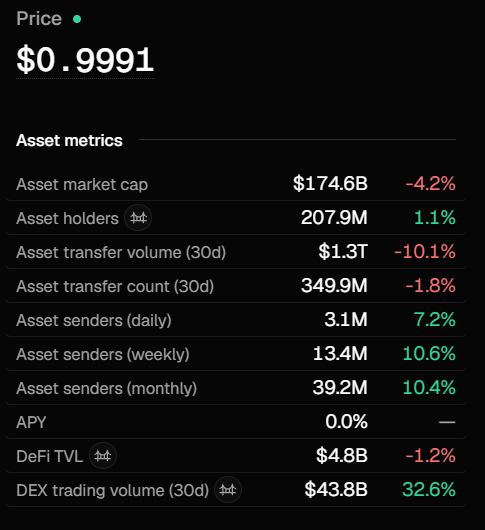
USDT's market cap slipped over 4.2% to $174.6 billion after the news, per Token Terminal data, even as Tether froze $1.5 billion from the Binance hack within 30 minutes.
Why Has Bittok Waited Five Years for Its $50 Million?
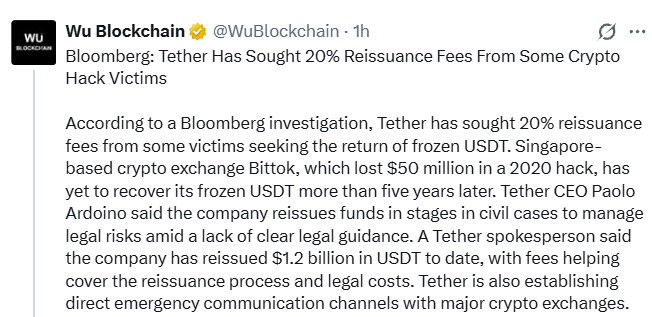
Singapore-based exchange Bittok lost $50 million in a 2020 hack. More than five years later, none of that frozen USDT has come back. Bloomberg reviewed emails showing a lawyer representing Tether told the firm that it acquired Bittok and that a 20% reissuance fee would apply to any returned funds. This news was then shared by Wu Blockchain on X.
Source: X Post
Tether CEO Paolo Ardoino said the company releases funds in stages during civil cases, mainly to manage legal risk at a time when there's no clear legal guidance on how these recoveries should work. A Tether spokesperson added that the company has reissued $1.2 billion in USDT to date, and that fees help cover the reissuance process and legal costs.
What Do Tether's Official Recovery Guidelines Actually Say?
This is the part people miss in Tether news today. There's an actual written policy, and it isn't 20%.

Recovery Term
What It Means
Fee
Up to 10% of the recovery amount, or $1,000, whichever is greater
When charged
Deducted directly from the recovered amount
Time frame
None stated, the process is discretionary
Typical duration
Several months, due to complex verification steps
So while Bloomberg's 20% figure made headlines, Tether's published terms cap the fee at 10% or $1,000. Stablecoin News on November 25 that Tether had quoted fees of up to 20% to some victims surrounds, but it's not confirmed whether anyone actually paid that rate. That gap between written policy and reported practice is exactly what's fueling the backlash.
How Did the Market React to the 20% Fee Report?
Numbers don't lie, and the market didn't like this one bit.
According to Token Terminal data, USDT's market cap dropped more than 4.2%, now sitting at $174.6 billion. Transfer volume over the past 30 days fell 10.1%, and transfer count dropped over 1.8% too.
Source: Token Terminal | November 25 | Time: 02:30 PM
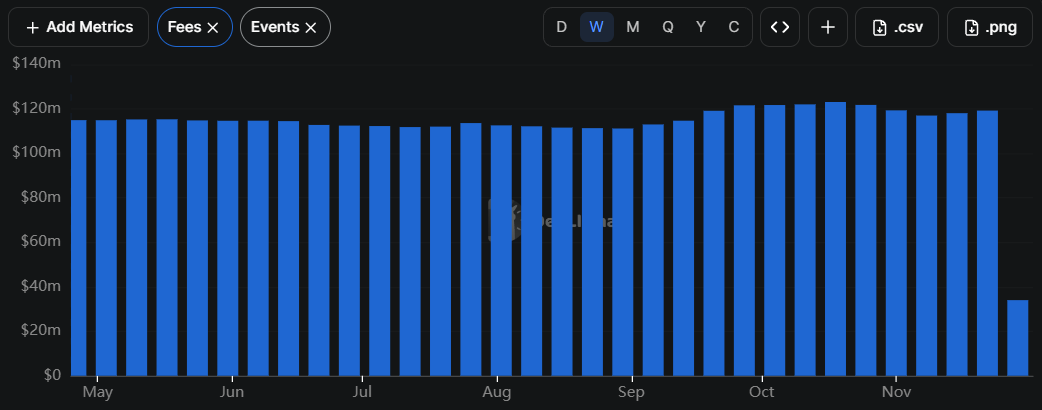
DefiLlama data tells an even sharper story. Tether generated $507.78 million in fees over the past 30 days. But weekly, fees fell off a cliff, from $119.27 million between November 16 and 22, down to just $34.01 million for November 23 to 29, the ongoing week, as trust questions spread.
Source: DefiLlama Data | November 25 | Time: 02:30 PM
Did Tether Actually Protect Users From North Korea?
Here's the twist in Tether news today: the same company facing fee backlash just pulled off a major save.
On November 2, Tether confirmed it froze over $1.5 billion in USDT within 30 minutes of the October 29 Binance hack.
The FBI identified North Korea as responsible for that attack. By acting fast, Tether stopped the funds from being moved, swapped, or laundered, cutting off a channel that U.S. authorities say regularly funds North Korea's nuclear weapons programme.
What Happens Next for Frozen USDT Holders?
Tether says it's building direct emergency communication channels with major exchanges, aiming to speed up how fast it responds to future hacks. That's a solid step. But for victims like Bittok, still waiting after five years, speed was never the problem, clarity was.
Until Tether spells out exactly when the 10% rule applies versus when a 20% rate gets quoted, every fresh Tether news today headline will likely reopen the same question: is this a fair recovery fee, or a toll on getting your own money back?
Expert Opinion: Tether's dual role, as both a fast-acting defender against hacks like the Binance incident and a gatekeeper charging fees on frozen funds, reflects the absence of formal rules around stablecoin recovery. The gap between Tether's stated 10% policy and the 20% figure reported by Bloomberg points to inconsistent enforcement rather than a fixed rulebook, something regulators may eventually be pushed to address.
Conclusion
Tether news today shows two faces of one company: a defender that froze $1.5 billion from North Korea in minutes, and a gatekeeper asking hack victims to pay up to 20% for their own frozen funds, with no fixed timeline in sight.
Disclaimer: This content is for informational purposes only and does not constitute financial, legal, or investment advice. Cryptocurrency markets, including stablecoins like USDT, carry financial risk, and recovery of frozen funds is not guaranteed in any case. Readers should do their own research and consult a licensed financial or legal advisor before making decisions related to crypto holdings or fund recovery.