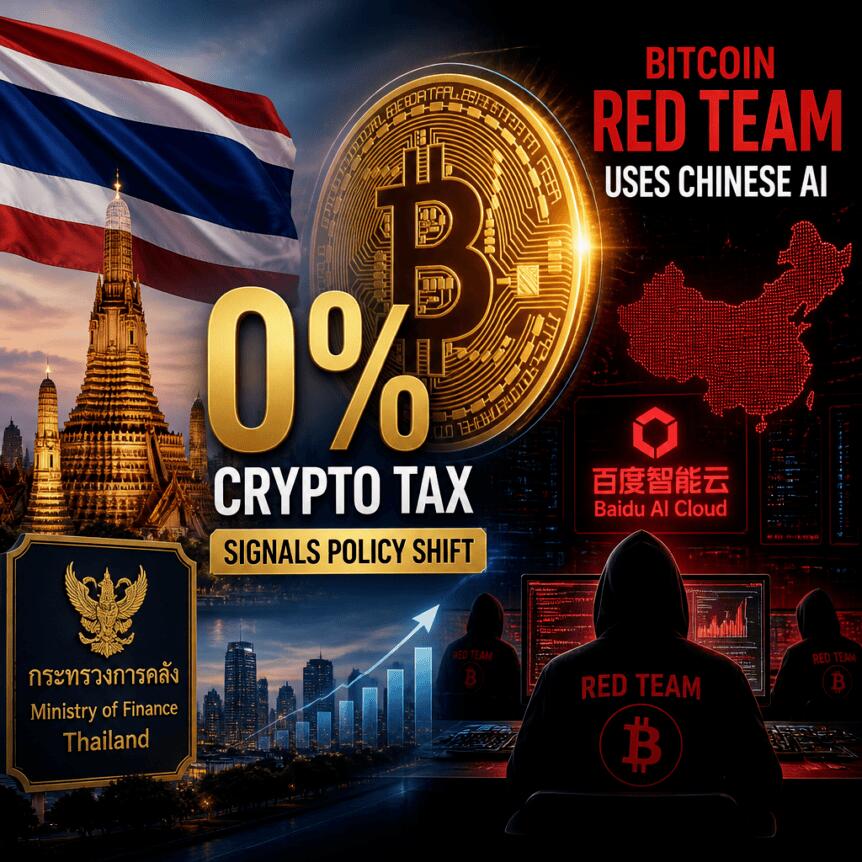
Thailand is rolling out a targeted tax break for crypto investors: beginning January 1, 2025, capital gains tax on profits from crypto trades conducted through platforms licensed by the count
Thailand is rolling out a targeted tax break for crypto investors: beginning January 1, 2025, capital gains tax on profits from crypto trades conducted through platforms licensed by the country’s Securities and Exchange Commission will be exempt for five years, through December 31, 2029.
The move is designed to strengthen Thailand’s position as a regional digital-asset hub, while drawing a clear line between regulated onshore platforms and trading activity that occurs outside licensing—where investors would remain subject to standard personal income tax rates of up to 38%.
Key takeaways
- Thailand will exempt qualifying crypto capital gains for trades executed via SEC-licensed platforms from Jan. 1, 2025 to Dec. 31, 2029.
- Unlicensed or overseas exchange activity is still taxed under standard personal tax rates up to 38%.
- The policy is intended to make Thai-regulated access more attractive for investors, aligning crypto treatment with that of traditional securities.
- Across Asia, regulators and courts are simultaneously pushing for stronger controls—ranging from anti-scam withdrawal safeguards to travel-rule style data sharing.
Thailand’s five-year capital gains exemption for regulated exchanges
Under the new framework, crypto investors in Thailand will not pay capital gains tax on sales made through platforms licensed by the Thai Securities and Exchange Commission. The exemption runs for five years, covering January 1, 2025 through December 31, 2029.
While the tax incentive is specifically tied to using licensed venues, the exemption also signals a broader regulatory posture: Thailand is effectively attempting to mirror capital gains treatment applied to traditional securities. That linkage matters because it changes how investors model after-tax returns when comparing Thai-regulated offerings with offshore alternatives.
However, the relief is not universal. Traders who use exchanges that are unlicensed in Thailand, or that operate overseas without meeting the local licensing requirements, are expected to continue facing the country’s regular personal tax rates, reported as as high as 38%.
Thailand’s approach also follows earlier steps. In early 2024, the country reportedly waived 7% value-added tax on crypto gains—suggesting a pattern of phased adjustments aimed at improving the competitiveness of licensed crypto activity.
Asia’s policy push: scams, travel rules, and enforceability
Thailand’s tax move lands in a wider regulatory environment across Asia where authorities are focusing not only on market structure, but also on operational safeguards and information-sharing.
In Japan, for example, the Financial Services Agency has asked exchanges to adopt withdrawal delays and additional controls to combat scams. The regulator and Japan’s National Police Agency also highlighted patterns where fraudulent proceeds are transferred to exchange accounts. The requested measures include restricting withdrawals for a set period after customers deposit fiat or purchase digital assets, requiring users to pre-register withdrawal addresses, and enforcing a waiting period before newly added addresses can be used.
Taiwan is moving in a similar compliance direction. The Financial Supervisory Commission is set to require crypto platforms to transmit customer information for domestic platform-to-platform transfers starting in October. The rules apply irrespective of transfer value, with extra data requirements for transfers above 30,000 New Taiwan dollars (about $930). For high-value transfers, additional details such as a sender’s date of birth and residential address (for individuals) or corporate identification and registered address are expected. Receiving platforms would also need to verify beneficiary information provided by the sending institution against their own records. Taiwan also plans to extend the framework to transfers between domestic and overseas VASPs by the end of 2027.
Enforcement and asset tracing: Bybit’s North Korea case
Regulatory safeguards are running alongside legal efforts to trace and recover stolen funds. In a US court case involving exchange Bybit, a federal judge reportedly supported Bybit’s bid to trace assets connected to the widely reported $1.5 billion North Korea-linked hack from February 2025.
According to newly revealed court records, Bybit filed the lawsuit under seal on June 18 against North Korea, its Reconnaissance General Bureau, the Lazarus Group, and 20 unidentified defendants. The court granted expedited discovery on June 19, giving Bybit a route to identify alleged intermediaries and pursue a portion of funds that remain traceable.
Bybit reportedly told the court that 90.2% of the stolen assets had become untraceable after moving through mixers, cross-chain bridges, and over-the-counter dealers. The remaining 9.8% was said to be traced to identifiable wallets, including 5.3% of the total—about $75.5 million—that had been frozen or recovered. Bybit is seeking return of the stolen assets and approximately $1.5 billion in damages.
For market participants, the practical significance is straightforward: even when large portions of theft are obfuscated, courts and discovery processes can still uncover pockets of traceability—often tied to wallet-level movements and intermediary behavior—creating leverage for claims that go beyond a single judgment against a sanctioned state actor.
What builders and investors should watch next
Thailand’s capital gains exemption is likely to intensify the incentive to trade through SEC-licensed channels, while continuing to discourage the “regulatory arbitrage” route of using unlicensed or offshore exchanges. Investors should watch how Thailand defines eligibility in practice and whether licensed platforms promote the change in ways that meaningfully shift user behavior.
This article was originally published as Thailand’s 0% Crypto Tax Signals Policy Shift as Bitcoin Red Team Uses Chinese AI on Crypto Breaking News – your trusted source for crypto news, Bitcoin news, and blockchain updates.