In one of the most controversial parliamentary maneuvers in recent European legislative history, the European Parliament approved the reinstatement of Chat Control 1.0 on July 9, 2026 — a reg
In one of the most controversial parliamentary maneuvers in recent European legislative history, the European Parliament approved the reinstatement of Chat Control 1.0 on July 9, 2026 — a regulation that allows technology companies to scan private messages for illegal content. The vote outcome was stunning: 314 lawmakers voted against it, yet the measure passed anyway. Understanding how this happened requires knowing how European parliamentary procedures work — and why tech companies, cryptography experts, and privacy advocates are alarmed.
What Exactly Is Chat Control 1.0?
Chat Control 1.0 is a temporary exemption to European privacy laws that permits messaging platforms like Gmail, Facebook Messenger, Snapchat, and Skype to voluntarily scan users’ private communications. The platforms search for child sexual abuse material (CSAM) — images and videos of child exploitation — and report findings to law enforcement authorities.
The system works using hash matching, a technique that compares files against a database of known illegal content. When a match is found, the platform flags the conversation and reports it to authorities. In theory, the system focuses on already-identified abuse material, not new material.
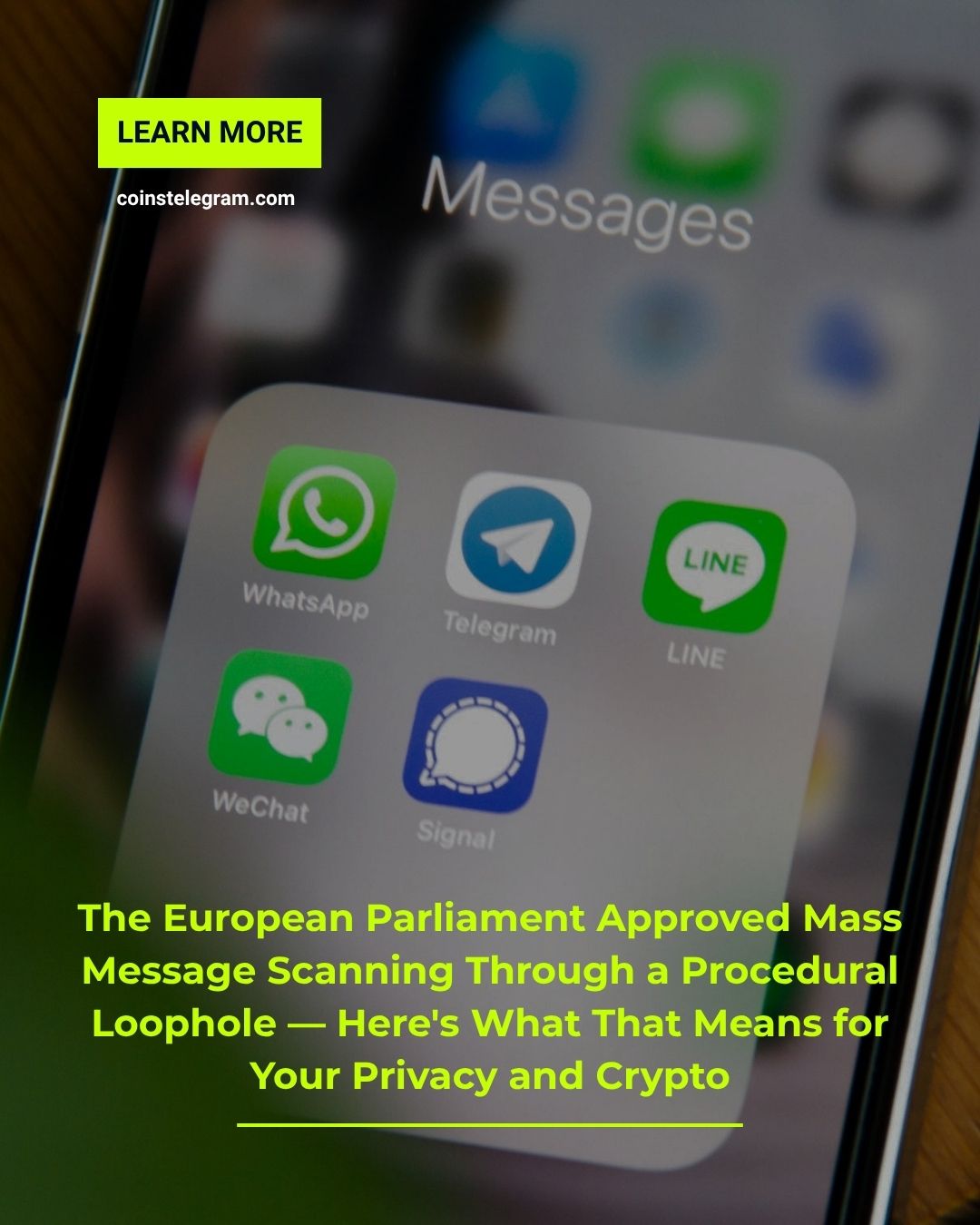
Here’s the important distinction: platforms are allowed to scan, but they are not required to do so. It is voluntary. Additionally, services using end-to-end encryption — including WhatsApp and Signal, where the platform itself cannot see message contents — remain exempt from this rule. The company cannot scan what it cannot access.
How Did This Pass If Most Lawmakers Voted Against It?
This is where the procedural complexity becomes crucial. Chat Control 1.0 expired on April 3, 2026, after the European Parliament rejected its extension in March. The vote was decisive: 311 MEPs (Members of European Parliament) opposed renewal, 228 supported it, and 92 abstained. The matter appeared settled.
But on July 2, 2026, the European Council — representing the 27 member-state governments — unilaterally adopted Chat Control 1.0 as its official position for what is called a “second reading.” That procedural designation is the loophole. Under second-reading rules, Parliament cannot simply pass or reject a measure by a simple majority vote. Instead, lawmakers can only block or amend the Council’s proposal if they achieve an absolute majority of all 720 MEPs — meaning 361 votes are needed, not just a majority of those present.
On July 9, when the vote occurred, 607 MEPs were present and voting. Of those, 314 voted to reject the extension — a clear majority of attendees. But because 361 votes were required to block it, and only 314 were cast in opposition, the measure passed by default. The extension survived not because it won an argument, but because it cleared a procedural threshold.
The timing compounded the controversy. The vote was scheduled during the last parliamentary session before the summer recess, when attendance drops significantly. Around 112 MEPs were absent. Critics argue this wasn’t an accident — it was deliberately scheduled to minimize opposition votes.
The Democratic Problem
Privacy advocates and cybersecurity experts immediately flagged a fundamental issue: how can lawmakers who reject something democratically find it imposed through procedural maneuvering?
Former MEP Patrick Breyer, a long-time privacy advocate, stated bluntly:
“The fact that Chat Control is moving forward against the will of the majority of voting MEPs is a farce and damages democracy.” MEP Markéta Gregorová added that the move violated “our own rules of procedure” and accused the largest parliamentary bloc, the European People’s Party, of abusing its position to resurrect a proposal the Parliament had already rejected.
The paradox is stark: more lawmakers voted against Chat Control than for it. Yet it passed.
What This Means for Regular Users
If you use Gmail, Facebook Messenger, Instagram Direct Messages, Snapchat, Skype, or similar platforms in Europe, those services now have legal permission to scan your messages. The company will look for images and videos of child abuse and report them to authorities if found. Importantly, text messages are not scanned — only images and videos.
If you use WhatsApp, Signal, or other end-to-end encrypted services, your messages remain unscanned. These platforms encrypt data so thoroughly that even the company operating the service cannot see what users send to each other. Chat Control 1.0 explicitly exempts these services.
The regulation will remain in effect until April 3, 2028, while European lawmakers negotiate Chat Control 2.0 — a more permanent, more invasive framework that could potentially require scanning of encrypted messages using artificial intelligence.
The Crypto and Tech Industry Impact
The crypto community and Web3 developers view Chat Control 1.0 as a warning signal. Here’s why: the technology used to encrypt private messages is the same cryptographic foundation that secures blockchain networks and cryptocurrency wallets. If European regulators successfully mandate breaking or weakening encryption for messaging, they will create pressure to apply similar rules to cryptocurrency platforms.
Companies like Signal have already threatened to withdraw from the EU entirely if Chat Control 2.0 passes. Exodus to non-regulated jurisdictions would mean European users losing access to secure communications tools.
For artificial intelligence developers, the concern is different but related. Chat Control relies increasingly on AI systems to detect abuse material, including new or modified images the system hasn’t encountered before. The European Commission’s own testing found these AI systems produced false positives “as high as 20 percent” — meaning one in five flagged conversations were not actually illegal content. Expanding AI-based scanning creates risks of innocent users being flagged to authorities based on algorithmic error.
What’s Coming Next: Chat Control 2.0
This vote does not finalize European privacy policy. Chat Control 1.0 is a temporary exemption. The real battle is over Chat Control 2.0 — formally called the Child Sexual Abuse Regulation (CSAR) — which has been under negotiation since 2022 and remains deeply contested.
Chat Control 2.0 could require platforms to scan encrypted messages by implementing “client-side scanning” — technology that analyzes content on a user’s device before it gets encrypted. Such technology would effectively weaken end-to-end encryption, creating vulnerabilities that governments, criminals, and hackers could potentially exploit.
Negotiations on Chat Control 2.0 resume in September 2026. The vote count on Chat Control 1.0 suggests support is fragile: if lawmakers achieve even a simple majority against a permanent framework, it could be blocked.
The Bigger Picture
Chat Control 1.0’s passage through procedural maneuvering raises questions about EU decision-making. Parliamentary rules designed to protect minority interests became, in this case, a tool for passing legislation against the majority’s explicit vote. European lawmakers and analysts are asking whether procedural safeguards work as intended or whether they can be weaponized to resurrect rejected proposals.
For cryptocurrency, Web3, and privacy-focused tech companies, the message is clear: Europe’s regulatory environment continues tightening around encryption, data access, and communications privacy. Whether Chat Control 2.0 advances will depend on whether lawmakers value privacy rights or regulatory access in 2026-2027.