Blockchain is transforming the way investors manage, trade and use precious metals in digital markets. But physical reserves are still vital, as each token relies on the security of its safek
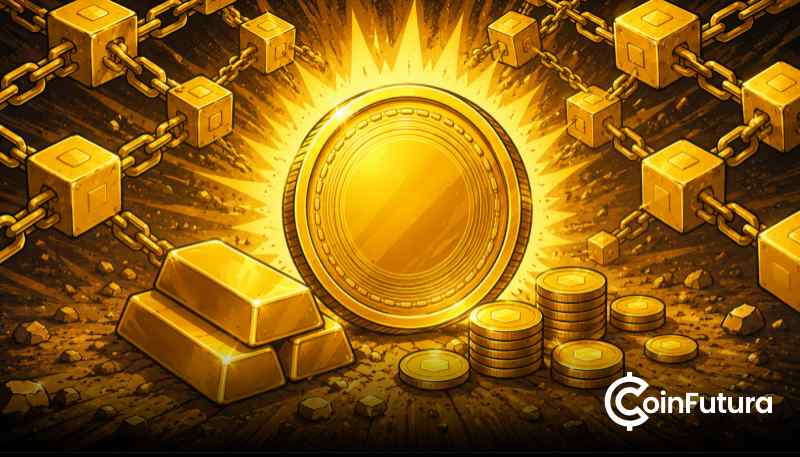
Blockchain is transforming the way investors manage, trade and use precious metals in digital markets. But physical reserves are still vital, as each token relies on the security of its safekeeping, ownership, and verification. Hence, the future will be defined by the combination of familiar metal value, quicker settlement, greater access, and convenient on-chain financial services.
Physical Value Moves On-Chain
Tokenized precious metals are linked to the blockchain records of physical gold, silver, platinum, and palladium stored in secure, professionally-run vaults. Each token is issued based on a fixed amount of metal and the investors get digital transferability in addition to direct physical commodity value. But its value will still be based on real reserves, so the ownership of the token and their redemption procedures as well as audits are still crucial features for investors.
Blockchain ascribes programmable characteristics to precious metals, giving rise to a change from static bullion to assets ready for rapid and active participation in digital markets. Furthermore, conventional token designs allow wallets, exchanges, and applications to integrate easily with metal ownership, allowing it to get in on the well established on-chain financial services. This model is not an alternative to the bullion but it provides a more rapid, wide, and flexible distribution mechanism to traditional assets.
Wider Access, Liquidity, and Settlement
Fractional ownership reduces the investment barrier and investors may buy smaller metal pieces rather than whole bars or commodity contracts. Thus, tokenized gold and silver can be accessible to smaller investors, areas that are not well-served, and markets that are restricted from physical products. Meanwhile, digital transfers decrease transport requirements and secured metal can stay in the vaults as it moves from one border to another.
On-chain markets are always active and users can respond to economic news, price changes, and sudden demand for metals quickly. There's also the added benefit of settlement potentially being completed in minutes, with quicker settlement potentially lowering counterparty exposure, capital delays, and costly administrative tasks. However, no trading activity, no matter how constant, can ensure that the market will be deep enough it's in the presence of trusted issuers, buyers, sellers and exchanges that the market will become deep.
DeFi, Payments, and Cross-Chain Use
Tokenized metals can be used as collateral, and borrowers can tap into the stablecoins without having to sell their gold and silver when the market is rough. This means that a passive store of value can serve as a basis for loaning services, liquidity pools and other decentralized finance services for users around the world. But yield is not the result of metal itself, however, it is related to lending structures, demand from borrowers, and other financial risks.
Certain platforms offer payments using metals, and multi asset wallets might integrate various assets like commodities, stablecoins, cryptocurrencies and cash under a single secure interface. Likewise, cross-chain tools allow for cross-chain transactions; this flexibility may also be utilized in the future to connect liquidity to different blockchain markets. However, the security of bridges and accurate price feeds are still essential since any failure can cause an impact on transfers, valuations, liquidation or collateral management.
Trust, Custody, and Regulation
The biggest hurdle, however, is trust which is continuously required by the token holders, the custodians, the auditors, the record operators, and the issuers. Therefore, a report, independent audit and on-chain verification can verify the circulating supply of a token, against the physical metal that is on hand and being protected. Nevertheless, there are various risks that cannot be eliminated using transparency tools and even if they were, there is a possibility of fraud, seizure, insolvency or operational failure, which could affect the value of reserves.
In addition, the regulation differs between countries and tokenized metals might be subject to commodity, payment, securities, tax or digital asset regulation in reality. Therefore, it is essential for issuers to establish investors' rights, redemption methods, fees, and legal claims before selling products internationally in the financial markets. Adoption might be facilitated by clear rules, while the rules might change over time and can limit the trading access, institutional participation and product availability for many users.
While precious metals and cryptocurrencies have distinct functions, they can be synergistic in well-diversified, well-managed digital investment portfolios. Both gold and digital assets have their merits, and digital can leverage the scarcity of gold while offering programmable services, quicker payments and greater market opportunities. An on-chain financial system, therefore, could bring together the tangible and the digital without replacing one with the other.
Metal relevance is also driven by industrial demand, as well as by the fact that silver, platinum, palladium and gold continue to be vital in advanced technology and green energy. These metals are used in electronics, vehicles, energy systems, medical tools, satellites, data centers and contemporary space technology infrastructure, among other applications. Thus, the future demand could be related to investment demand and industrial development, but the metal prices will still be determined by economic and market conditions.
As blockchain technology becomes visible, helping to trace the origins, movement and recycling of metals, as well as verified claims of sourcing across global markets, sustainability can achieve greater visibility. Furthermore, better traceability would benefit responsible investing, provided that data is reliable, and these data would need to link to physical supply chains across time. In conclusion, tokenized precious metals hold the potential for significant growth in the future, and innovation, legal clarity, security, and tangible support will be essential for sustained expansion.
The post The Future of Precious Metals in an On-Chain Financial System appears on Coin Futura. Visit our website to read more interesting articles about cryptocurrency, blockchain technology, and digital assets.