AI is changing financial crime, and Nigeria’s banks, fintechs and law enforcement agencies believe they have to change with it. That was the central message at the Adhere Compliance Frontline
AI is changing financial crime, and Nigeria’s banks, fintechs and law enforcement agencies believe they have to change with it.
That was the central message at the Adhere Compliance Frontline Forum, organised by SmartComply at the Radisson Blu Anchorage Hotel in Victoria Island, Lagos. The event brought together executives from banks, fintech companies, regulators and security agencies to discuss how the industry can stay ahead of fraudsters who are increasingly using artificial intelligence and other digital tools to steal money.
Among those present were representatives from the Nigeria Inter-Bank Settlement System (NIBSS), the Economic and Financial Crimes Commission (EFCC), the Nigeria Police Force National Cybercrime Centre (NPF-NCCC), Paystack, Payaza, ChamsSwitch, Rack Centre, Hydrogen Payment Services, Novac Payments, Odu’a Investment Company, Utila, Vertiv and Fastspeed Technologies.
The event also saw SmartComply unveil Adhere, its AI-powered compliance platform, alongside a new industry report titled The Compliance Reckoning, which examines how financial crime and regulatory compliance are evolving across Nigeria’s financial sector.
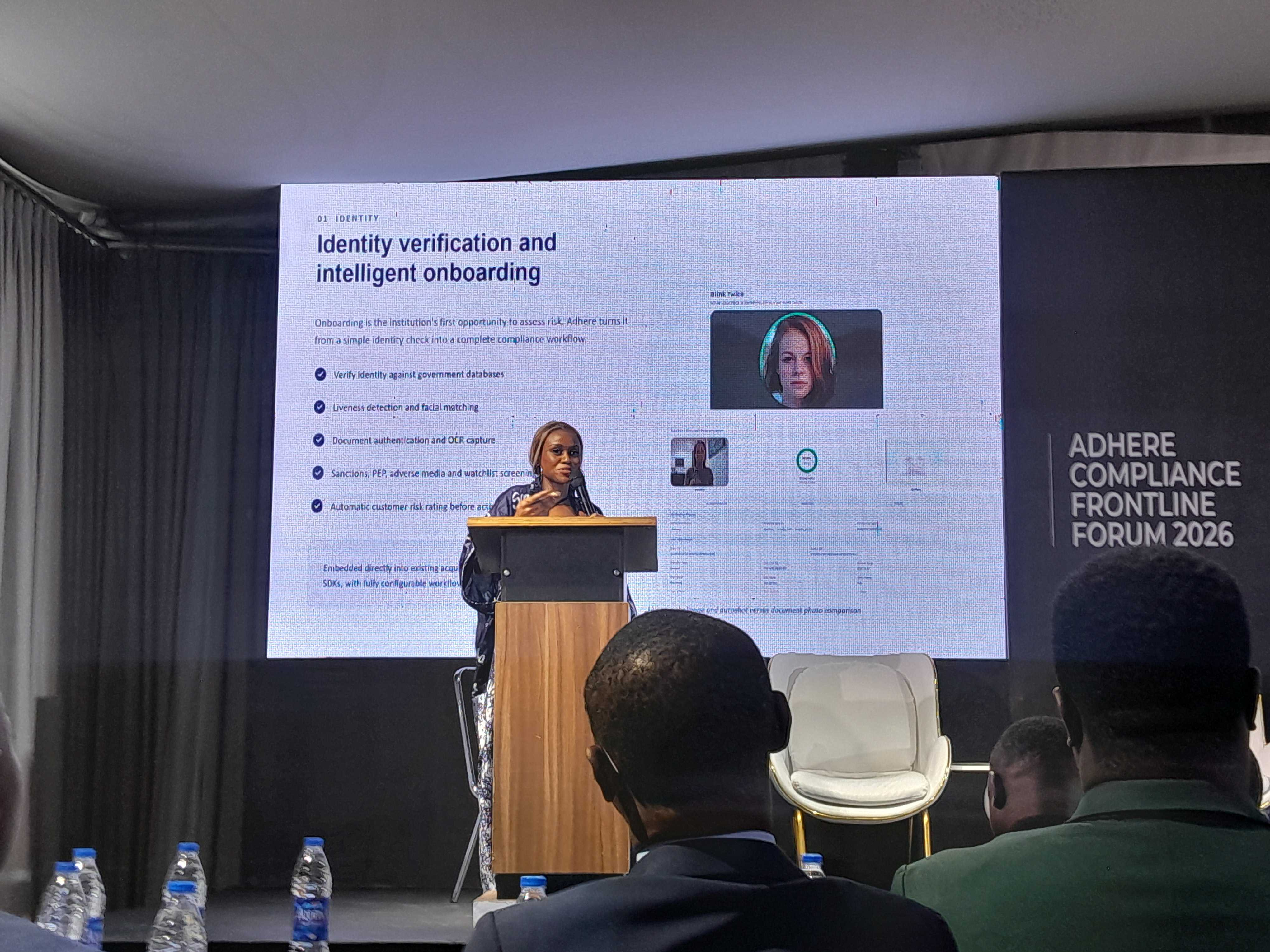
SmartComply Chief Technology Officer Anita Ajalla during the unveiling of Adhere Financial crime no longer looks like it used to
Delivering the keynote address, Assistant Inspector-General of Police Uche Henry Ifeanyi, who also chairs INTERPOL’s African Working Group on Cybercrime, said financial crime has changed dramatically over the past few years.
According to him, banks rarely deal with armed robbers walking into banking halls anymore. Instead, today’s criminals sit behind laptops and smartphones, attacking payment systems from anywhere in the world.
“Arm robbers no longer carry weapons. They carry laptops and phones,” he said. He explained that criminals now rely on tactics such as SIM swap fraud, ransomware attacks, insider collaboration and social engineering to steal money from victims.
To put it simply, instead of breaking into a bank vault, fraudsters now trick people into giving away sensitive information like their PINs, one-time passwords (OTPs) or banking credentials. In some cases, they also exploit weak security systems or work with insiders who have access to financial platforms.
Similar read: ‘Nigeria’s ATM card is the safest in the world’, top cybercrime chief, AIG Uche Ifeanyi says
That, he said, is why financial institutions can no longer rely on traditional security measures alone.
The cybercrime chief argued that AI-powered security tools are becoming necessary because they can monitor millions of transactions in real time and quickly identify unusual behaviour before money disappears.
He also made a claim that surprised many attendees.
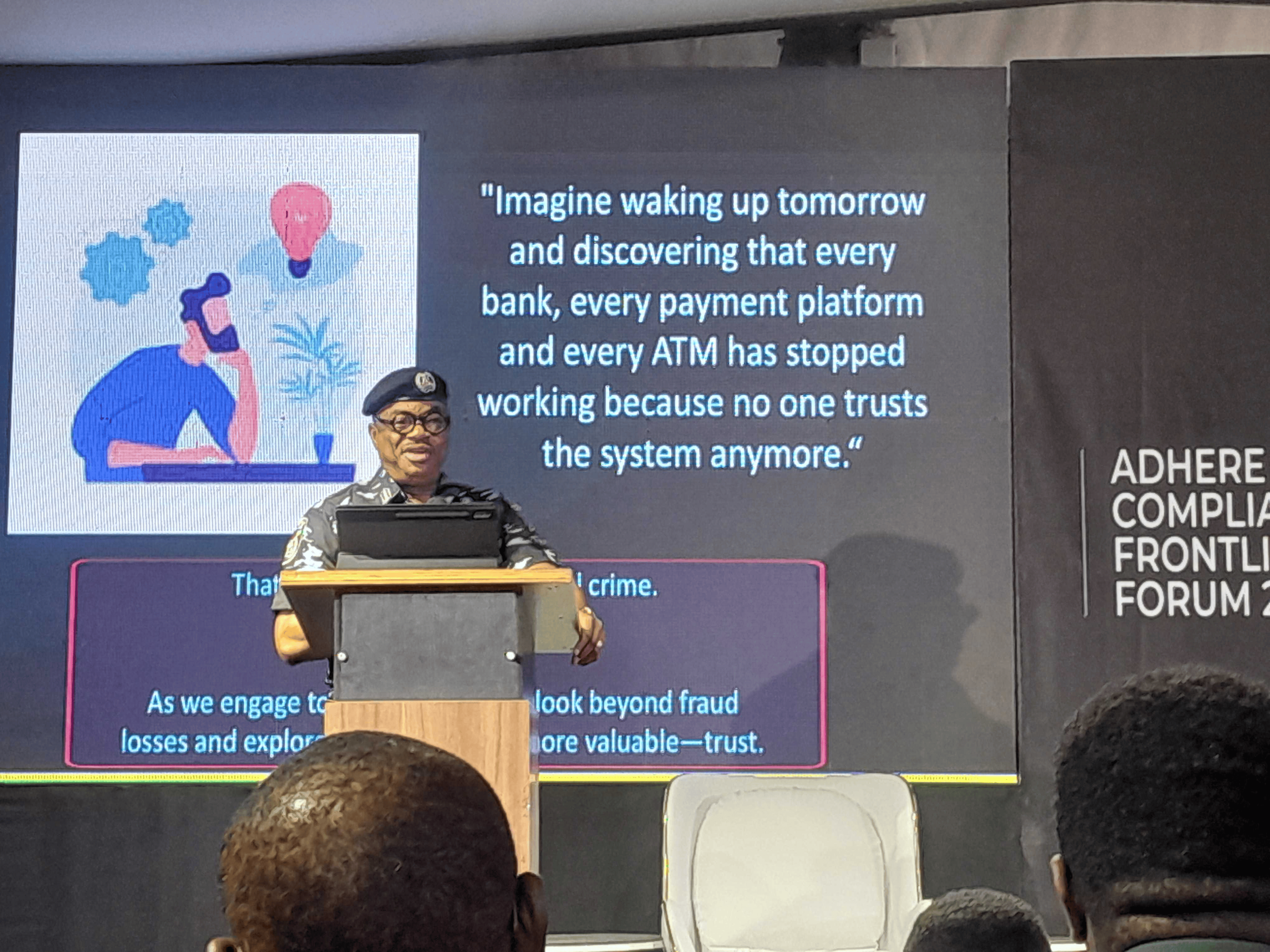
Assistant Inspector-General of Police and the Chairman of INTERPOL’s African Working Group on Cybercrime, Uche Ifeanyi
“Nigeria’s ATM card is the safest card in the world,” he said, explaining that there has never been a successful hack of the ATM card technology itself. According to him, most ATM-related fraud happens because criminals manipulate people, not because they break the card’s security. He warned that if Nigeria fails to strengthen its cybercrime response, financial crime could become a bigger threat than terrorism within the next five to ten years.
Banks and fintechs say compliance has to become smarter
The forum’s first panel focused on how banks and fintechs can meet the Central Bank of Nigeria’s Anti-Money Laundering (AML) Baseline Requirements.
Moderated by Daniel Obot, Divisional CEO of Seequre, the session featured Rowland Okondor, Vice President of Products at Novac Payments; Abiodun Gbade, Head of IT at Odu’a Investment Company; Ayodeji Jaiyeola, Chief Information Security Officer at Hydrogen Payment Services; Oluwatosin Obadimu, Manager of the Industry Fraud Desk at NIBSS; and Adebowale Adegbite, Enterprise Business Manager at Fastspeed Technologies.
Rather than treating compliance as something that happens after suspicious transactions have been reported, the panel argued that banks should be able to detect risks while transactions are happening.
For example, if someone who normally transfers ₦50,000 suddenly attempts to move ₦20 million from a new location using an unfamiliar device, an intelligent monitoring system should immediately flag the transaction for further checks before the money leaves the account.
The speakers said many financial institutions still struggle with old banking systems, fragmented customer data and limited technical expertise, making it harder to implement this kind of real-time monitoring.
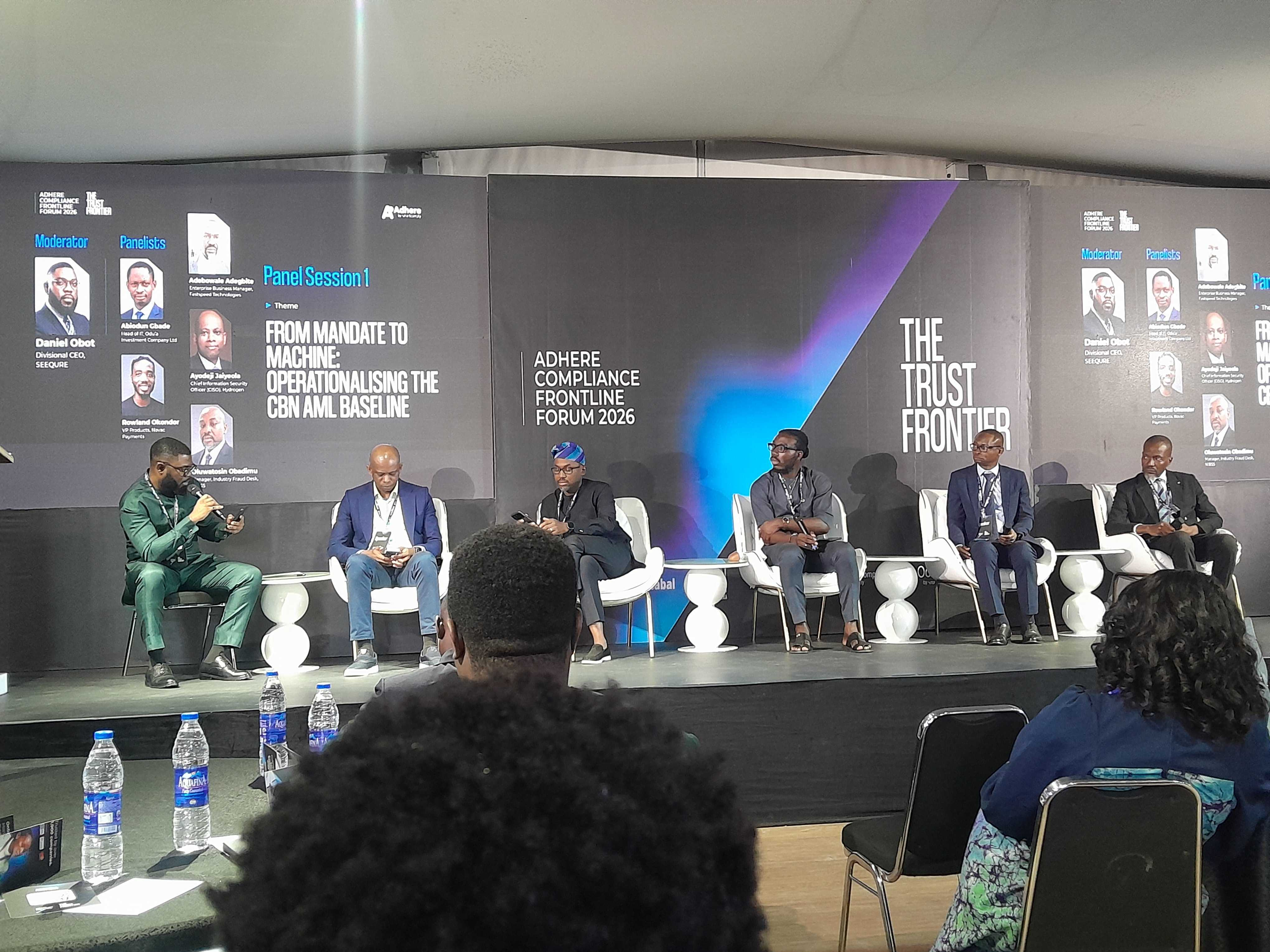
Panel session consisting of Daniel Obot, Divisional CEO of Seequre, which featured Rowland Okondor, Vice President of Products at Novac Payments; Abiodun Gbade, Head of IT at Odu’a Investment Company; Ayodeji Jaiyeola, Chief Information Security Officer at Hydrogen Payment Services; Oluwatosin Obadimu, Manager of the Industry Fraud Desk at NIBSS; and Adebowale Adegbite, Enterprise Business Manager at Fastspeed Technologies.
They also stressed that stronger collaboration between banks would make it more difficult for fraudsters to move stolen funds across multiple institutions unnoticed.
Following the session, SmartComply Chief Technology Officer Anita Ajalla unveiled Adhere, demonstrating how the platform combines transaction monitoring, identity verification, sanctions screening, fraud detection and regulatory reporting into a single compliance system.
Fraudsters are using AI, so defenders must too
The second panel, moderated by Olajumoke Rufus, Field Marketing Manager for Central Africa at Vertiv, examined how artificial intelligence is reshaping financial crime.
The discussion featured ACP Bashir Abdullahi, Assistant Director of the Cybercrime Digital Forensics Lab at the Nigeria Police Force National Cybercrime Centre; Ibrahim Shazali, Director of Fraud Risk Assessment and Control at the EFCC; and Kehinde Omotoso, Head of Engineering at Payaza.
The speakers said fraud has evolved from simple scams to more sophisticated attacks involving synthetic identities, where criminals combine genuine and fake information to create entirely new identities capable of bypassing security checks.
Tracing these crimes has also become more difficult because stolen money often passes through several bank accounts within minutes, making manual investigations almost impossible.
Their conclusion was straightforward: if criminals are using AI to become smarter, financial institutions and law enforcement agencies must also use AI to detect and stop them faster.
Compliance is no longer just a regulatory exercise
The final panel, moderated by Temitayo Jaiyeola, Senior Reporter at TechCabal, featured David Samson, Fraud Investigation Manager at Paystack; Gbemisola Osunrinde, Group Managing Director of SmartComply; Francis Ogbuka, Head of Africa at Utila; Mudiaga Umukoro, Managing Director and CEO of ChamsSwitch; and Kelechi Ohalete, Governance, Risk and Compliance Analyst at Rack Centre.
The discussion centred on how financial institutions should approach compliance as artificial intelligence becomes part of everyday financial services.
The panellists agreed that compliance should no longer be seen as a box to tick after transactions have been completed. Instead, security checks should happen throughout every stage of a transaction so suspicious activities can be detected before money is lost.
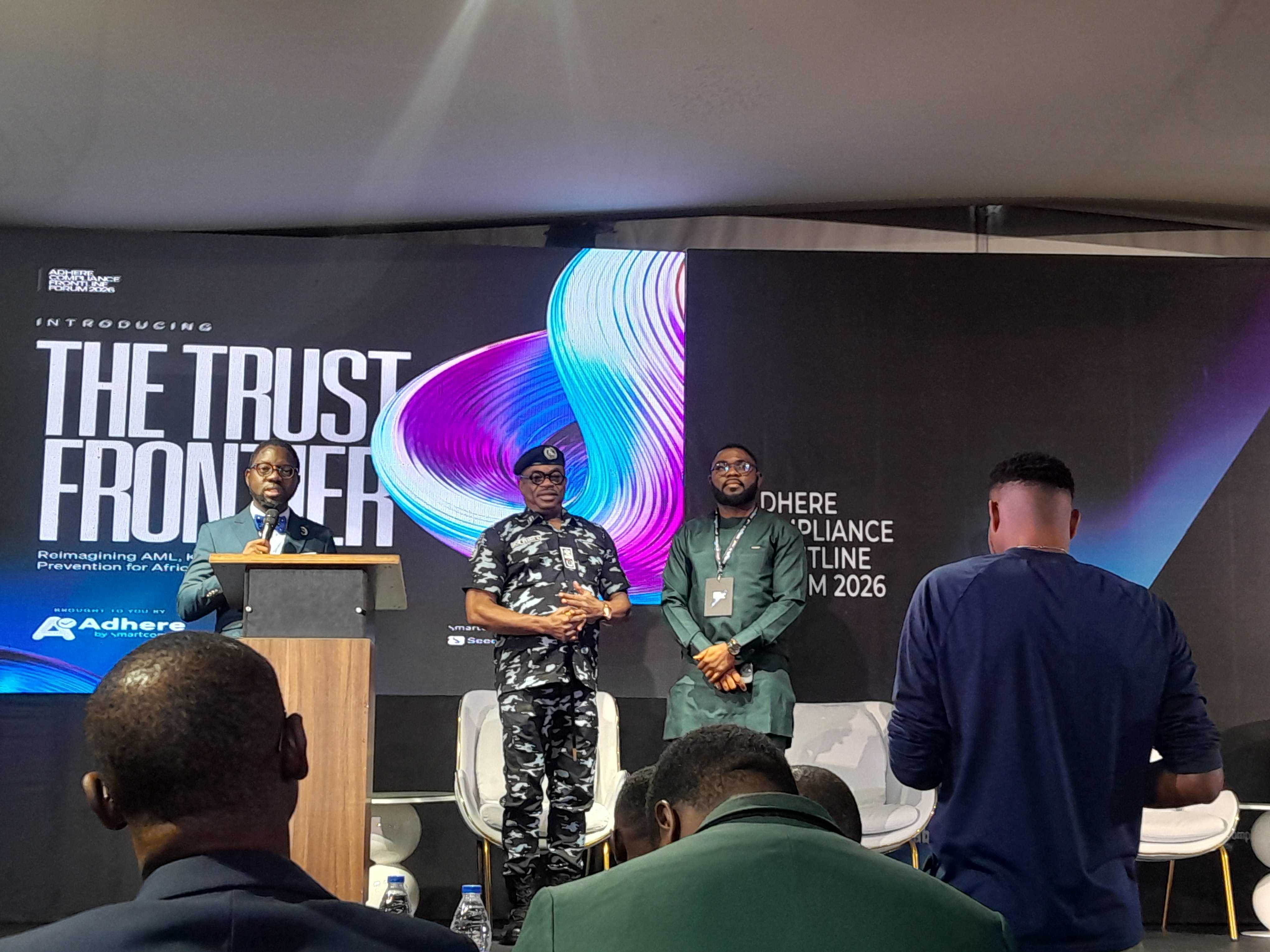
AIG Uche Ifeanyi and Daniel Obot, Divisional CEO, Seequre
They also called for greater information sharing between banks, fintechs, regulators and law enforcement agencies, arguing that fraudsters already collaborate across borders while many institutions still work in isolation.
The consensus across the forum was clear: financial crime is evolving much faster than before, and keeping up will require more than stronger regulations. It will require smarter technology, closer collaboration and systems that can spot threats before customers become victims.
Also read: 10 companies linked to AI-driven layoffs in H1 2026