
DeFi3 min read
Spark Vulnerability Mitigated
A vulnerability was identified via responsible disclosure and has been mitigated in the Spark protocol. It affects multi-input Spark spends only; single-input spends are unaffected. Your wall
Blockchain experiments in international aid are reaching a new stage. After several pilot projects carried out in different countries, UNDP believes this technology can now support a broader
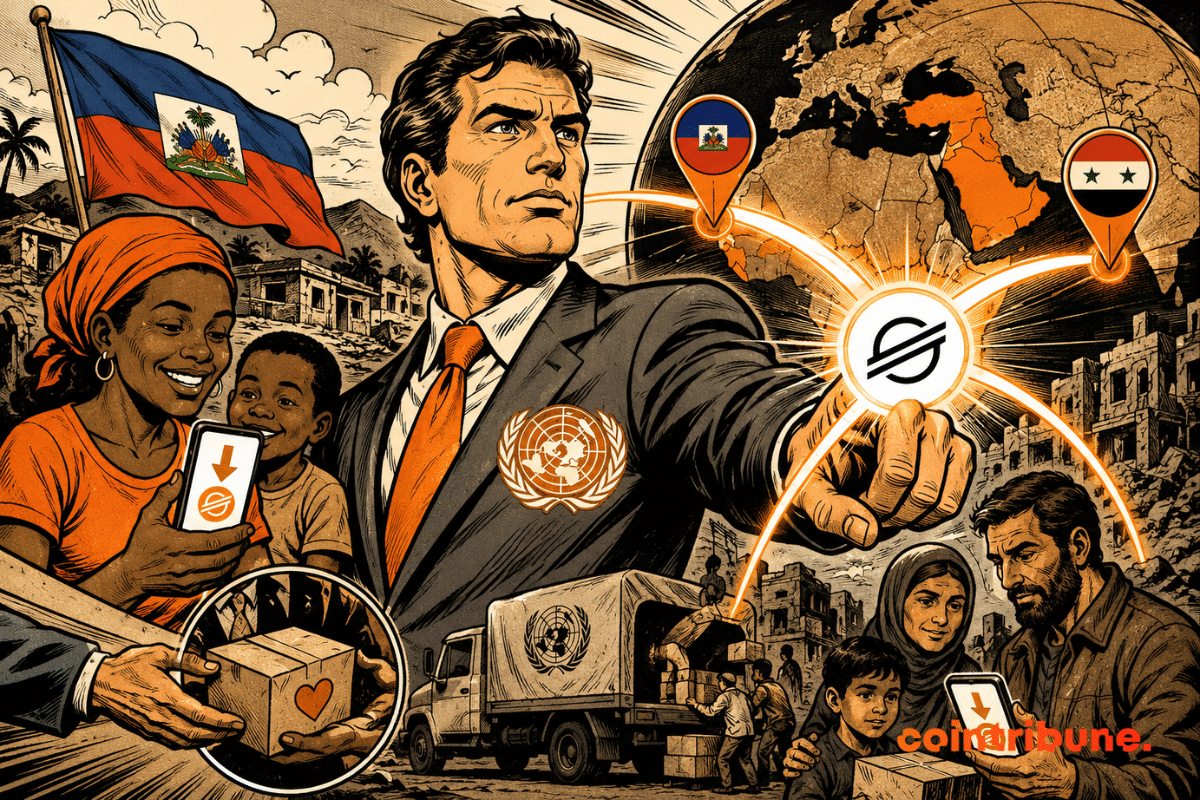
Blockchain experiments in international aid are reaching a new stage. After several pilot projects carried out in different countries, UNDP believes this technology can now support a broader range of humanitarian and development programs. The results obtained on the ground, notably in Haiti and Syria, have convinced the agency to extend the use of on-chain payments through a new agreement with the Stellar Development Foundation. This development marks a concrete advance of blockchain in operations conducted by the United Nations.
After a long experimentation phase, the United Nations Development Programme has drawn a positive assessment of its blockchain initiatives conducted on the ground. These works, carried out over sixteen months in Haiti, Syria, Kenya, Guatemala, and Gambia, have led UNDP to sign a new agreement with the Stellar Development Foundation to expand the use of its blockchain infrastructure. Meanwhile, other initiatives are already in preparation in Colombia and Papua New Guinea. The goal is now to further integrate blockchain-based payments into field programs.
The trials have delivered several concrete results. In Syria, a “Cash for Work” program recorded payments on a digital platform, reducing distribution costs from 10% to only 2%. In Haiti, a pilot project continued operating despite a cellular network outage. These experiences show that blockchain infrastructures can maintain operational continuity even in environments where traditional networks face challenges.
These initial returns pave the way for wider deployment. National offices will gradually have a process enabling them to use these solutions in more programs. This approach aims to strengthen operational resilience while reducing costs associated with payments to beneficiaries.
Start your crypto adventure safely with BybitThis link uses an affiliate program.UNDP considers that this first phase validates the interest of blockchain for its development missions. The agency now wishes to establish an operational framework so that its national offices can more easily adopt this technology. This development reflects a desire to move beyond simple experiments to integrate these tools into larger-scale programs.
Last month, UNDP also launched a blockchain advisory group at the Proof of Talk conference held in Paris. This initiative is intended to support the organization’s future directions in the use of this technology. The work of the group will not be limited to digital payments, as it will also focus on digital public infrastructures and the improvement of public systems.
Through this strategy, UNDP intends to explore multiple uses of blockchain in the service of development. The lessons learned from pilot projects will serve as a basis for upcoming deployments. The goal remains to adapt these solutions to local realities while ensuring coherent implementation across the organization’s various offices.
The expansion of these initiatives is part of a broader dynamic around blockchain networks and stablecoins. These technologies are increasingly used to facilitate cross-border transfers, especially in regions where access to banking services remains limited. They offer an alternative to make payments and transfer funds with greater continuity.
This trend is also found in the private sector. Ripple recently took a stake in the African fintech Flutterwave to promote the adoption of its stablecoin RLUSD and the XRP Ledger in Africa. Latin America also attracts industry players, targeting several transfer corridors in Argentina, Bolivia, Colombia, and Venezuela. These initiatives illustrate the growing interest in digital infrastructures in emerging markets.
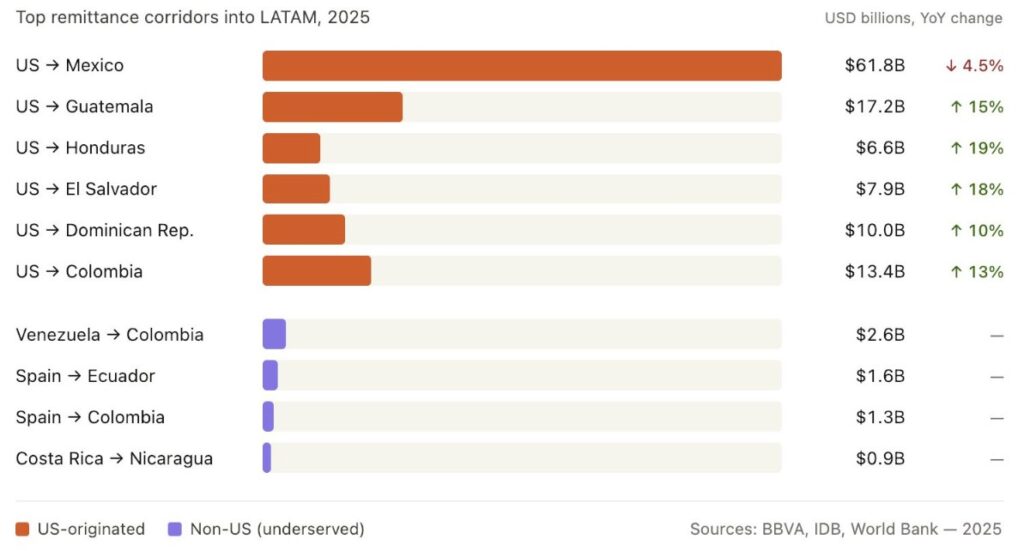 The main remittance channels in Latin America. Source: Cointelegraph.
Former UN Under-Secretary-General Vera Songwe believes that “stablecoins now go beyond just remittances.” According to her, they facilitate access to digital financial services in regions where traditional banking solutions remain limited. She recalls that “in Africa, approximately 650 million people do not have a bank account.” According to her statements, a smartphone allows access to stablecoins, saving in a currency less exposed to inflation and strengthening financial inclusion.
UNDP now plans to rely on lessons from its pilot projects to gradually generalize these solutions in its programs, supported by the blockchain infrastructure of Stellar. If this new phase confirms results observed in Haiti, Syria, and other countries involved, the use of this technology could take a larger role in the organization’s humanitarian and development operations, especially to secure and optimize payments to beneficiaries.