The US just voted to block a digital dollar, with Elizabeth Warren helping
The US Senate has moved to formally block a government-issued digital dollar. Buried inside a sweeping housing affordability package is a provision that bars the Federal Reserve from issuing
A
AnonymousCryptoCompass newsroom
June 23, 2026
3 min read
NEWS
CryptoCompass editorial visual for markets coverage.
The US Senate has moved to formally block a government-issued digital dollar. Buried inside a sweeping housing affordability package is a provision that bars the Federal Reserve from issuing a central bank digital currency (CBDC) through the end of 2030, with a carve-out for private stablecoins.
The 21st Century ROAD to Housing Act passed the Senate in an 85-5 vote on Monday. The bill is primarily designed to boost housing supply and stop large investors from buying single-family homes. While attaching an anti-CBDC provision to a housing bill is unusual, it highlights a common legislative strategy of hitching unrelated policies to must-pass legislation.House lawmakers were reportedly contemplating an accelerated process to put their own approval on the housing bill by as soon as Tuesday, and a signature from Trump will make it law, including the CBDC provision.
From Executive Order to Statute
The vote converts existing policy into law, and that distinction matters. President Donald Trump signed an executive order in January 2025 that prohibited his administration from making any moves toward a CBDC. But an executive order can be reversed by a future president without Congressional approval. A statute is far harder to unwind. The 21st Century ROAD to Housing Act includes language banning the Federal Reserve from issuing or creating a CBDC or any digital asset "substantially similar" to a CBDC, effective until December 31, 2030. After that date, the Fed would need explicit Congressional approval to revisit the idea.
The Warren Irony
The politics surrounding the bill carry a notable twist. The act was introduced by Senate Banking Committee Chairman Tim Scott and Ranking Member Elizabeth Warren, the top Republican and Democrat on the committee.Neither lawmaker mentioned the CBDC ban, which occupies just two pages in the 303-page bill.
Warren's involvement is striking given her prior stance. At a 2021 Senate hearing she chaired, Warren described central bank digital currency as holding "great promise." Her co-sponsorship of legislation that now freezes one reflects the compromises required to pass a large bipartisan package.
The immediate practical stakes are limited. There is no federal project currently working on instituting a CBDC.Market observers suggest the restriction could benefit private stablecoin issuers by reducing the prospect of competition from a government-backed digital currency. Meanwhile, the European Central Bank has been working on a digital euro that is set to get a pilot program next year and a full launch in 2029.
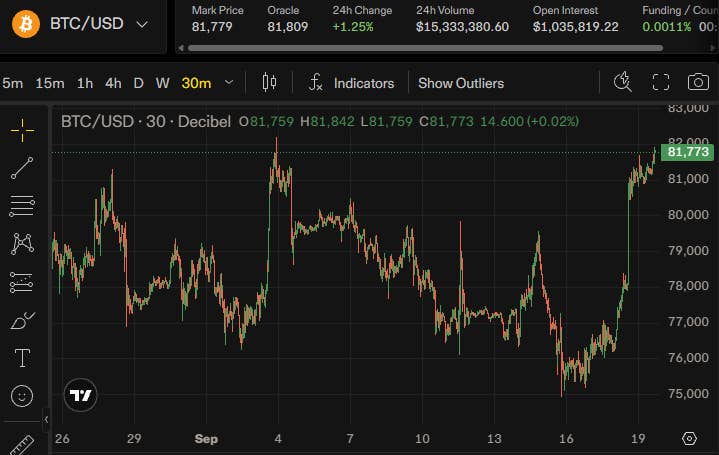
Gold price is near $4,400 after a period in which cryptocurrencies have delivered stronger short-term gains. Bitcoin’s rally above $81,500 and renewed interest in altcoins have drawn attentio
Marina Protocol Daily Quiz Answer 20 September 2026 If you're searching for the Marina Protocol Daily Quiz Answer for 20 September 2026, this guide brings together the latest verified update,
ARK Invest CEO Cathie Wood is one of the most bullish investors in the Bitcoin (BTC) ecosystem. When a podcaster referred to the cryptocurrency as a "dead cat," she didn't hold back. Wood is